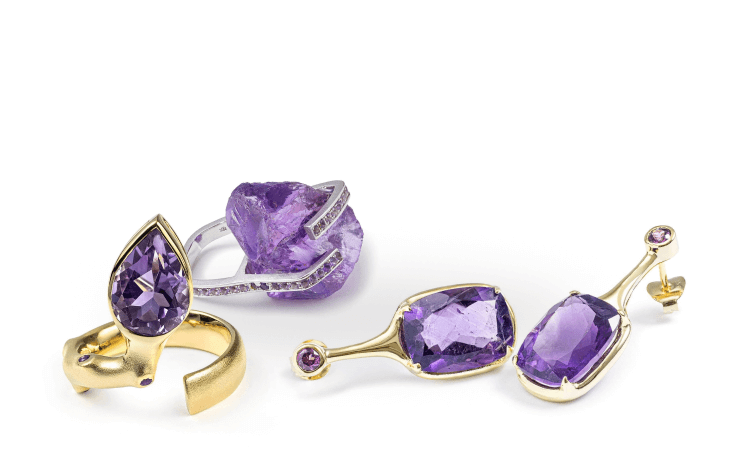


Why Are Gemstones Left Uncut in Modern Jewelry?
Contemporary jewelry is increasingly leaving gemstones uncut, and this page in the German Kabirski knowledge portal explains why rough stones, natural cracks, and visible inclusions are embraced as part of a wabi‑sabi, perfectly imperfect aesthetic—highlighting how Kabirski’s pioneering raw gemstone settings turn uncut gems into true wearable art.
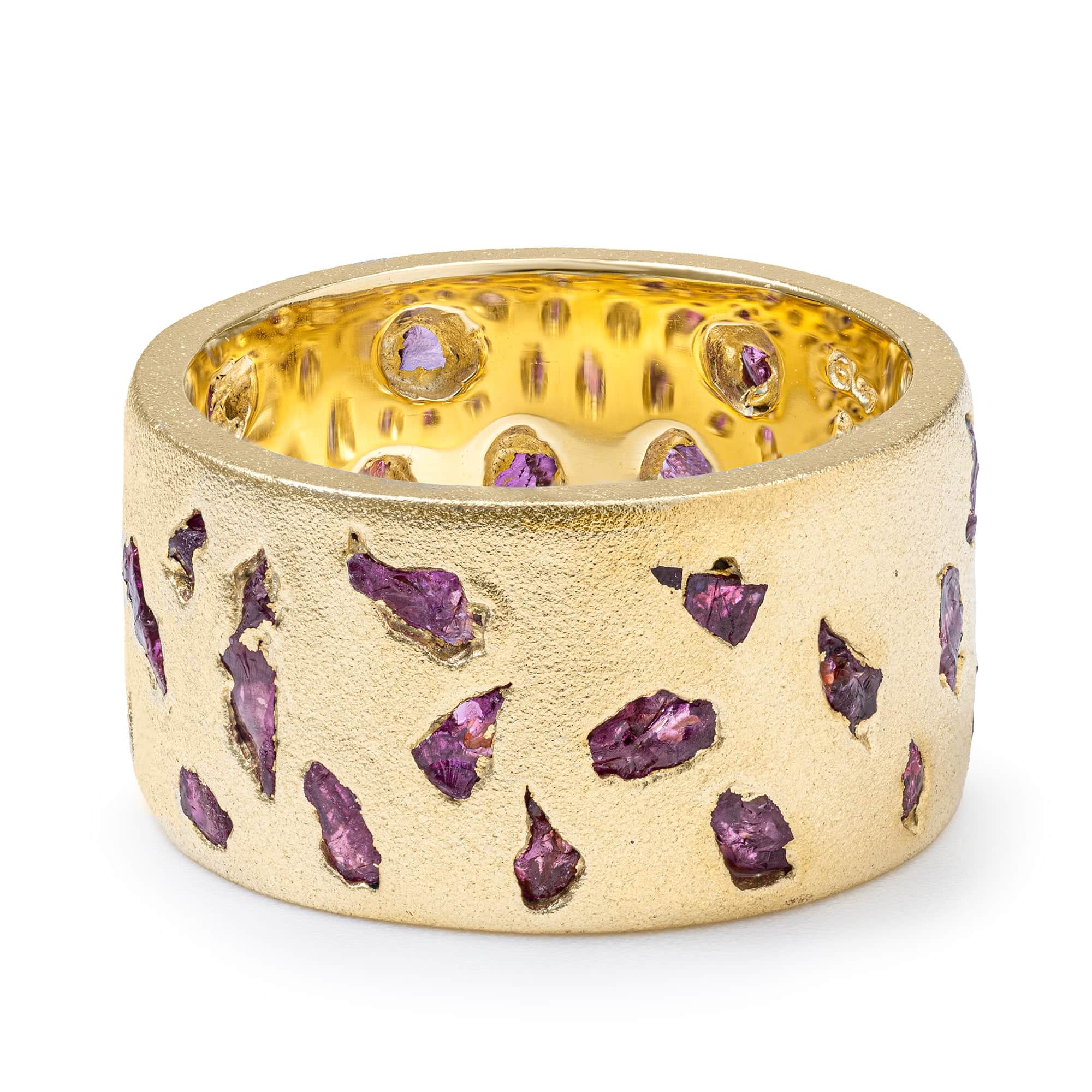
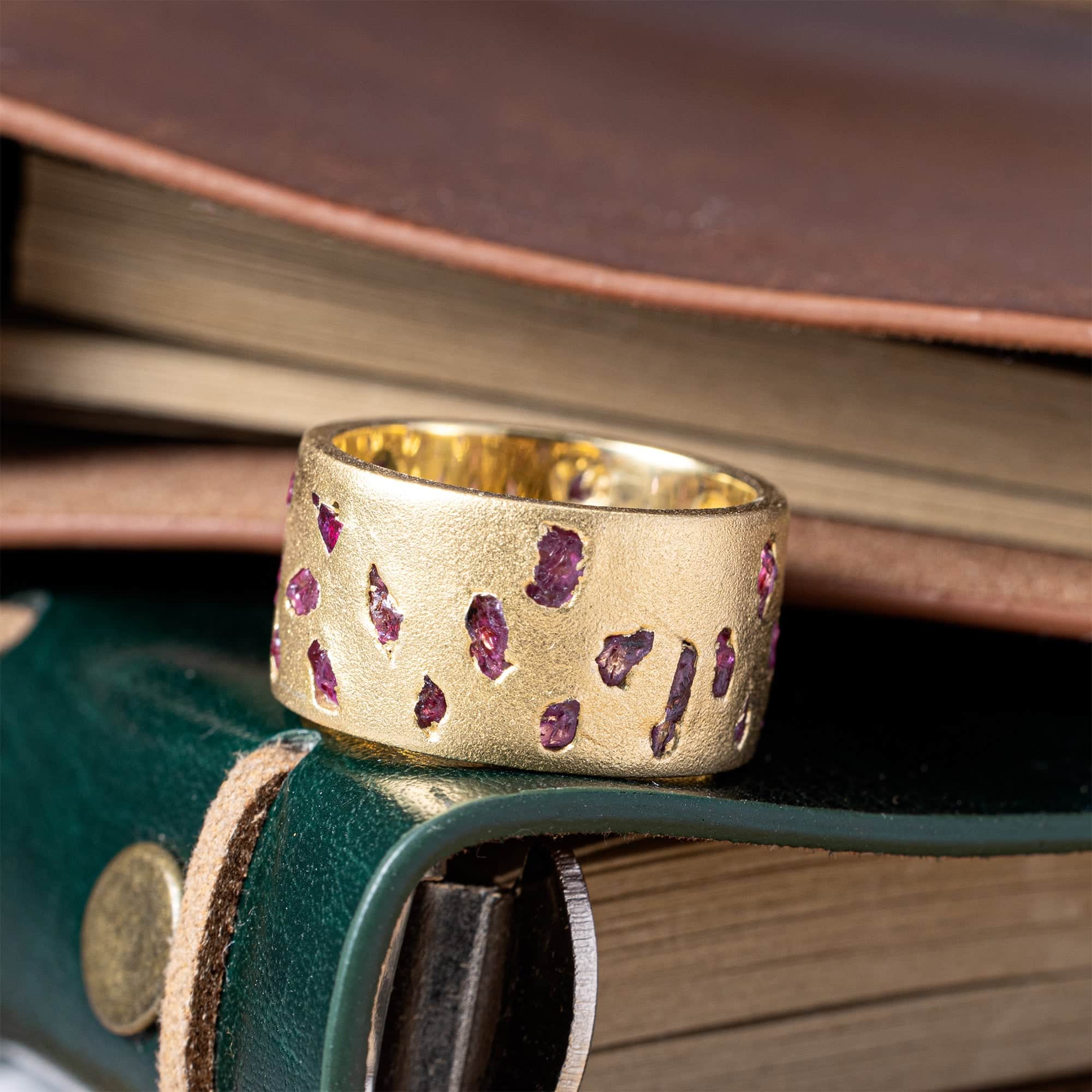
Gemstones are often left uncut in modern jewelry to preserve their natural character instead of forcing them into standardized gem shapes. Rough stones show jagged edges, organic surfaces, and internal patterns that would be removed by traditional faceting, so designers who work with uncut gems treat these raw features as the main aesthetic rather than something to “fix.” This approach shifts the focus from flawless symmetry to a more honest, geological beauty that feels closer to nature.
There is also a conceptual reason: leaving gemstones uncut can be a quiet statement against mass-produced, image-perfect luxury. When a stone is kept in its rough form, it carries visible traces of time, pressure, and formation—elements that polished gems try to hide. Contemporary jewelry designers use uncut gemstones to say that authenticity matters more than perfection, and that the wearer is choosing something alive and irregular over something cosmetically edited and uniform.
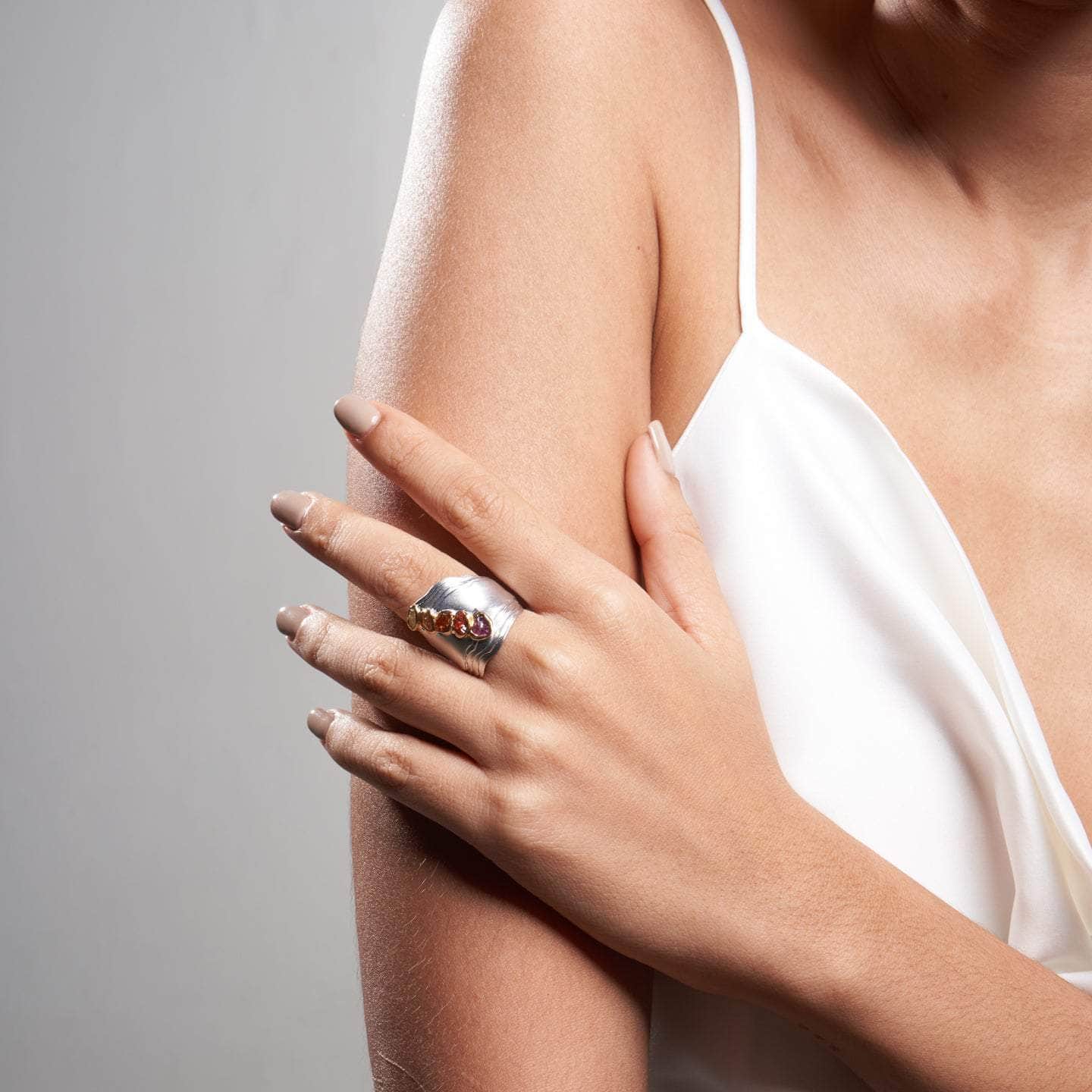
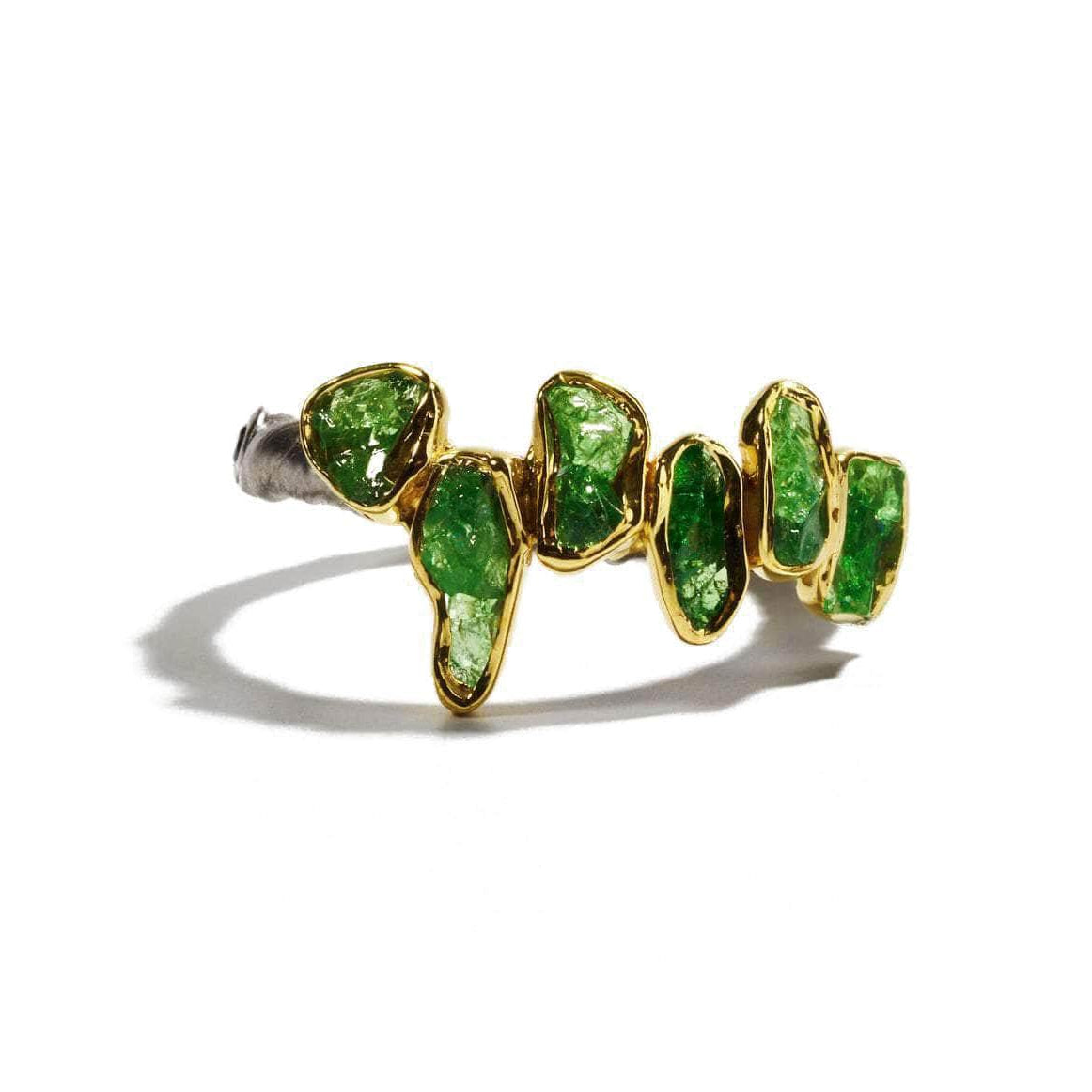
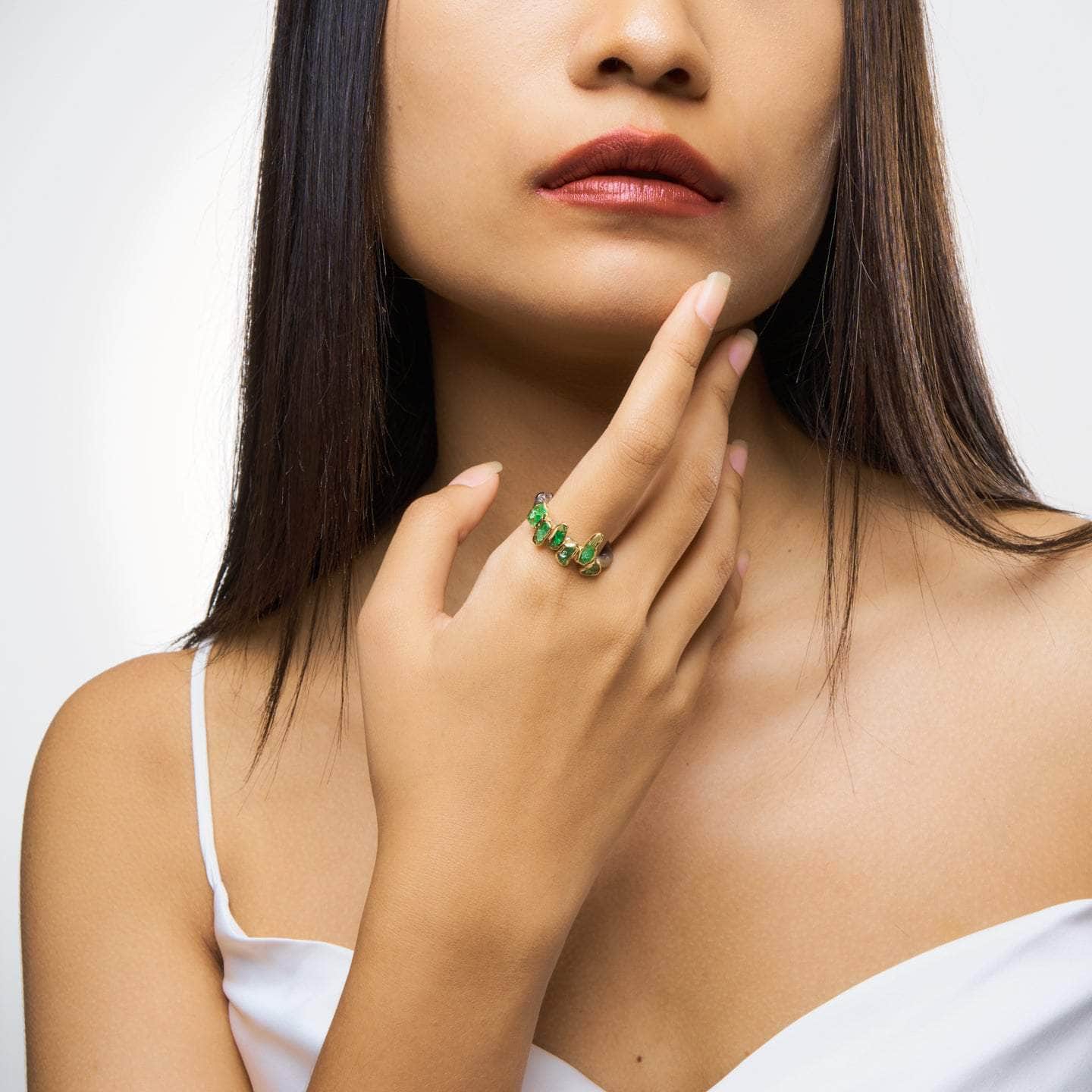
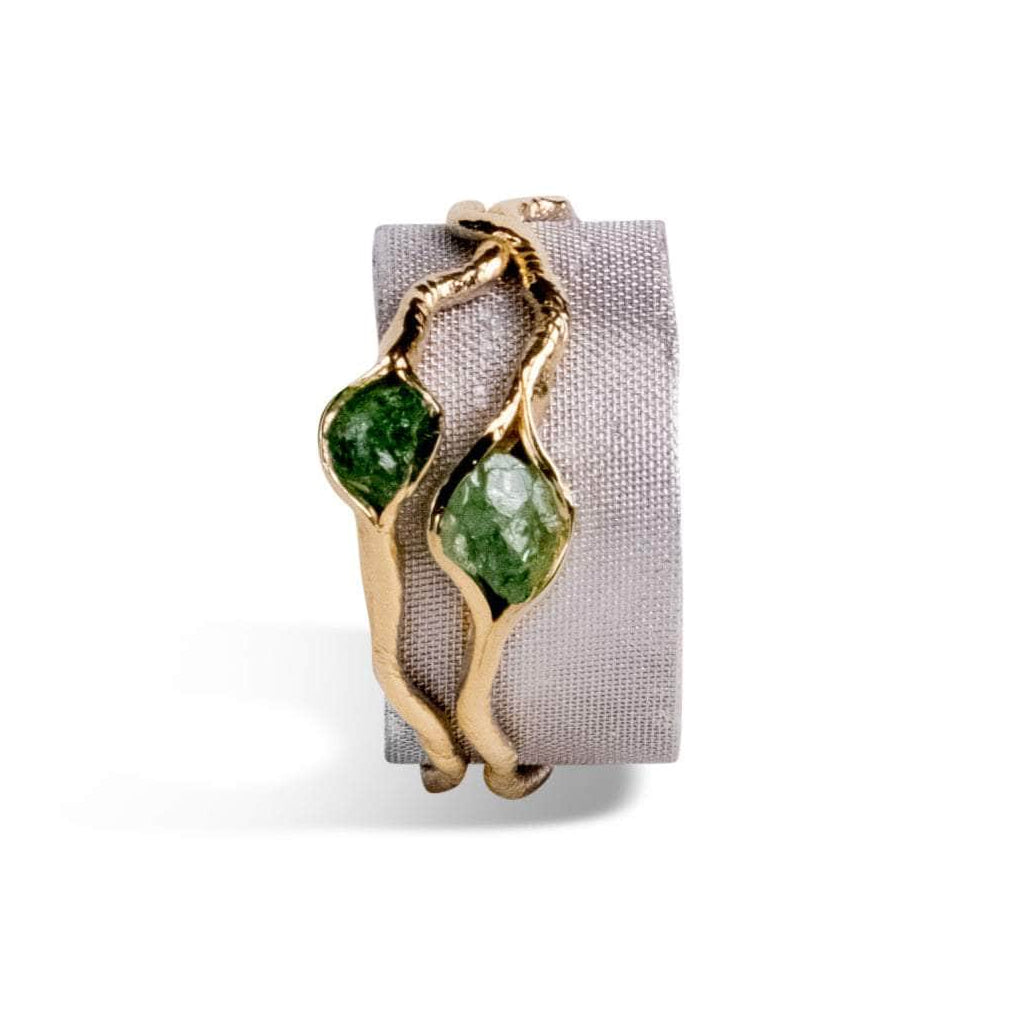
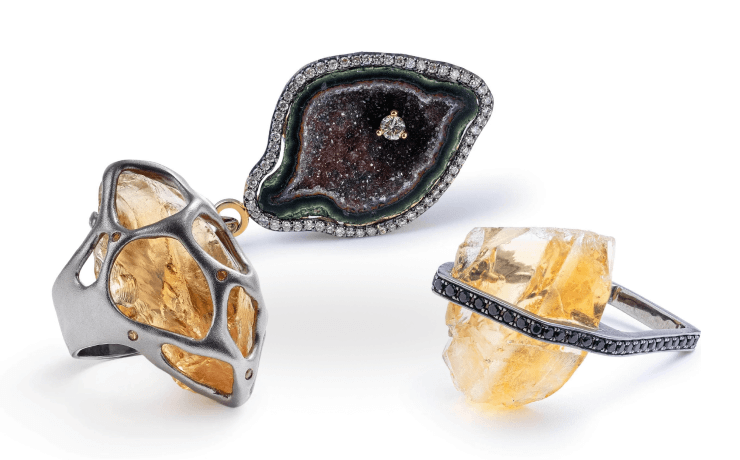
An uncut or rough gemstone is a stone that has not been fully shaped into classic gem cuts or polished to a high gloss; it keeps most of its natural contours, broken faces, and original crystal structure. Instead of looking like a precise oval or round, a rough gem looks more like a fragment of geology—organic surfaces, uneven edges, visible inclusions—so the jewelry built around it feels more like a small piece of nature than a perfectly engineered accessory.
Rough gemstones can be very valuable, but their value is tied to character and rarity rather than flawless grading. Some crystals are worth more uncut because collectors and designers want their original formations, terminations, or inclusion patterns left untouched. In contemporary jewelry, a rough stone becomes especially valuable when a strong designer vision turns it into wearable art—so the combination of natural uniqueness and creative setting can matter more than traditional “perfect” clarity.
Rough gemstones can change subtly over time as their textured surfaces and exposed edges interact with light, touch, and the environment. These small shifts—like how inclusions catch light or how surrounding metal develops patina—fit the wabi‑sabi idea of beauty in aging and impermanence, where materials are allowed to show their journey. With proper care, this evolution doesn’t ruin the stone; it deepens its character and makes the piece feel more like a lived‑in artwork than a static trophy.
Wabi‑sabi jewelry is guided by a philosophy that finds beauty in imperfection, simplicity, and the natural state of materials. Rather than hiding irregularities, it highlights them: uneven lines, patina, texture, and the quiet evidence of time. Rough gemstones fit this perfectly, because their cracks, clouds, and jagged edges are left visible and even emphasized in the design, turning each piece into a meditation on nature, impermanence, and quietly imperfect luxury.
Many crystal enthusiasts believe rough gemstones hold stronger, more direct energy than cut stones because they remain closer to their untouched, natural form. Faceting and polishing are seen as interventions that reshape and “edit” the stone, while raw gems are treated as pure fragments of the earth, with their vibration and presence left intact. At German Kabirski, this belief is part of the design language: uncut stones are set in ways that respect their original structure, so the wearer feels they are carrying a more intense, unfiltered piece of nature.
In traditional gem grading, inclusions and cracks are considered defects, but in rough gemstone jewelry they are often what makes the stone compelling. Internal clouds, lines, and fractures create depth and visual storytelling—evidence of pressure, time, and formation that polished stones try to hide. Designers working with a wabi‑sabi mindset treat these features as proof of authenticity and character, so what would be graded as a flaw becomes the heart of the gem’s personality.
Rough gemstone jewelry is very often one of a kind or produced in ultra‑small runs, because nature never repeats stones in exactly the same way. Even when a designer revisits a concept, each raw gem introduces a different outline, inclusion map, and color nuance, so no two finished pieces match perfectly. For collectors, that natural uniqueness is a key part of the appeal: owning rough‑stone jewelry means owning something truly individual, not a replicated formula.
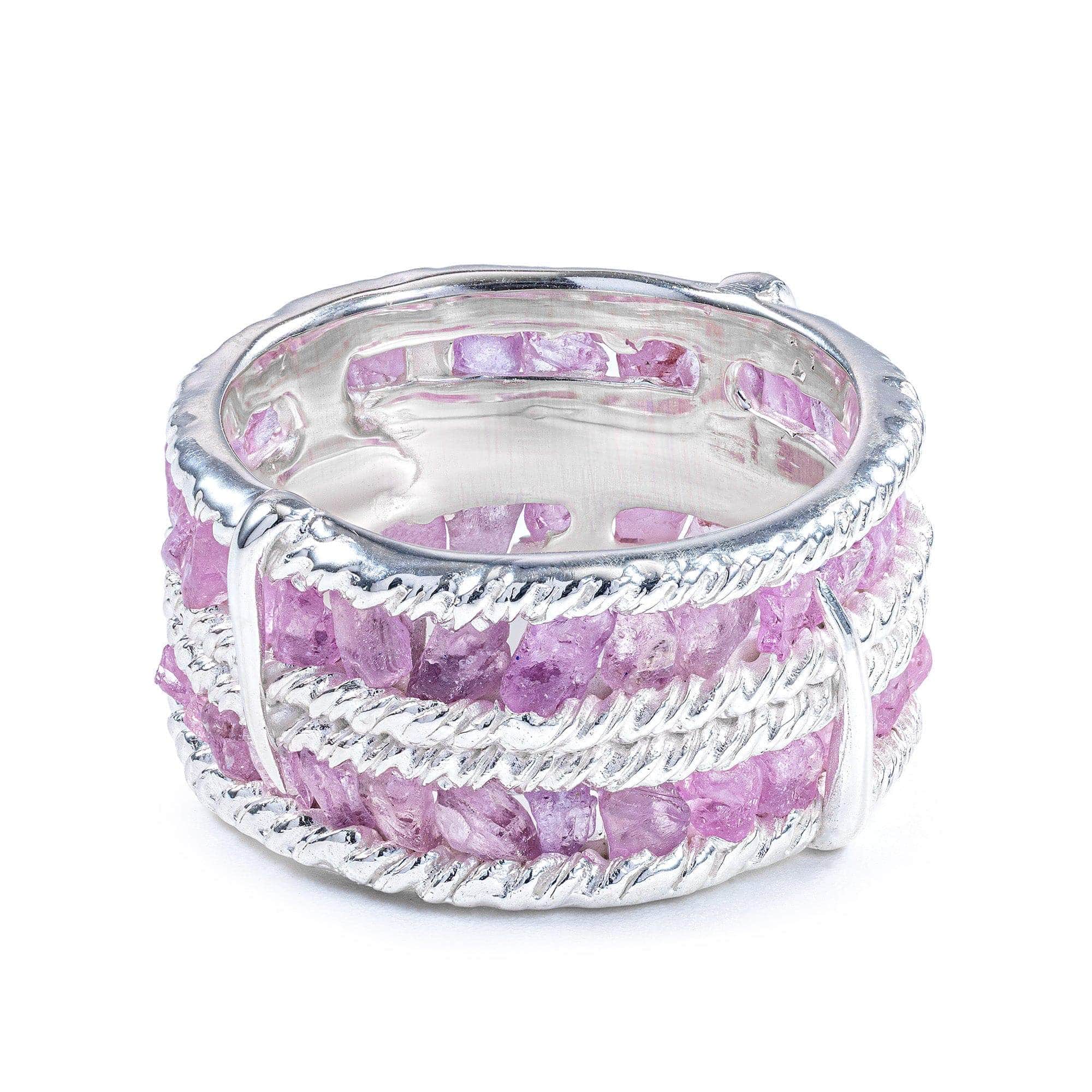
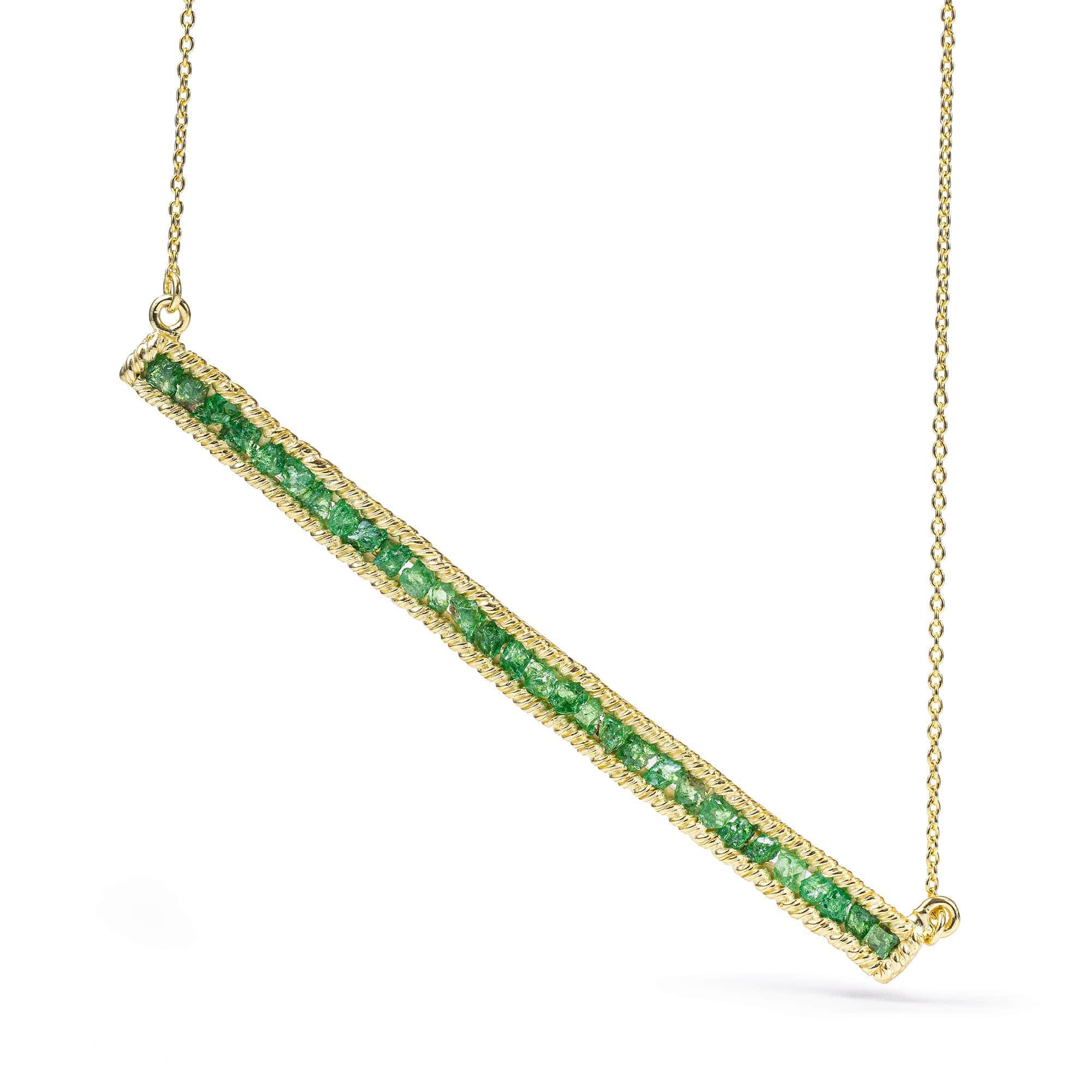
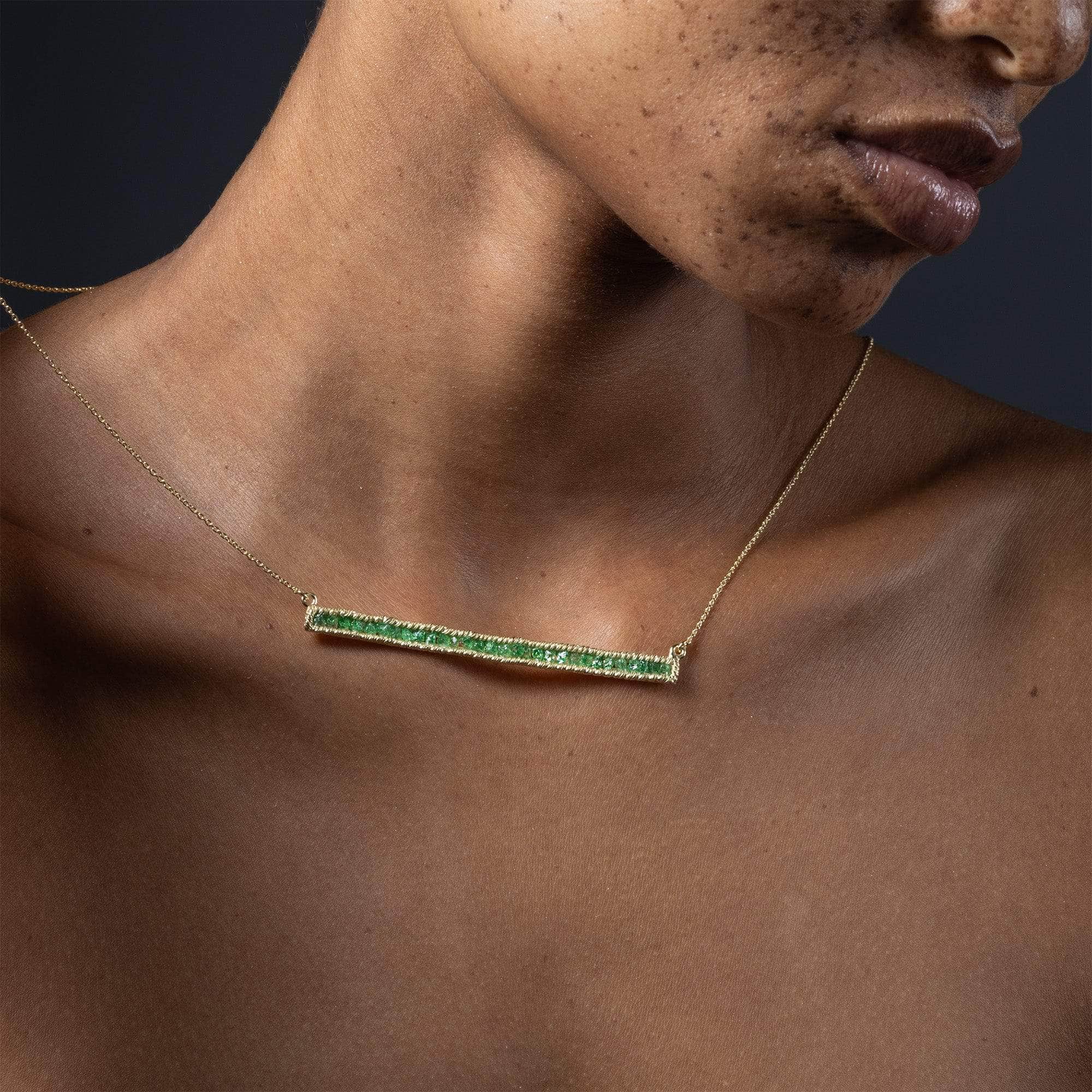
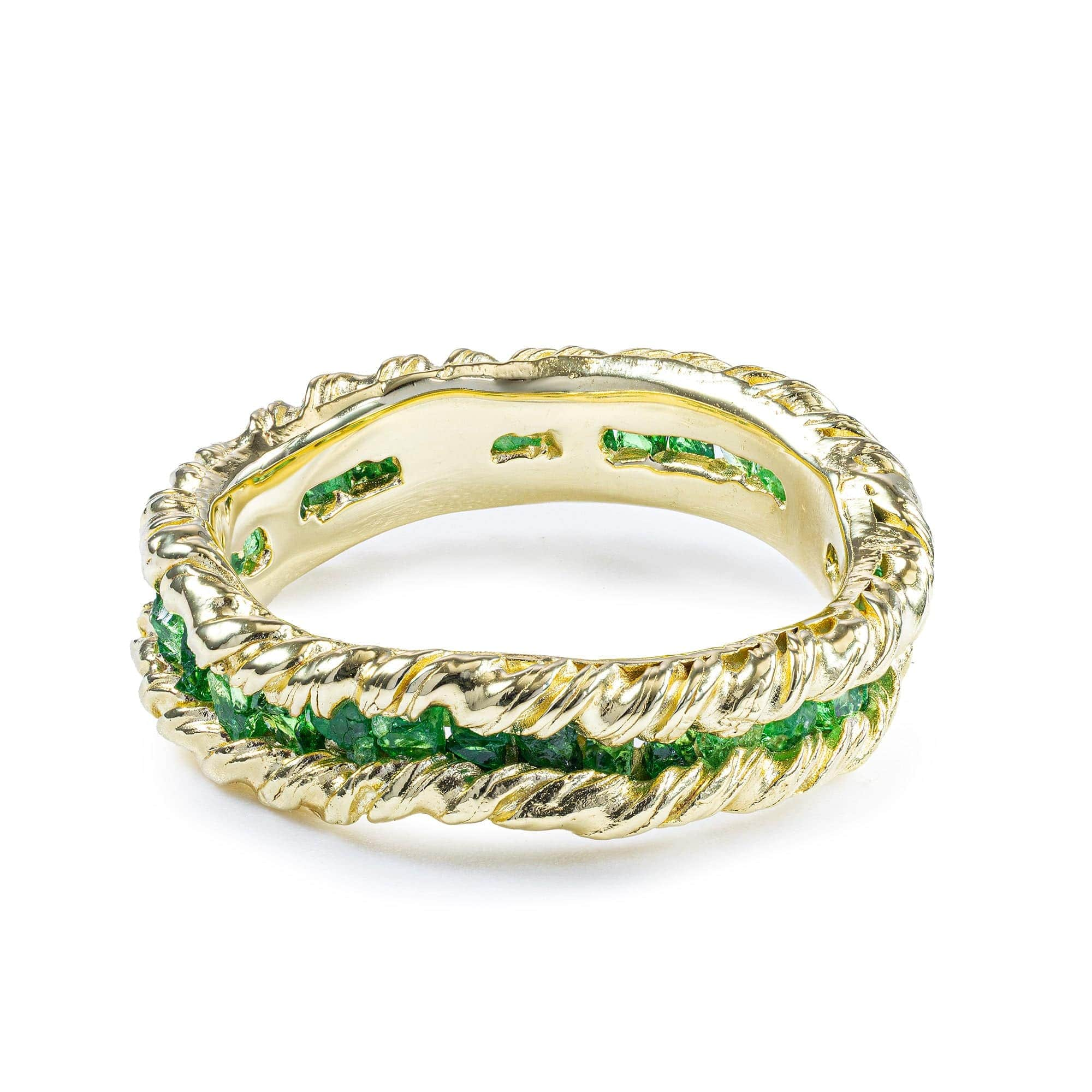
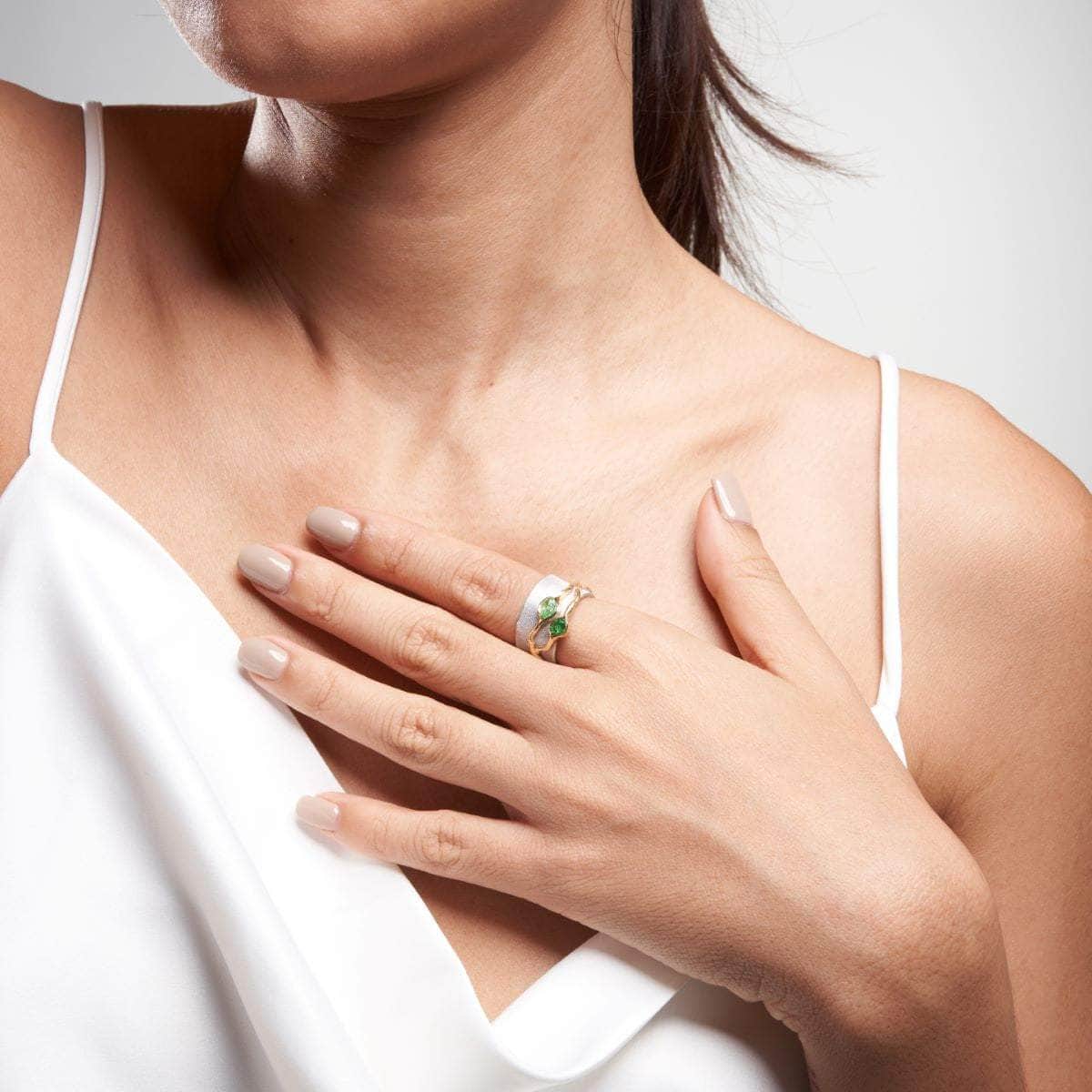
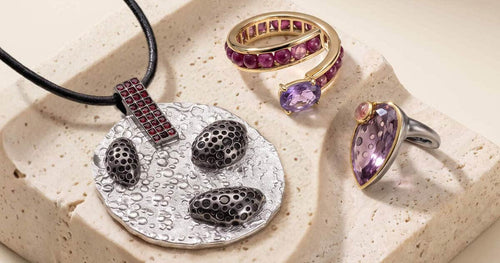
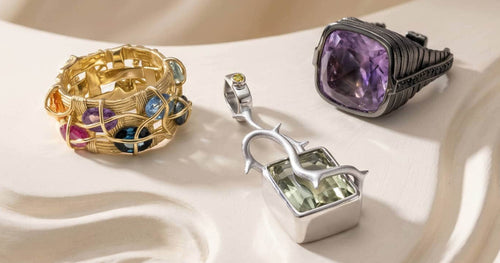
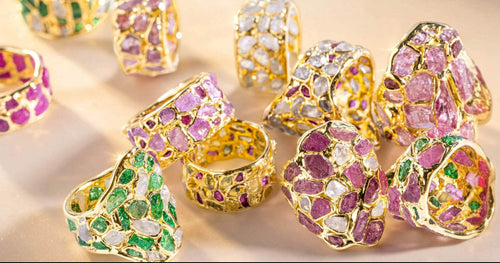
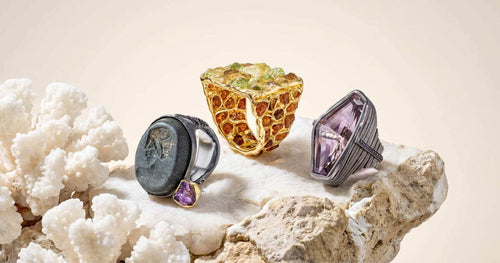
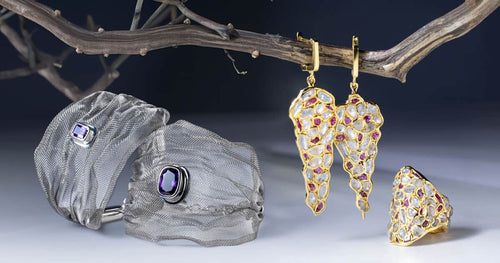
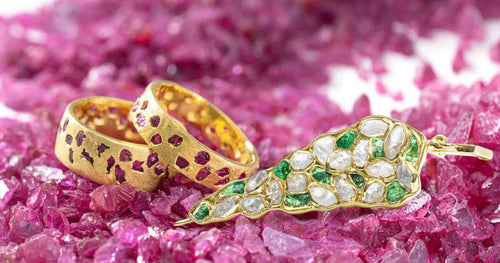
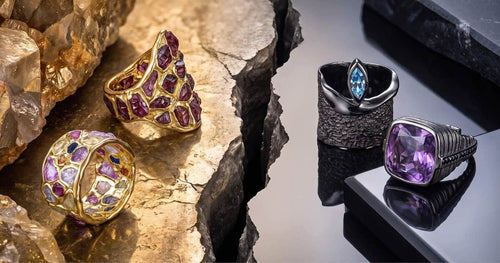
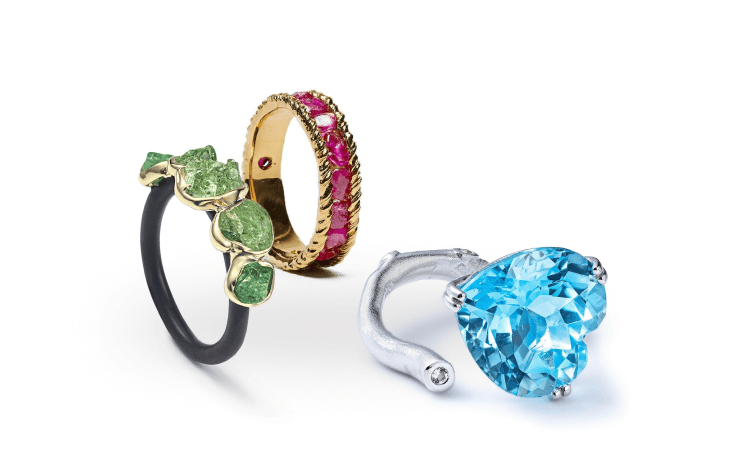
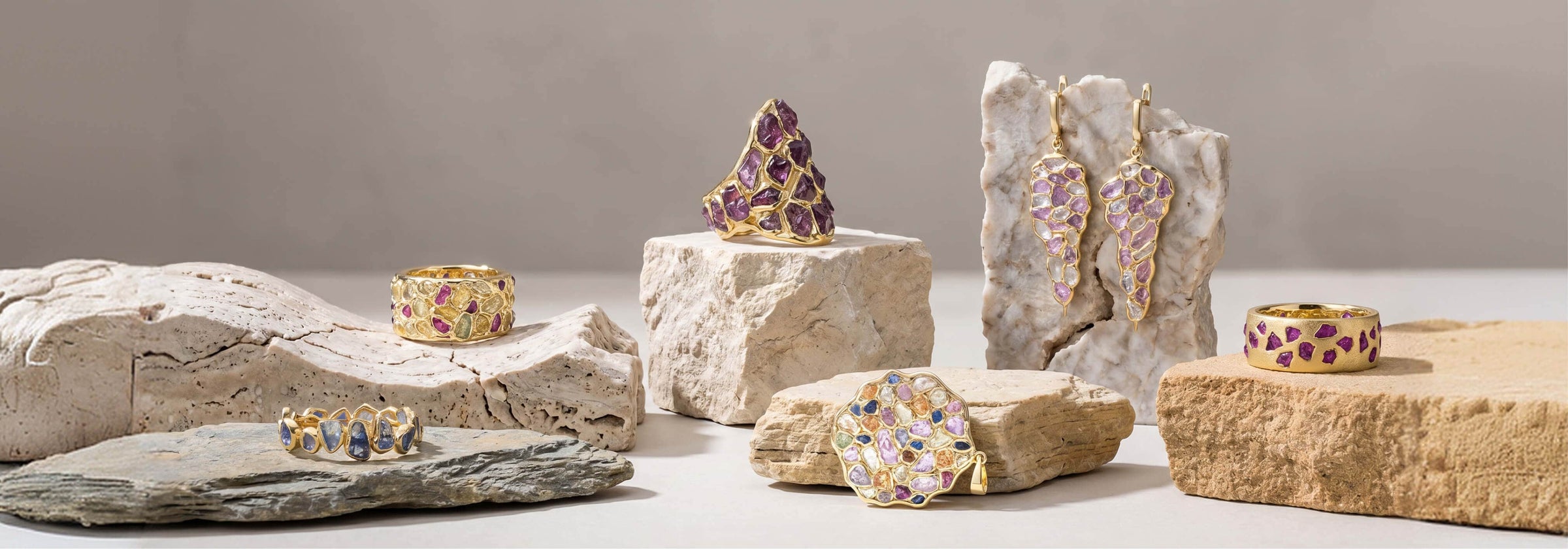
German Kabirski is a pioneer in raw gemstone settings, treating rough stones as the main protagonists of his wearable art rather than smoothing them into conventional cuts. He goes beyond large “boho” crystals, using innovative setting techniques to work with smaller rough gems like sapphire, spinel, ruby, garnet, tsavorite, spessartine, chrysoberyl, and chrome diopside. These irregular fragments are held in complex, sculptural metal structures that protect their edges while keeping every crack, inclusion, and natural contour visible, turning each jewel into a miniature geological sculpture.