

What Is Wearable Art? Definition, Examples, and Why It Matters
Wearable art turns the body into a statement. Explore how it breaks away from fashion, why it matters, and why collectors choose the unconventional.
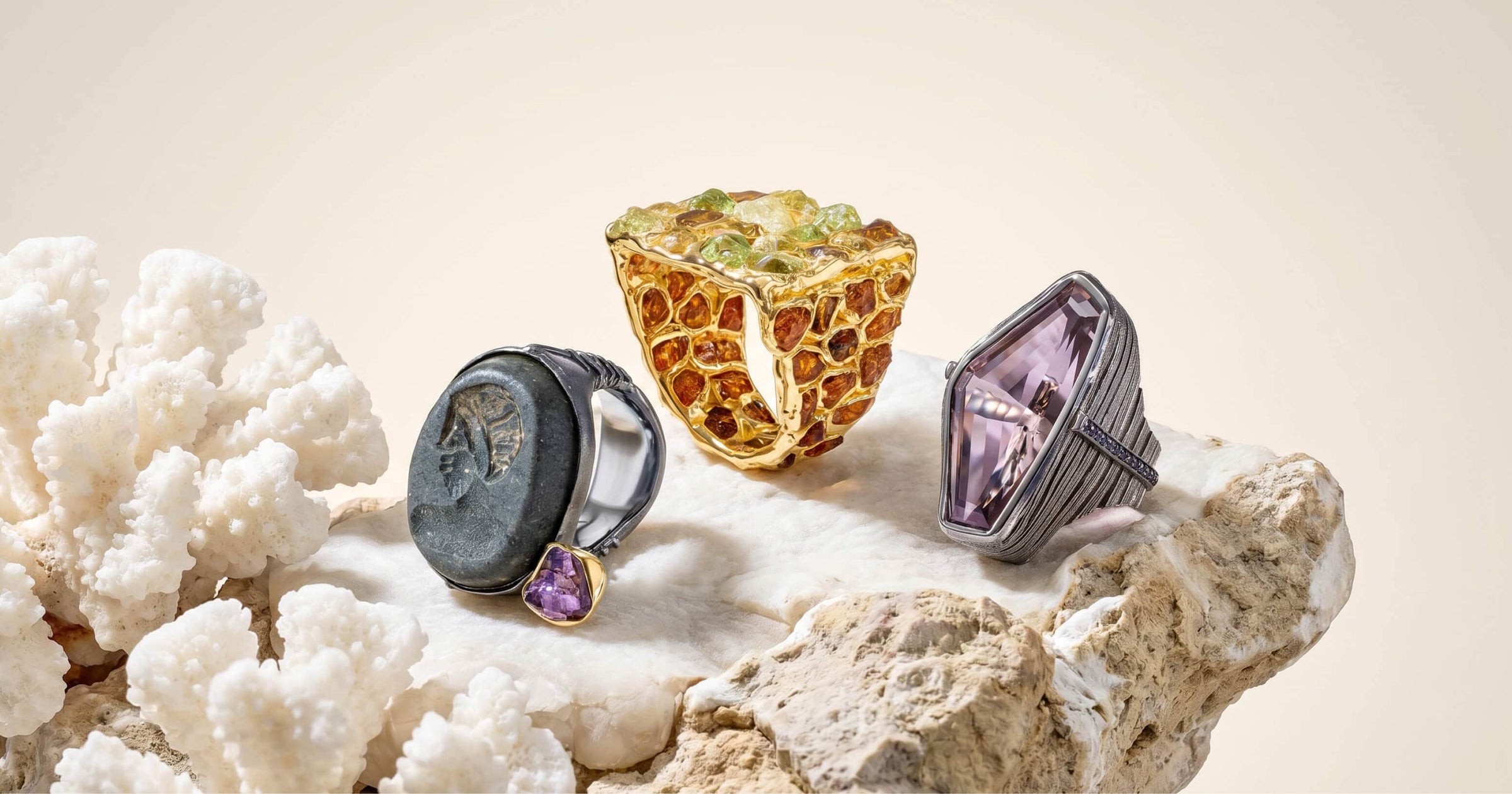
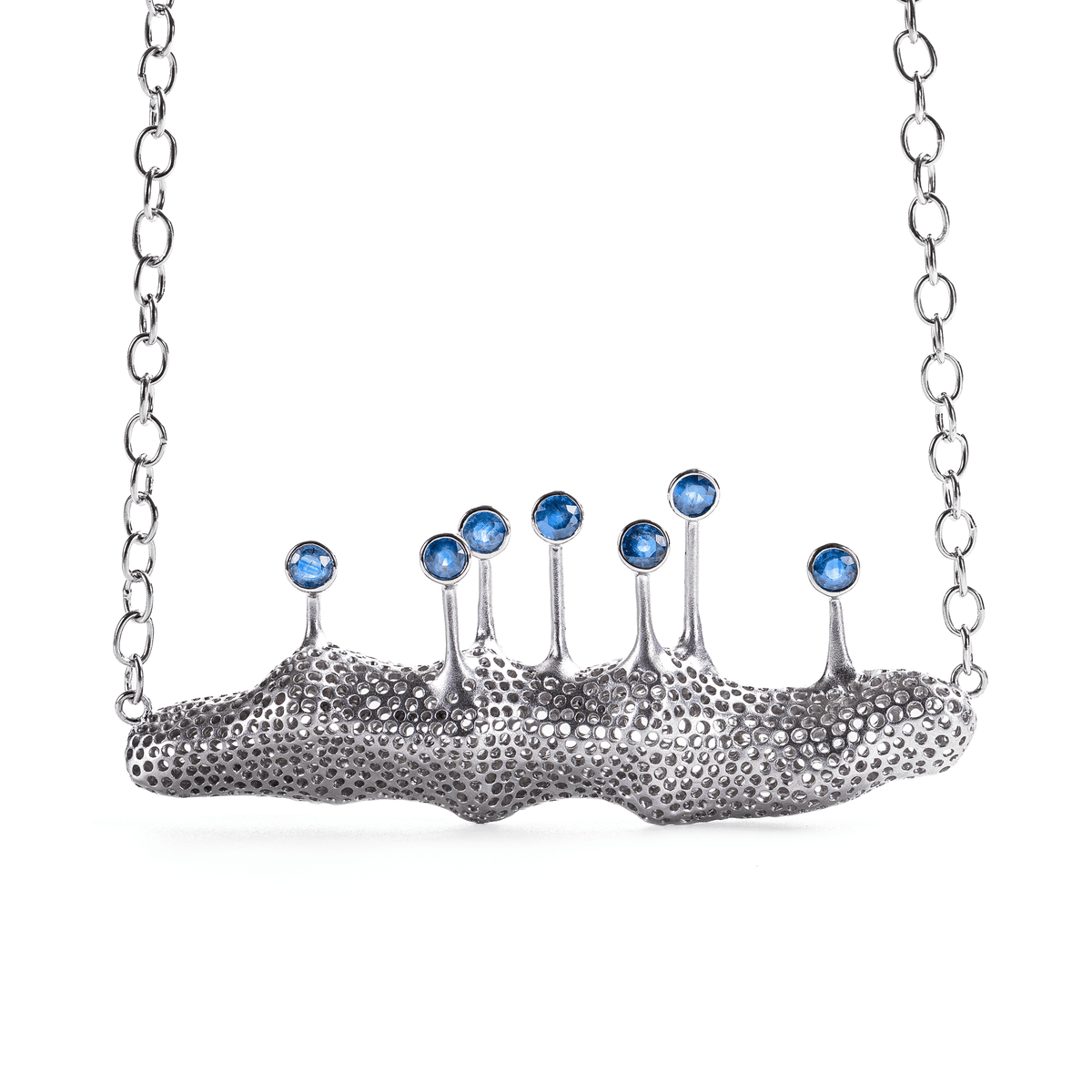
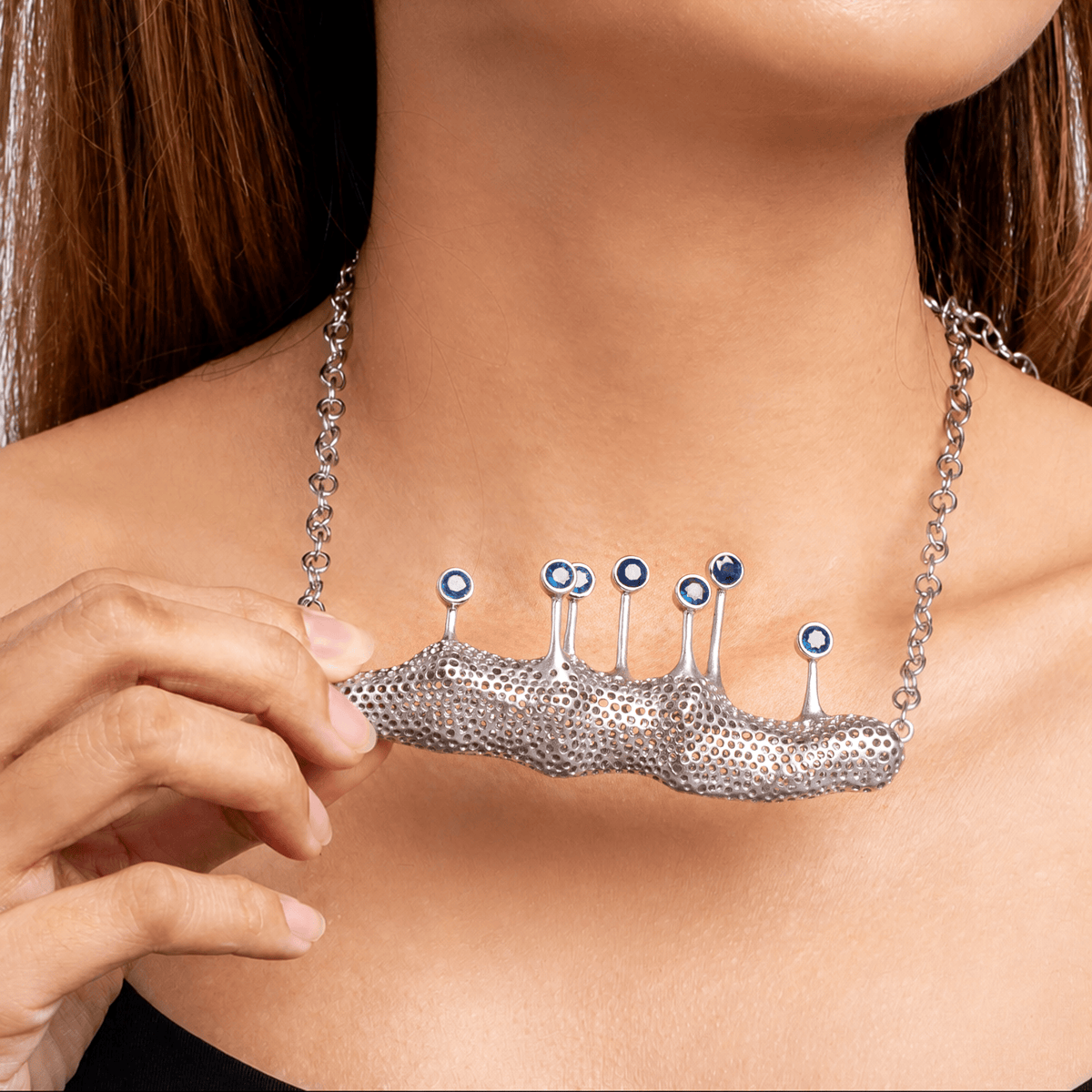
Wearable art is a form of artistic expression designed to be worn on the body, where the piece is conceived as art first and function second. Unlike conventional fashion or accessories, wearable art prioritizes concept, narrative, and visual impact, often resembling small-scale sculptures, moving installations, or experimental design objects. It can take many forms, including art jewelry, clothing, and body pieces, and is typically created to provoke thought, emotion, or curiosity rather than simply decorate.
Wearable art is a broader category that includes any art created to be worn on the body, while art jewelry is a specific subset within it. Jewelry is one of the most common forms of wearable art, but wearable art also includes garments, masks, and mixed-media body objects. The key difference is scope: art jewelry focuses on rings, necklaces, and similar pieces, whereas wearable art expands into the entire body as a canvas for artistic expression.
The distinction lies in intention. Fashion is primarily designed for style, trends, and wearability, while wearable art is created as an artistic statement that happens to be worn. Wearable art often challenges traditional ideas of beauty, proportion, and practicality, using unconventional forms, materials, or concepts. While fashion aims to be widely appealing and functional, wearable art may be provocative, experimental, or even uncomfortable, prioritizing meaning over mass acceptance. A sculptural art jewelry piece becomes wearable art when its main purpose is artistic expression rather than decoration.
Wearable art is often handmade or produced in small studios because the creative process involves experimentation, irregular forms, and material exploration that are difficult to replicate through mass production. However, it is not strictly limited to handcraft. Some artists incorporate technology or hybrid techniques, but even then, the defining element remains artistic control and originality rather than industrial uniformity.
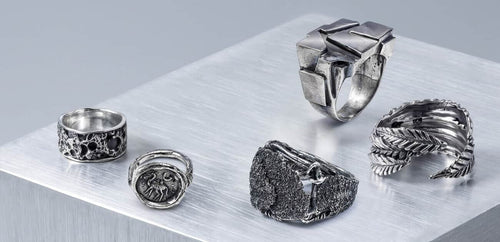
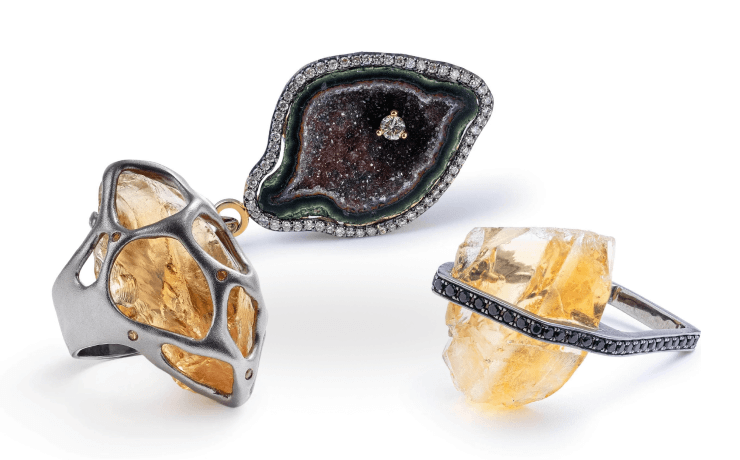
Wearable art can be created from virtually any material, depending on the artist’s concept. Common materials include metals, textiles, wood, and ceramics, but many artists also incorporate unconventional elements such as raw stones, found objects, recycled fragments, or industrial materials. These materials often appear in art jewelry as well, where the choice of material is symbolic and contributes to the narrative or emotional impact of the piece rather than simply serving a decorative function.
Artists create wearable art as a way to bring art into daily life and onto the human body, turning the wearer into part of the artwork. It allows for a more intimate and dynamic interaction than static art forms like painting or sculpture. Wearable art can express identity, challenge cultural norms, explore materials, or communicate ideas that are difficult to convey through traditional mediums.
Collectors are drawn to wearable art because it combines the emotional and conceptual depth of fine art with the physical presence of an object they can wear or display. Many pieces are one of a kind or produced in very limited quantities, which adds rarity and personal value. For collectors, wearable art is not just an accessory but a tangible connection to an artist’s vision, often carrying a sense of individuality that mass-produced items cannot offer.
Most wearable art is unique or created in limited editions, as the artistic process often involves handwork, experimentation, and material variation. Even when designs are repeated, no two pieces are exactly identical due to differences in texture, composition, or finishing. Mass production is generally avoided because it reduces the originality and expressive quality that define wearable art.
Styling wearable art typically involves letting one piece take visual priority. A sculptural ring, bold necklace, or experimental garment can act as the focal point, while the rest of the look remains minimal to avoid visual conflict. For a more expressive approach, multiple pieces can be combined, but they should share a common tone, material, or conceptual direction to maintain coherence. The goal is not to match an outfit, but to build an atmosphere around the artwork.
Wearable art is created by a wide range of artists, including jewelry designers, fashion designers, sculptors, and multidisciplinary creatives. Some, like Alexander McQueen and Rei Kawakubo, approached the body as a site for radical artistic expression through fashion, while others, such as Nick Cave or Lucy Orta, blur the line between wearable objects and performance art. In the field of art jewelry, creators like German Kabirski, Jiro Kamata, and Karl Fritsch are known for pushing materials and form beyond conventional expectations. Many wearable artists come from fine art backgrounds and use the body as an alternative medium, while others emerge from design fields but move beyond commercial constraints into more experimental territory. Independent studios and artist-led brands play a major role in this space, as they allow for greater creative freedom.
Wearable art can hold significant value, particularly when it is created by recognized artists or produced in limited quantities. Its value is influenced by factors such as originality, craftsmanship, conceptual strength, and the artist’s reputation. Because it exists at the intersection of art and design, wearable art is often collected both as a personal adornment and as a form of investment in contemporary creative work.
Yes, wearable art can appreciate in value, especially when the artist gains recognition or when the work becomes rare in the market. Limited production, distinctive style, and strong artistic identity all contribute to long-term desirability. As demand grows and availability decreases, certain pieces of wearable art may become highly sought after by collectors and galleries.
Contemporary wearable art is defined by its experimental approach to form, material, and meaning. It often reflects current cultural, social, or artistic dialogues, pushing boundaries between disciplines such as fashion, sculpture, and design. Artists such as Iris van Herpen in couture, Hussein Chalayan in conceptual fashion, and Nick Cave with his sculptural “Soundsuits” demonstrate how wearable art can move beyond clothing into performance and installation. In art jewelry, designers like German Kabirski, Otto Künzli, and Gijs Bakker challenge traditional forms by treating jewelry as a medium for ideas rather than decoration. Modern wearable art tends to reject traditional standards of beauty and instead embraces individuality, imperfection, and conceptual depth, making each piece a reflection of its time and the artist behind it.
Wearable art carries a point of view. It can express identity, rebellion, memory, or a fascination with history and material. A German Kabirski piece set with a genuine Mediterranean artifact isn't just decorative—it's a fragment of an actual past life, reframed and worn as a personal statement about what beauty and value mean.
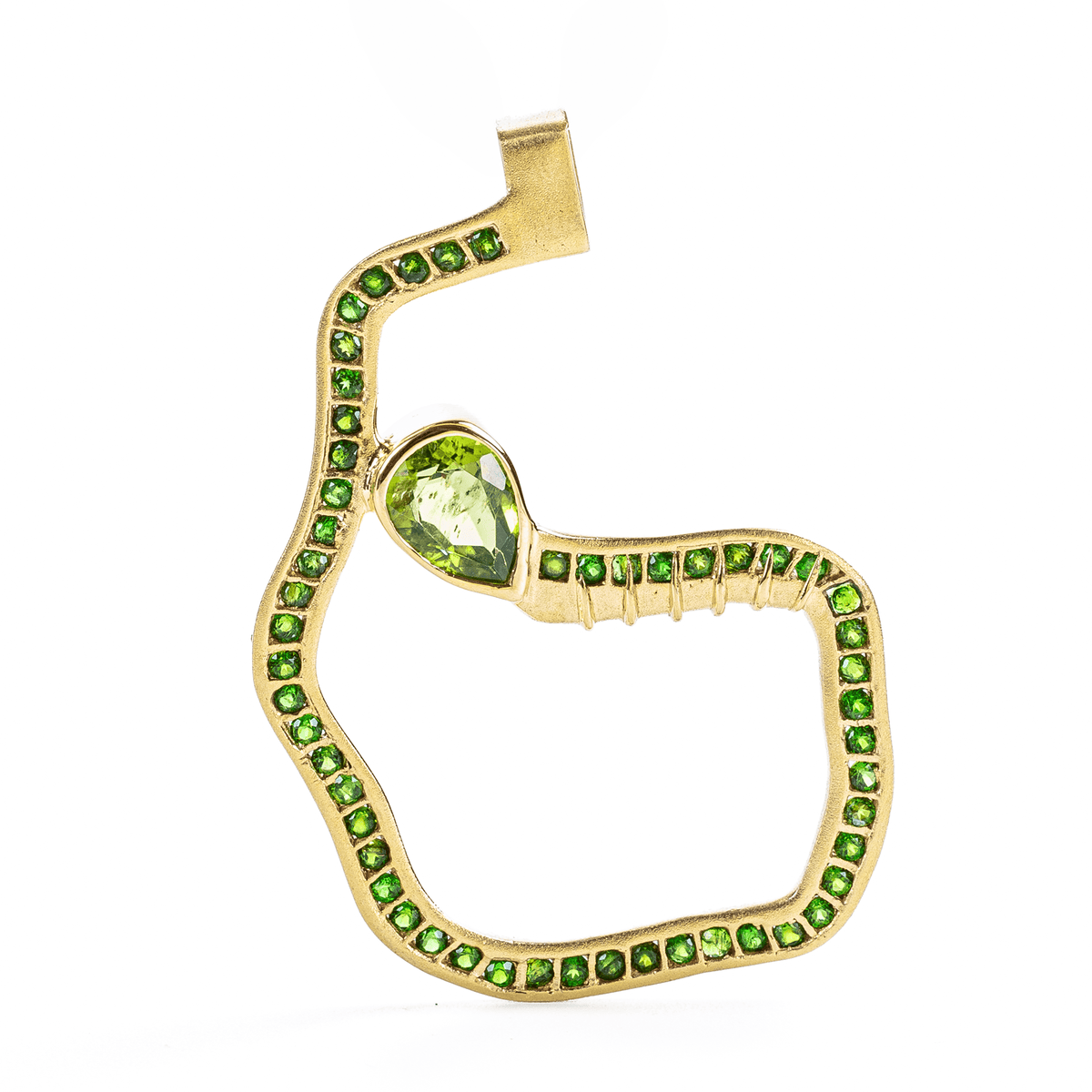
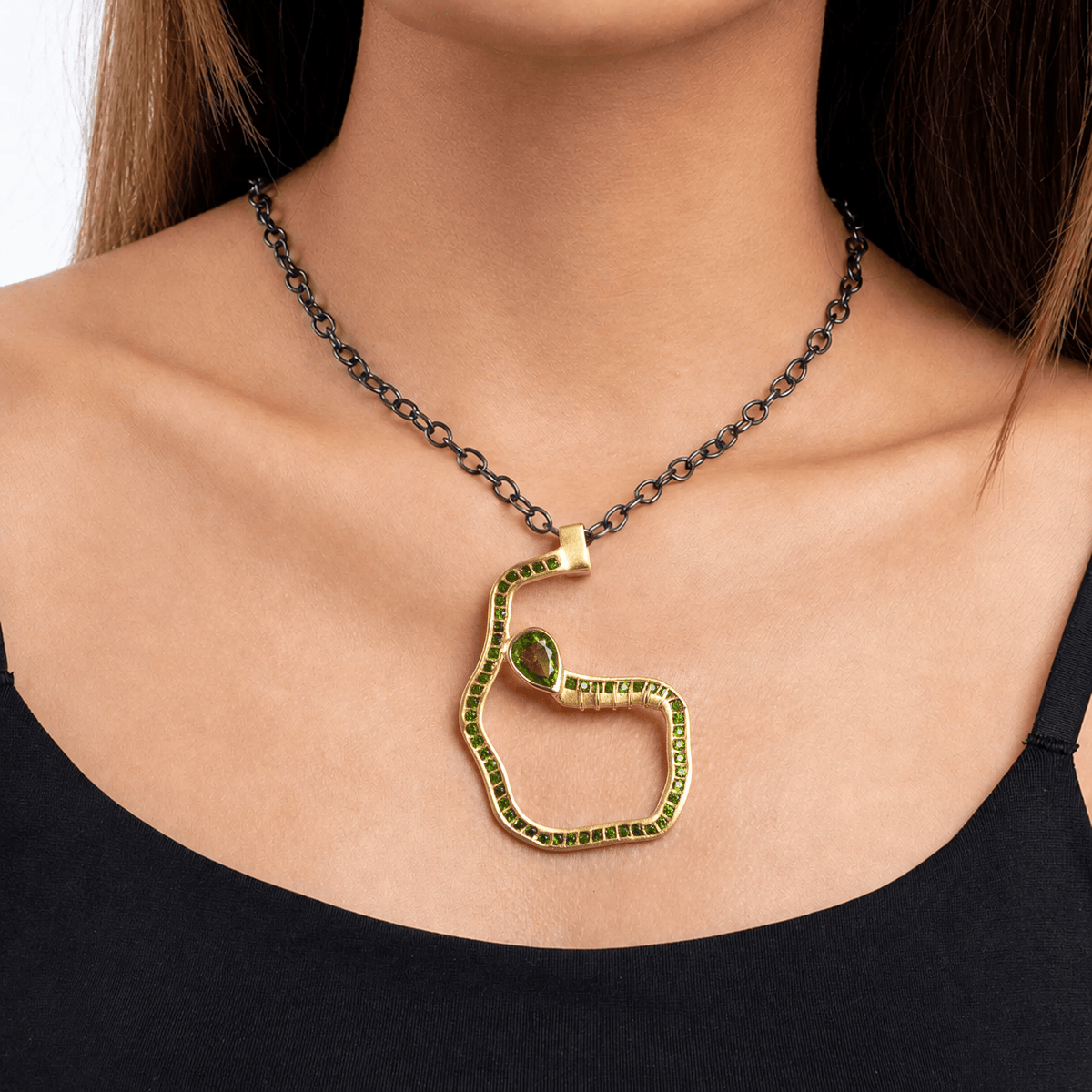
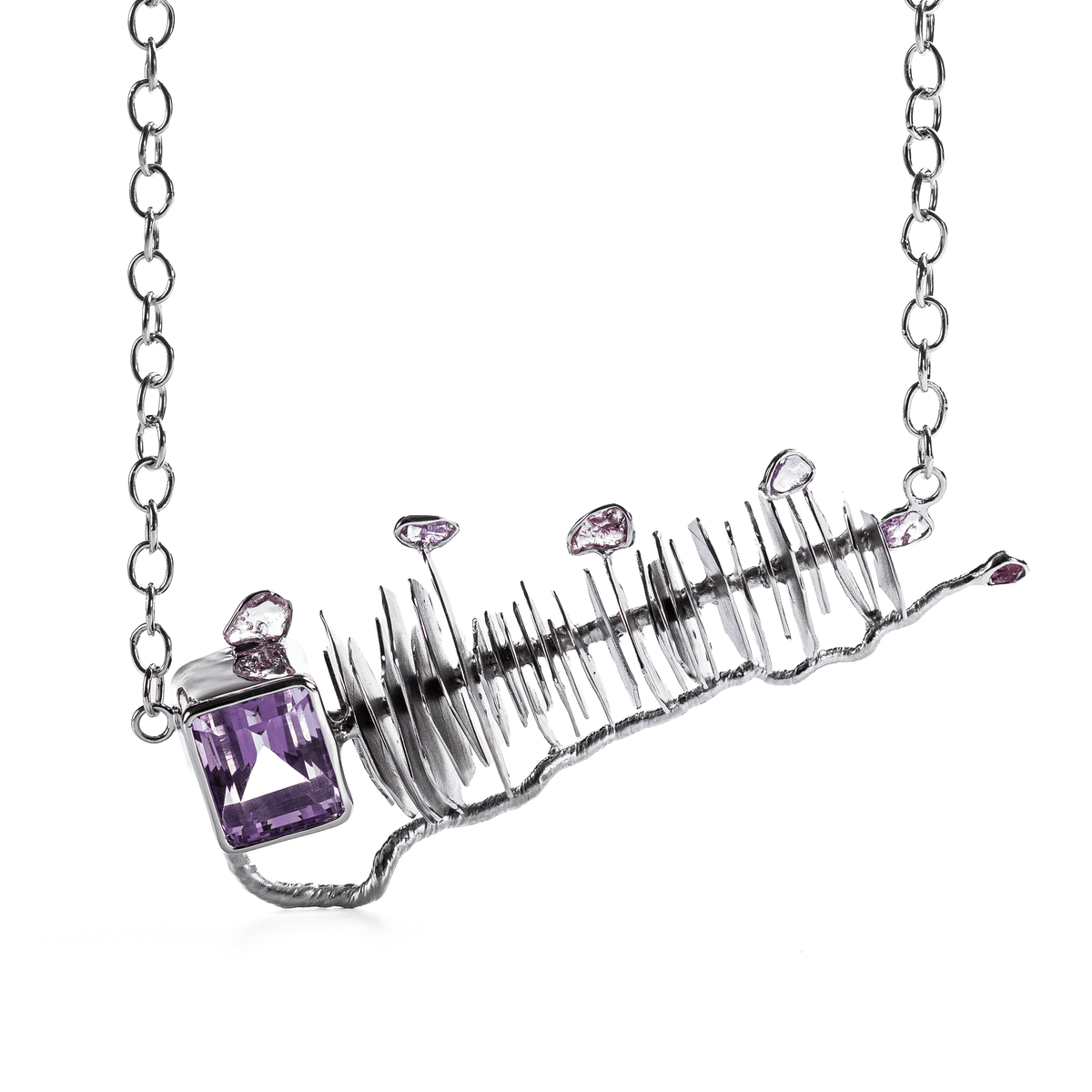
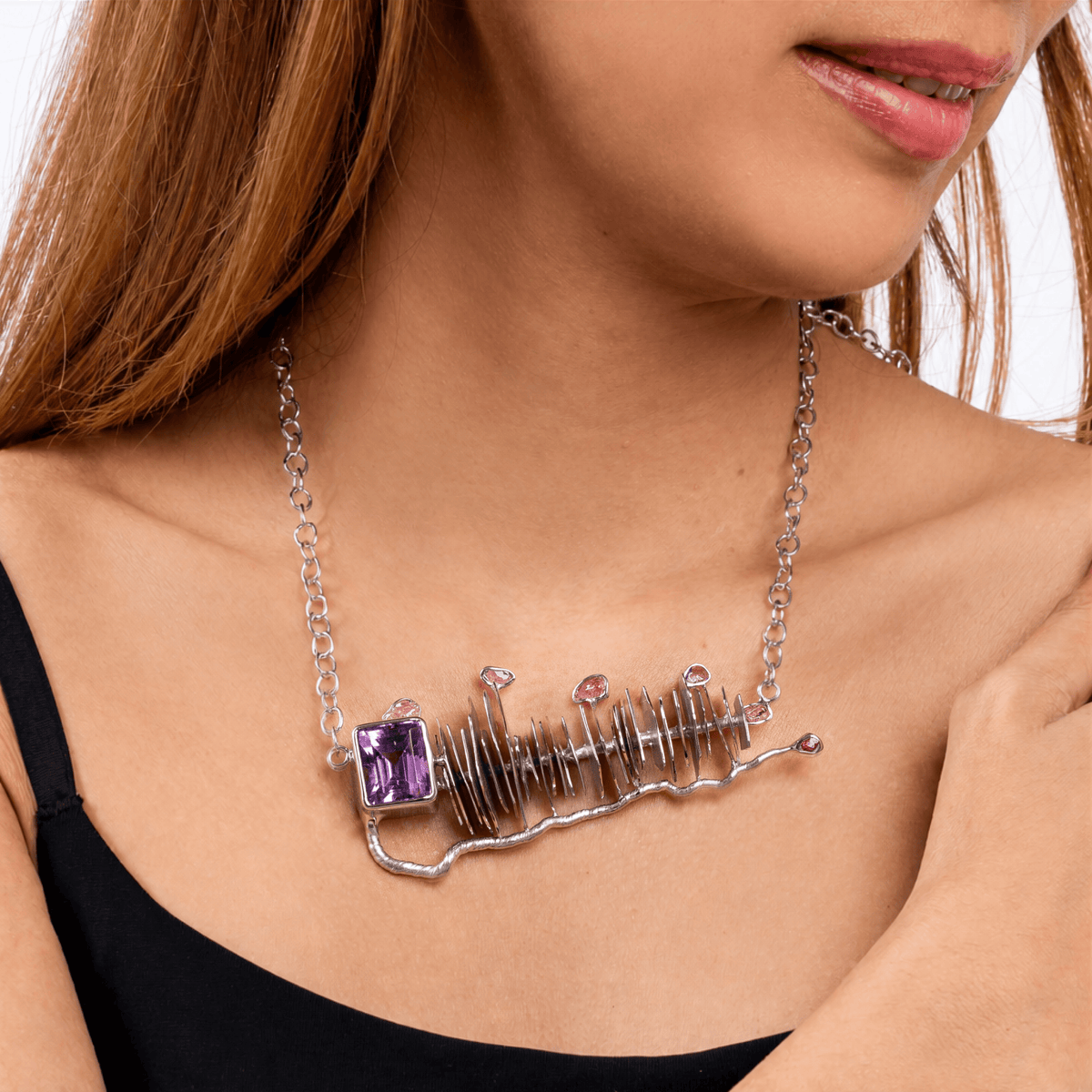
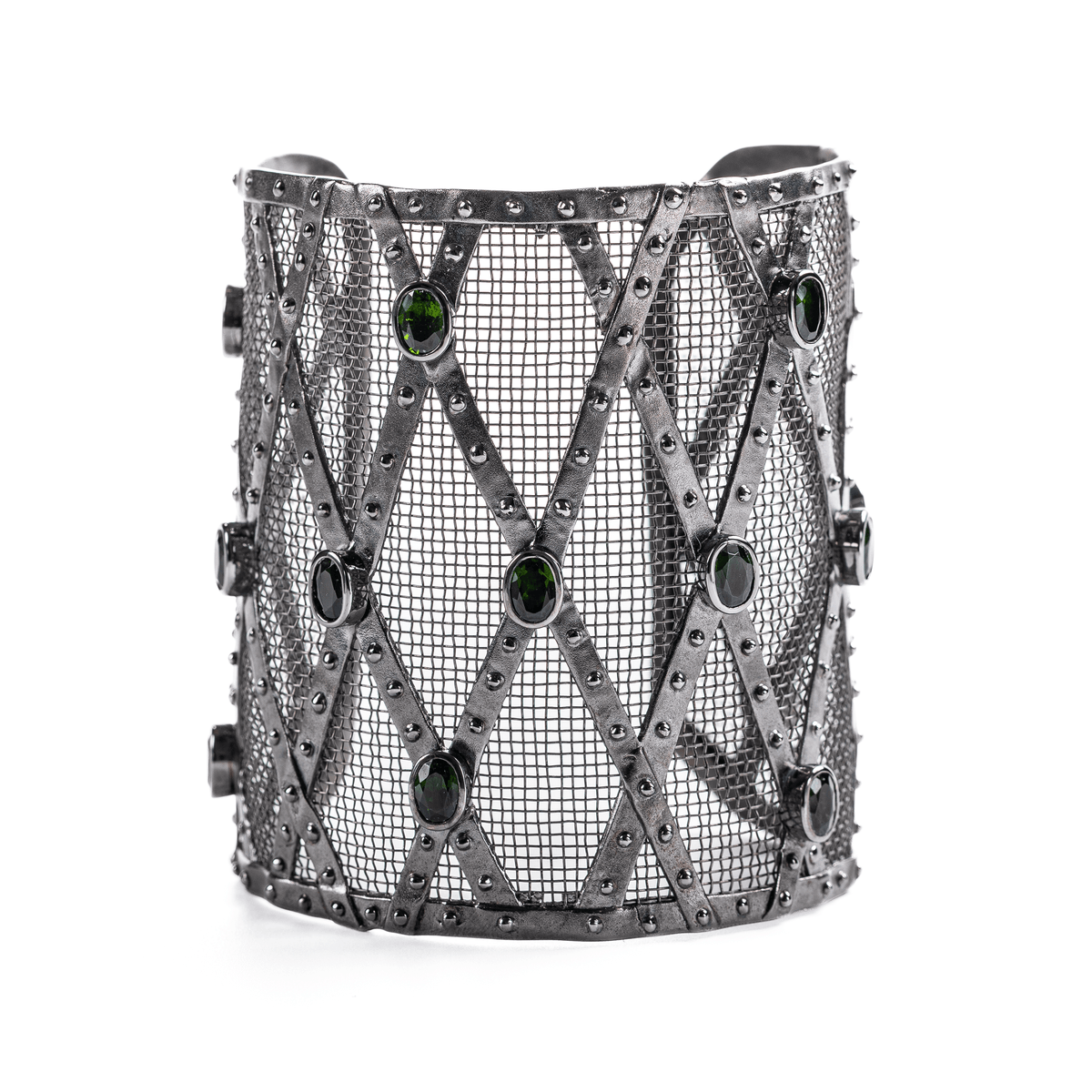
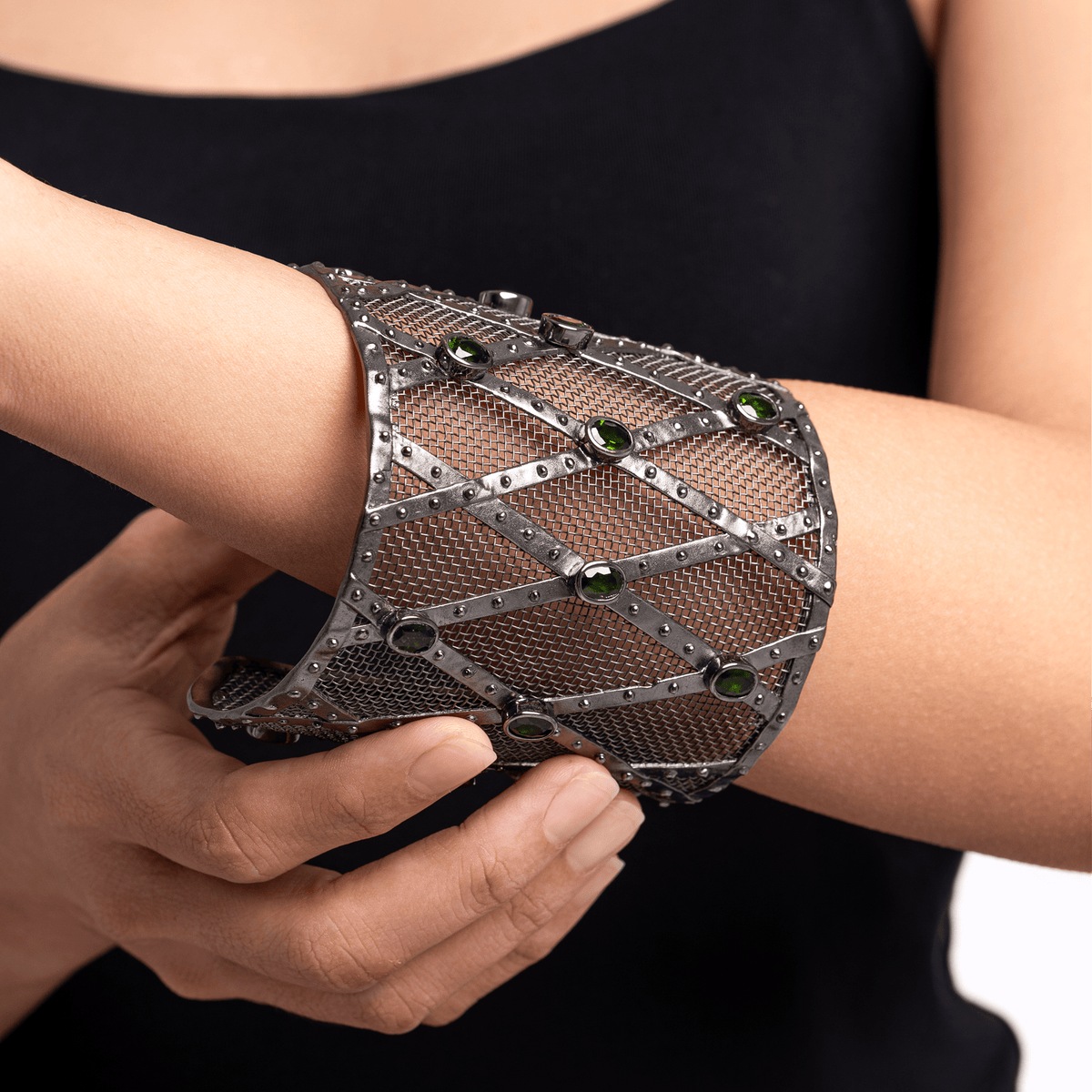
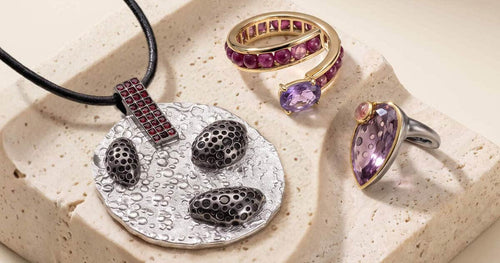
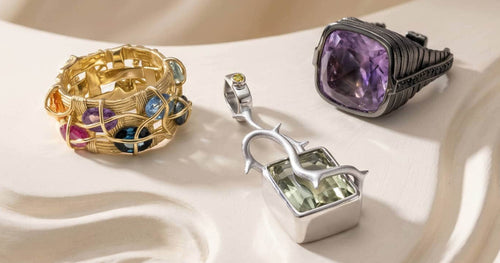
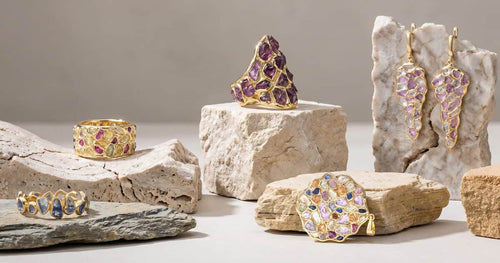
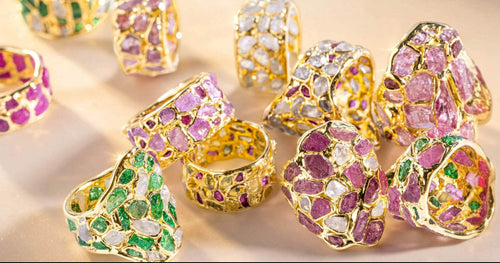
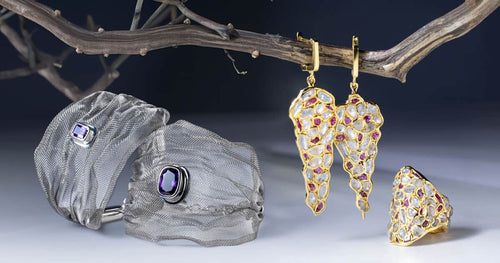
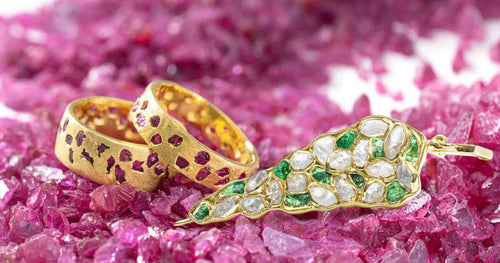
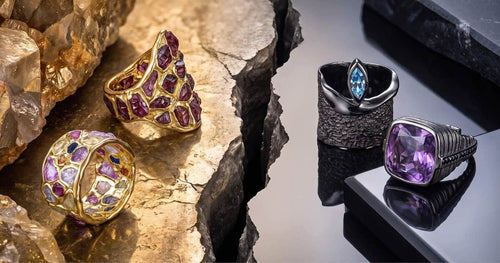
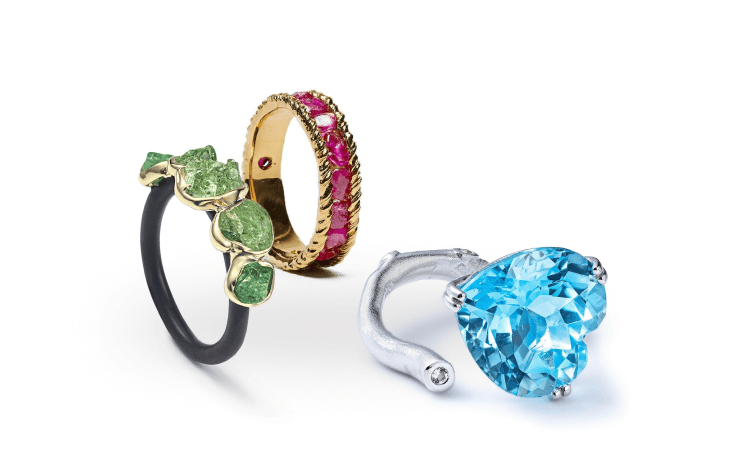
Wearable art jewelry tends to reach beyond standard gold and silver into more unexpected territory: soft and hard titanium mesh, dark anthracite-style plating, raw uncut gemstones like sapphire, ruby, garnet, and chrome diopside, and sometimes genuine ancient artifacts or found objects set directly into the design. This is where German Kabirski's work is a strong reference point, having built an entire design language around these materials.