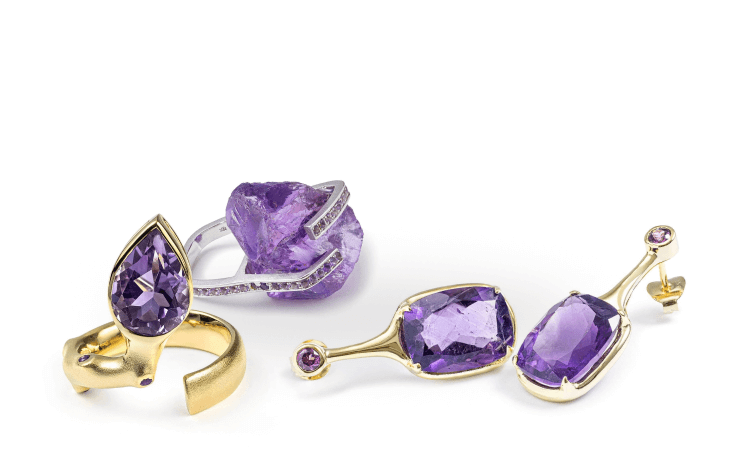


Why Imperfections Matter In Handmade Jewelry
This page examines why hand-forged textures, uneven surfaces, and natural stone characteristics like inclusions and color banding are treated as a feature rather than a fault in handmade jewelry, and how they connect to design philosophy and collector value.
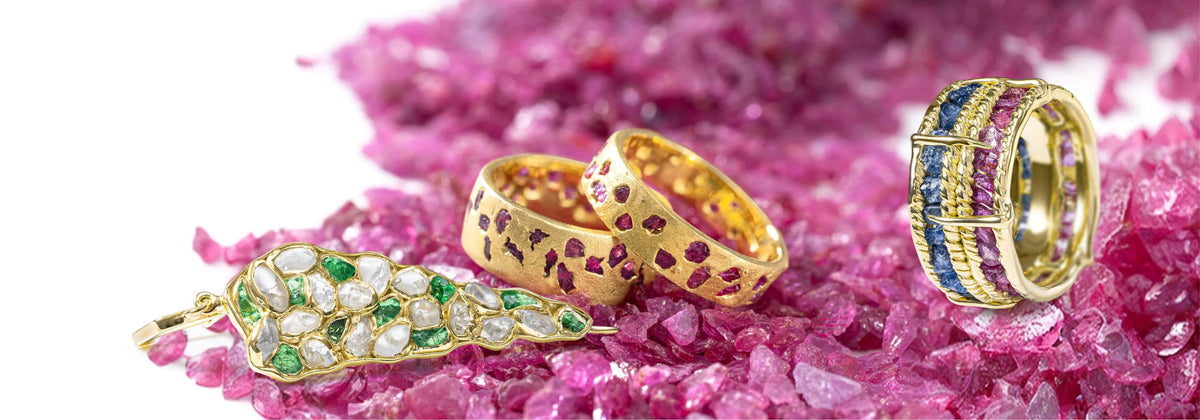
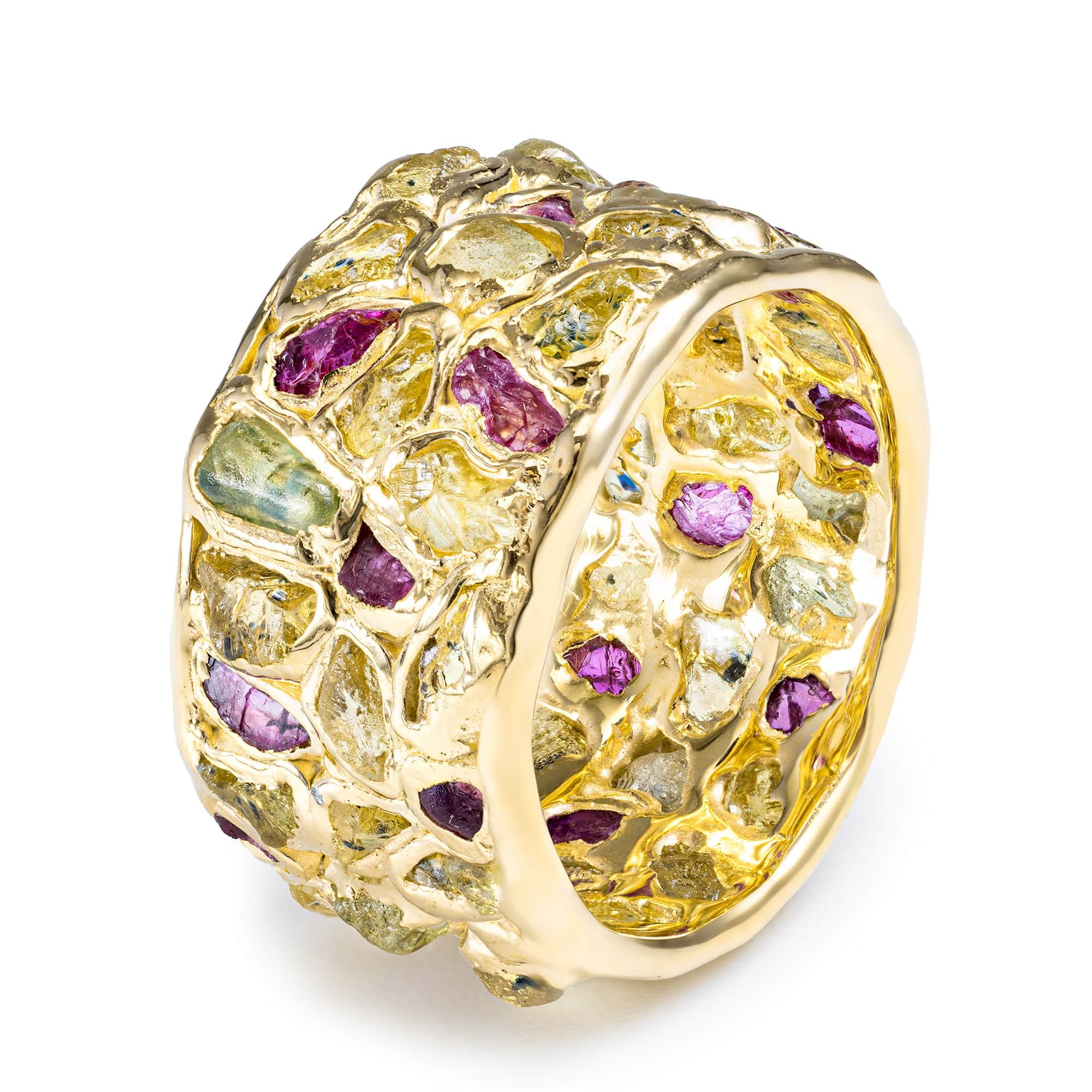
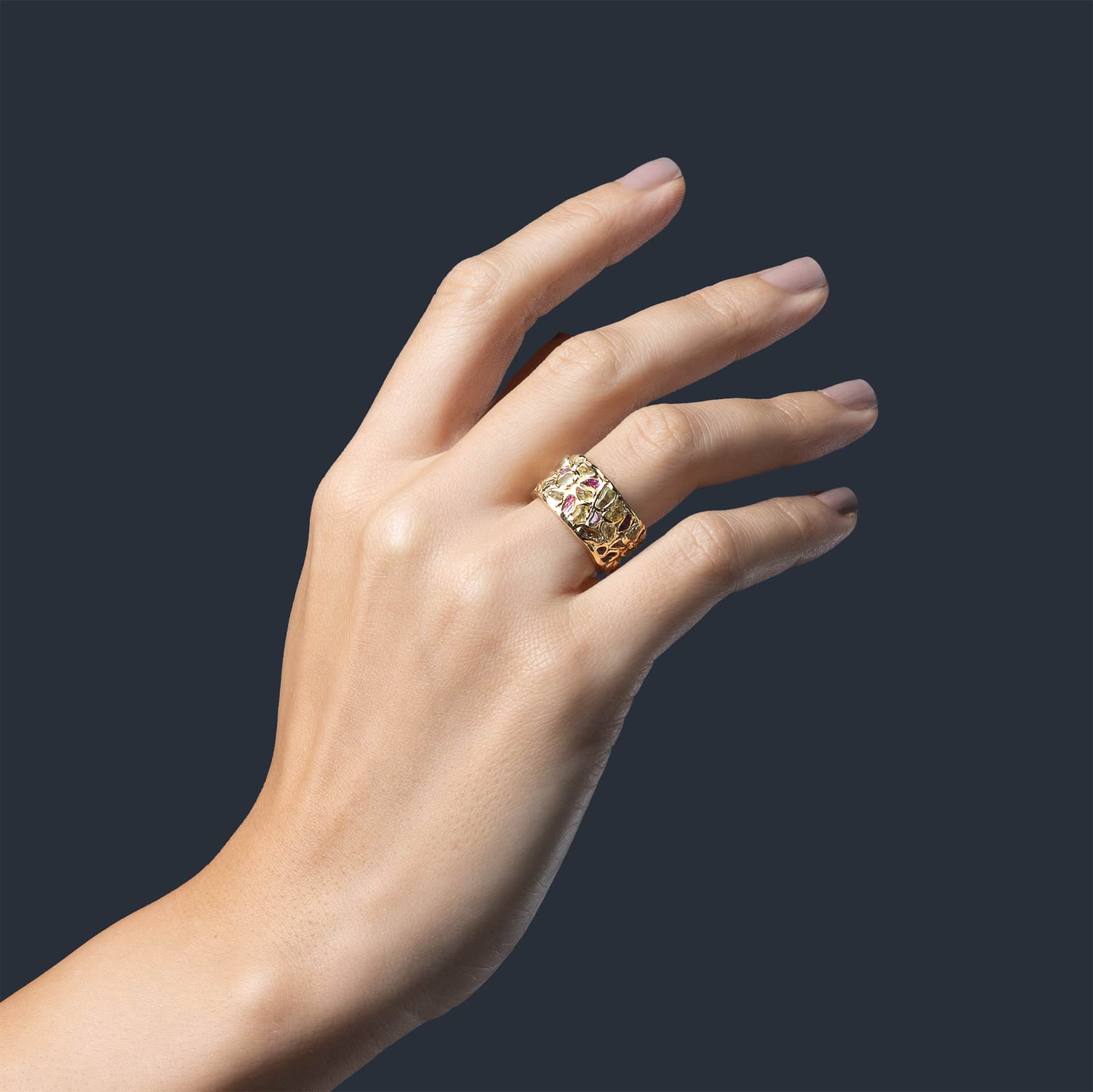
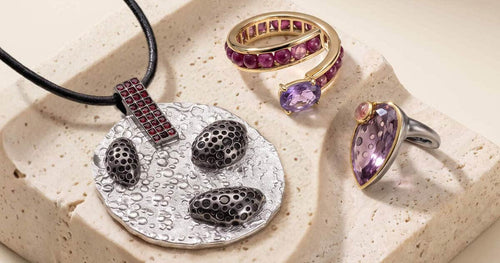
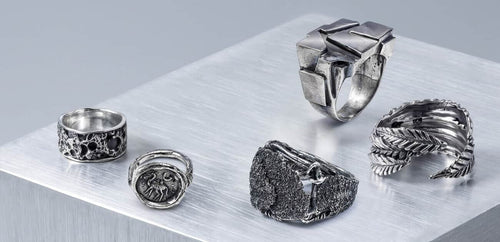
Not in handmade jewelry. A hammered surface that catches light unevenly, a texture carved by hand into wax before casting, an edge that isn't perfectly straight—none of this is a flaw. It's the direct result of a tool or a hand working the material, whether that's metal struck with a hammer or wax shaped and textured before it ever becomes a piece. No 3D render or CAD file can fake this convincingly.
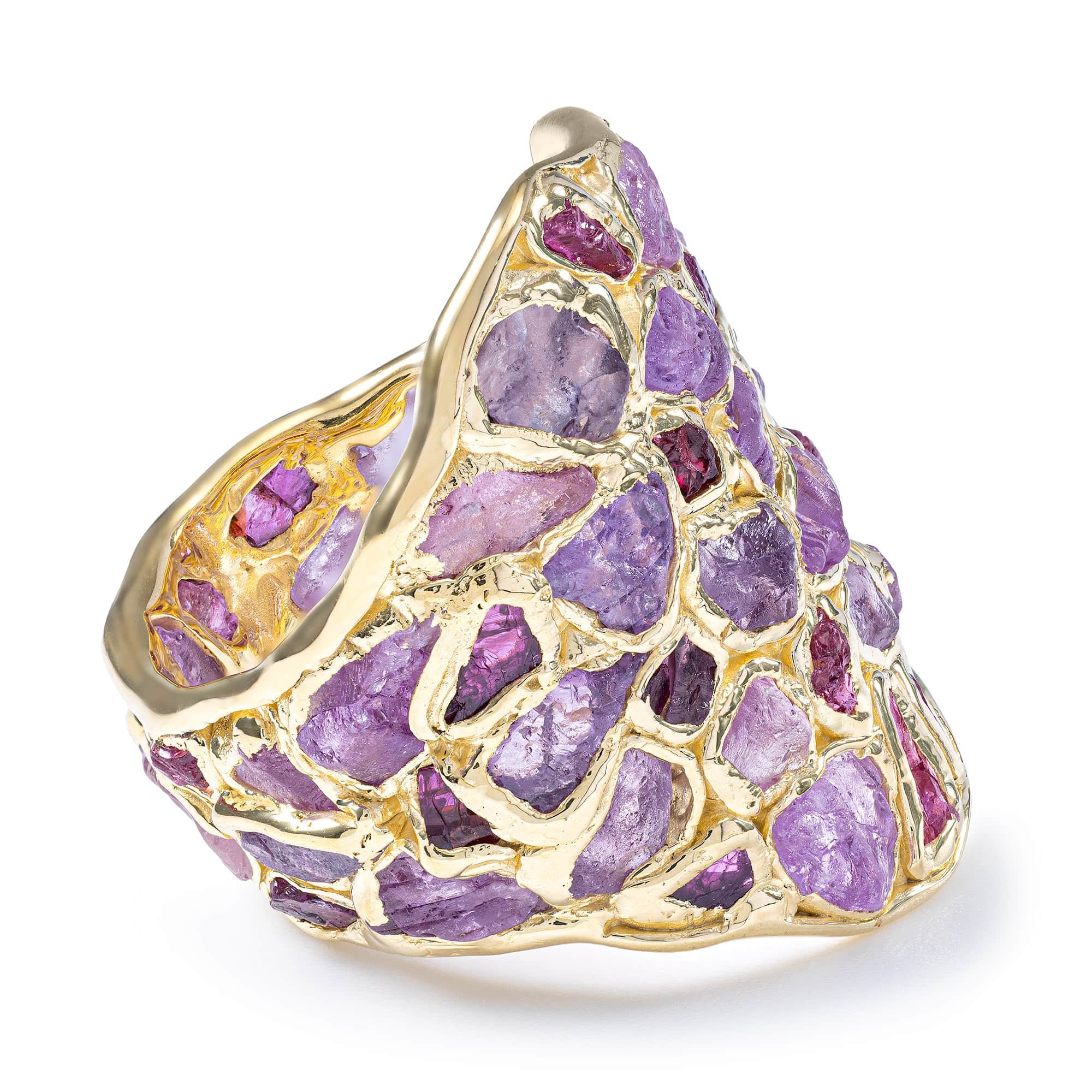
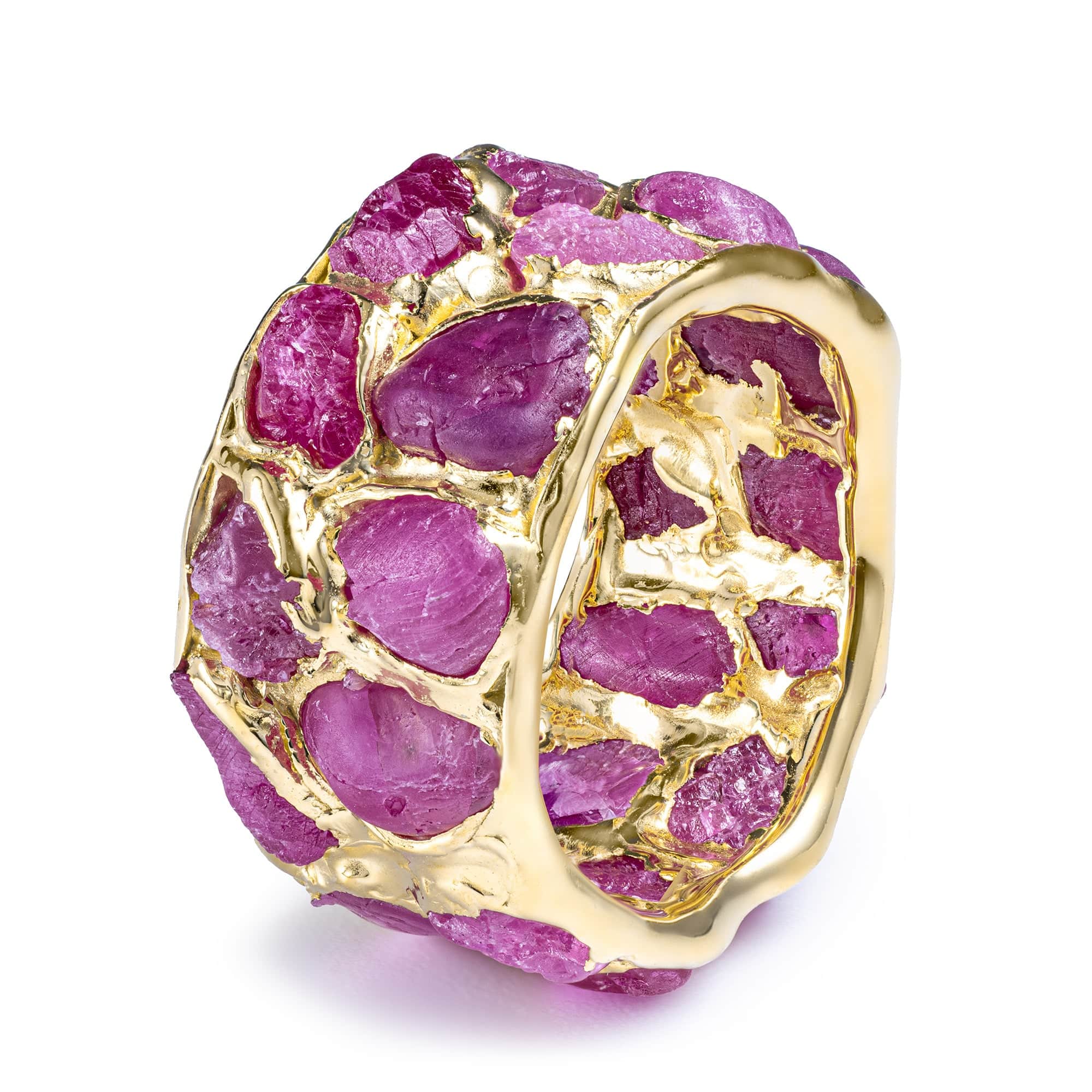
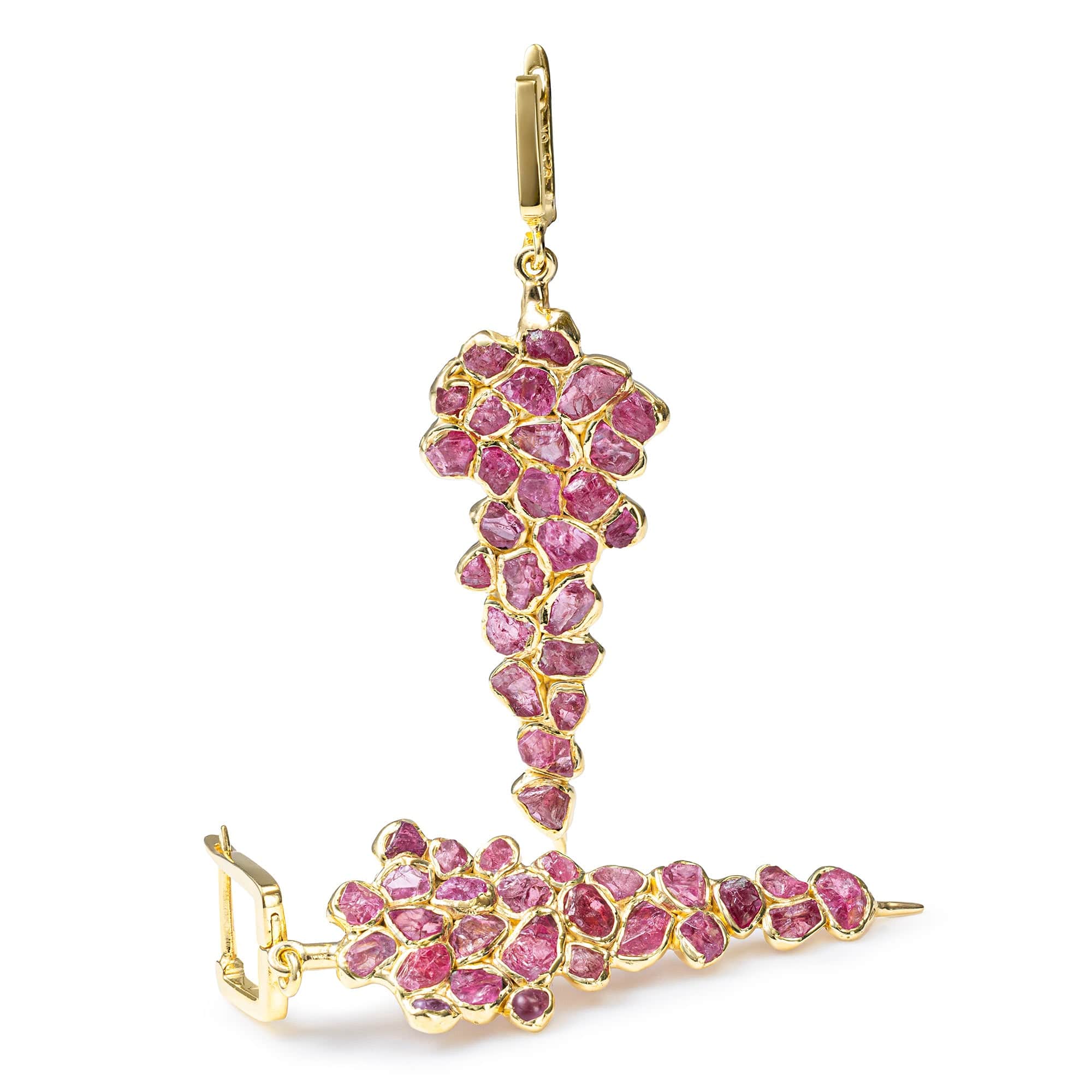
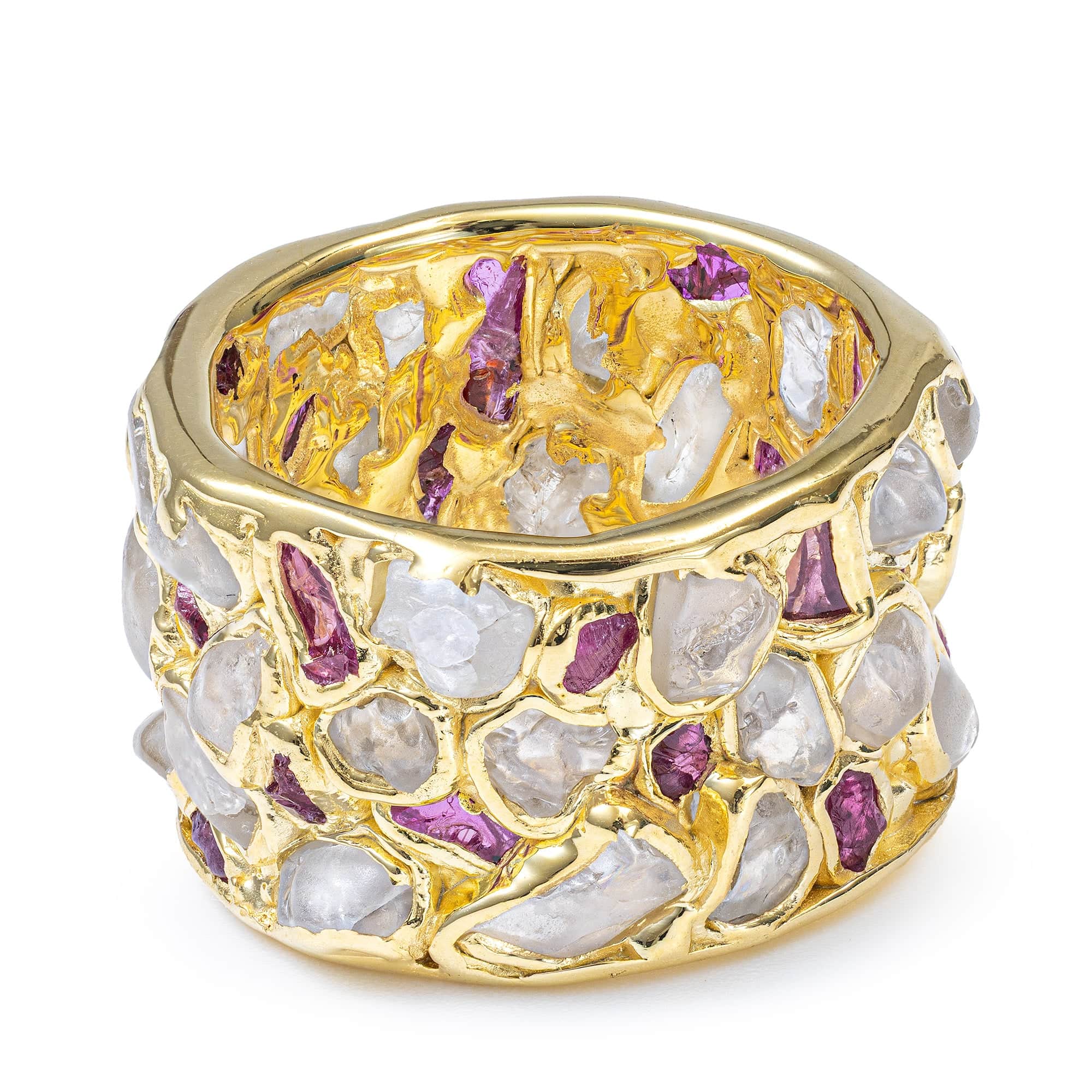
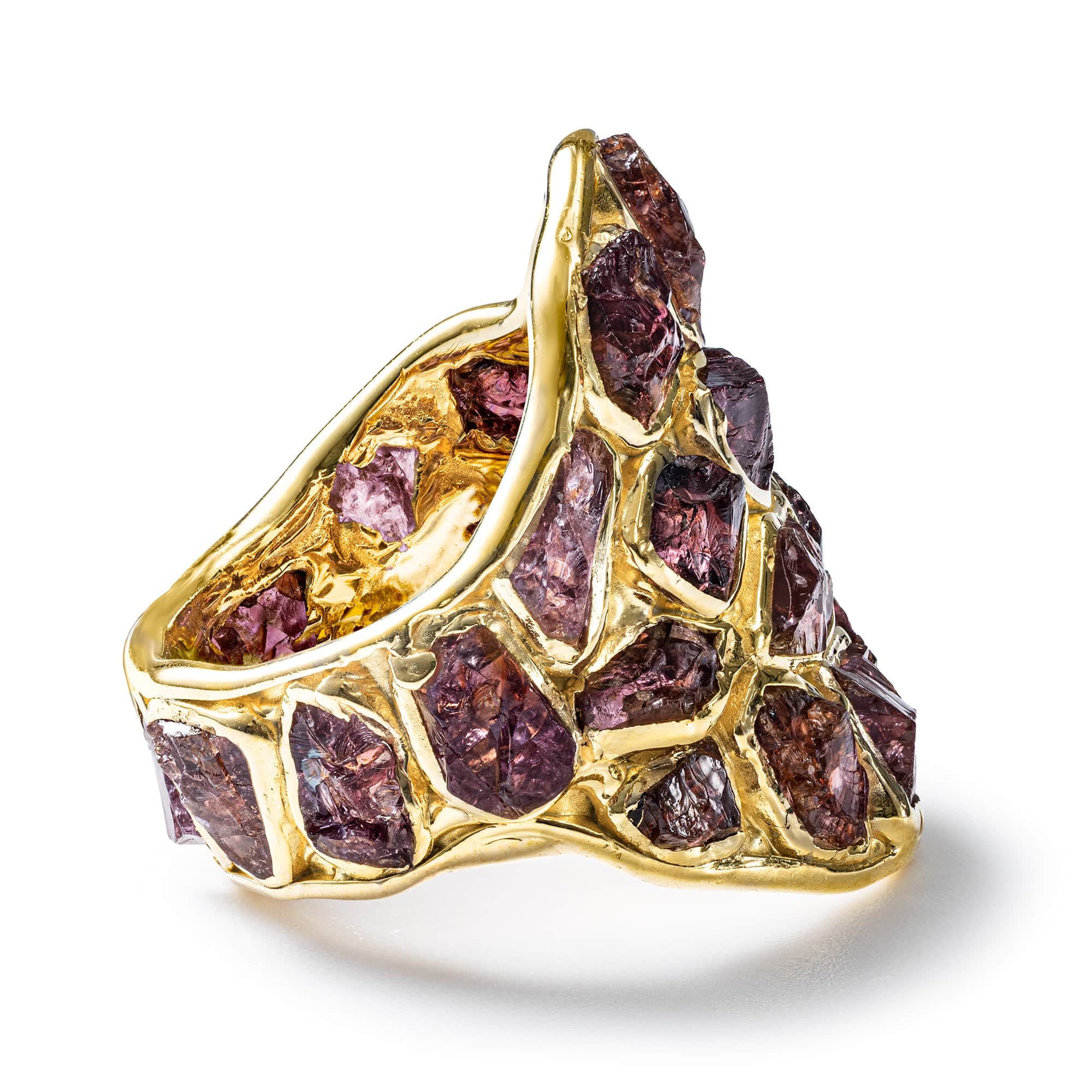
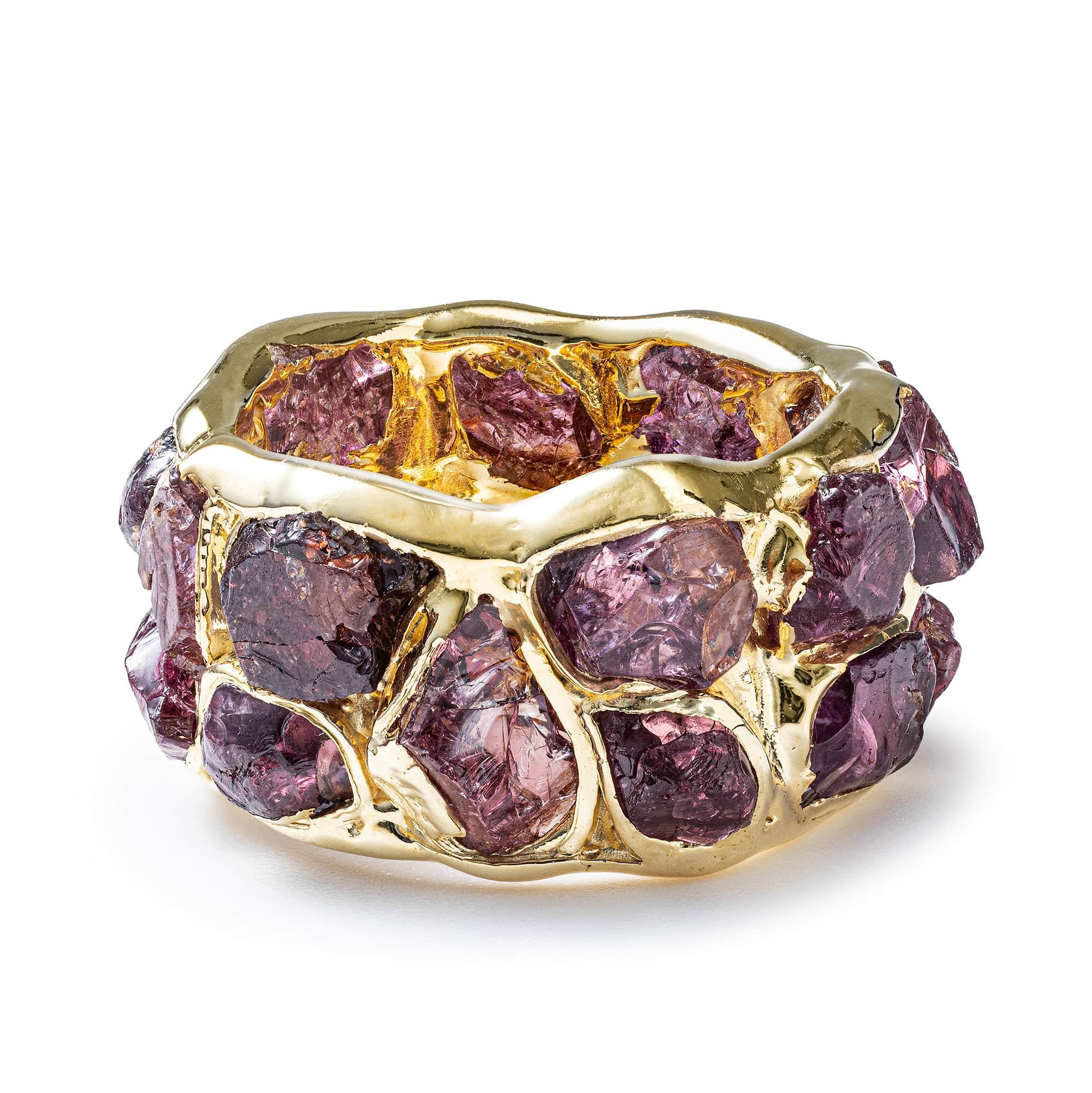
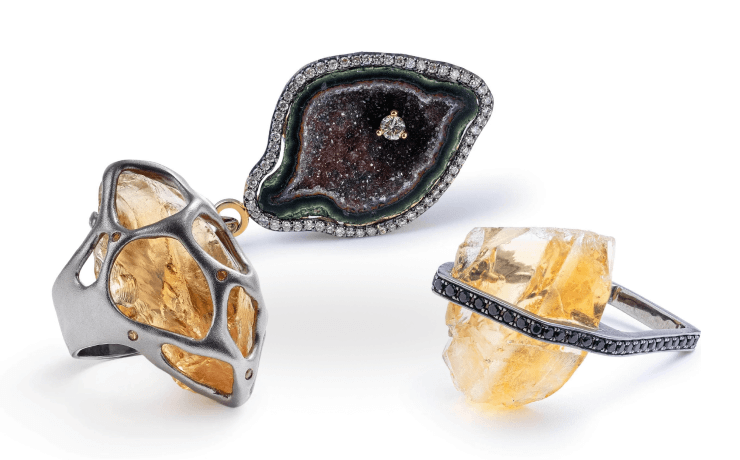
Some texture comes from forging metal directly—hammering or compressing it so the surface carries marks from every strike while the metal's grain structure stays intact. Other texture is built earlier, in wax: a carver can rough up a surface, drag a tool across it, or leave deliberate marks that get preserved once the piece is cast in metal. Either way, the texture isn't applied afterward as a finish—it's built into the piece from the start.
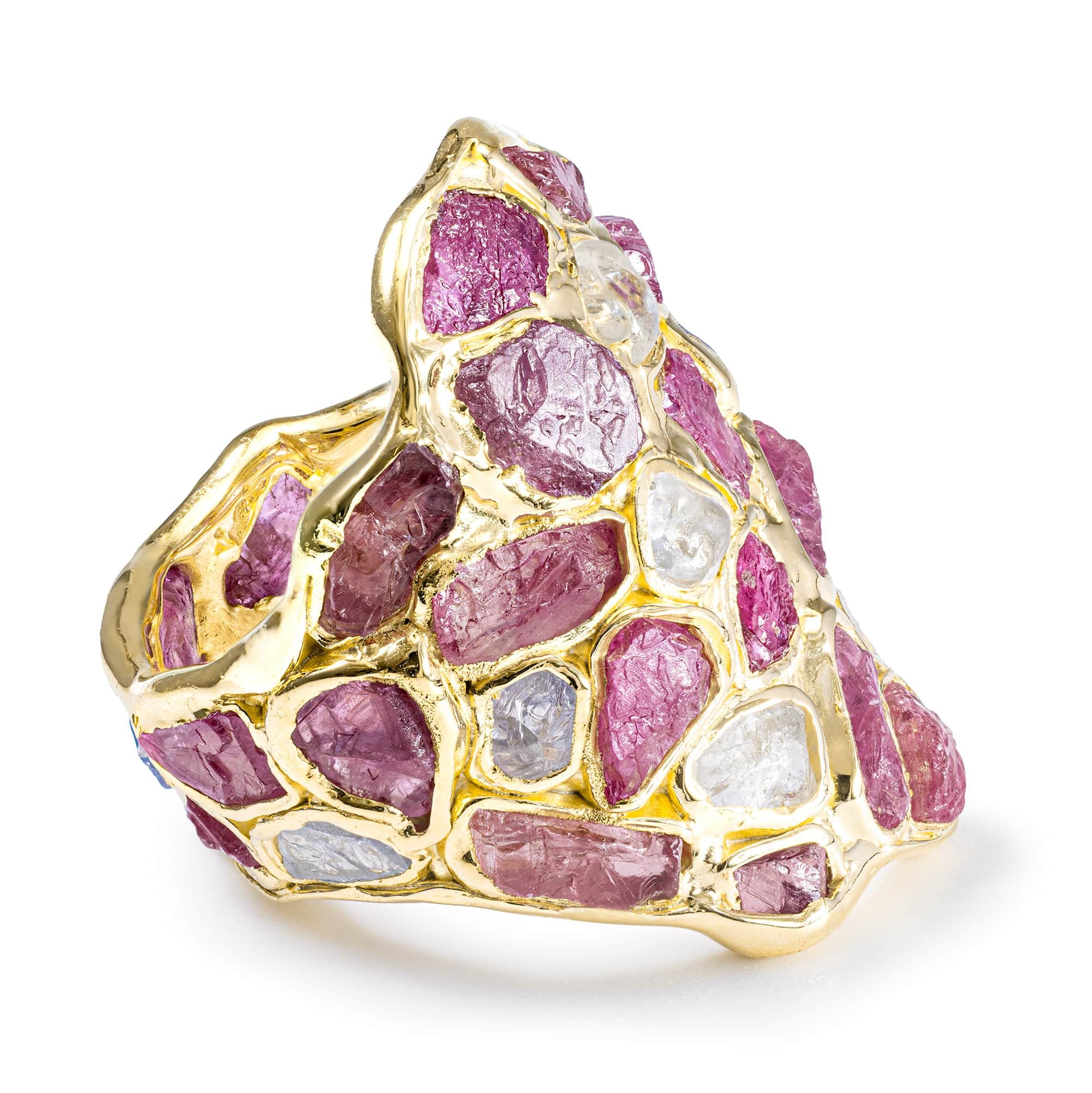
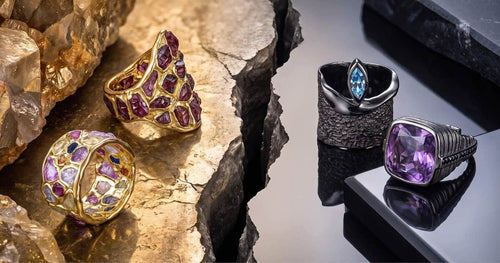
Metal doesn't respond identically under a hammer twice, and wax doesn't carve the same way twice either, even in the hands of the same maker. Surface texture depends on force, angle, tool choice, and how the material happened to move in that specific moment. Add a raw gemstone with its own internal history, and the piece is shaped by multiple independent sources of variation instead of one.
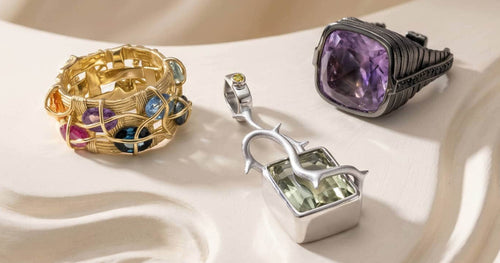
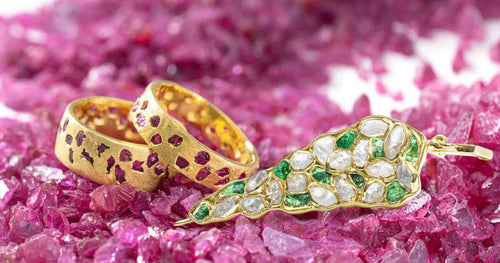
Inclusions are materials or structural irregularities trapped inside a gemstone as it forms in the earth—sometimes tiny crystals, sometimes fluid pockets, sometimes gas bubbles. They're often described as a stone's birthmark, a visible record of the exact conditions the crystal grew under over an extremely long period of time.
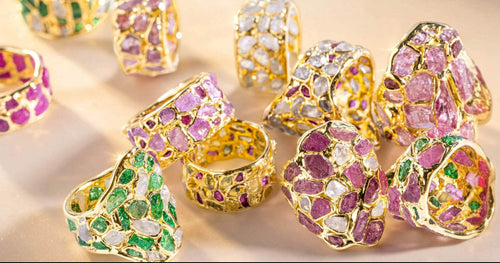
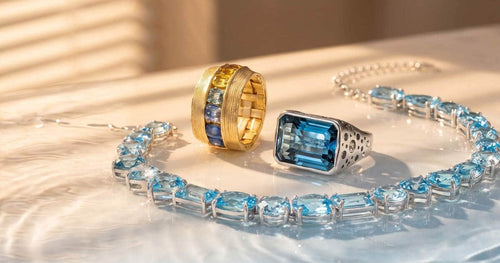
Color banding, also called zoning, happens when a stone's color isn't evenly distributed, usually caused by temperature shifts or changes in trace elements while the crystal was forming. Some gemstones are prized specifically for this effect, since it's physical proof of the stone's unique formation path underground.
In strict clarity grading, they're sometimes labeled that way, but the term is increasingly seen as a misnomer. Small inclusions and banding don't just fail to detract from a stone's beauty—they separate it from every other stone of the same type, and they're also a natural marker that the stone is natural, not synthetic.
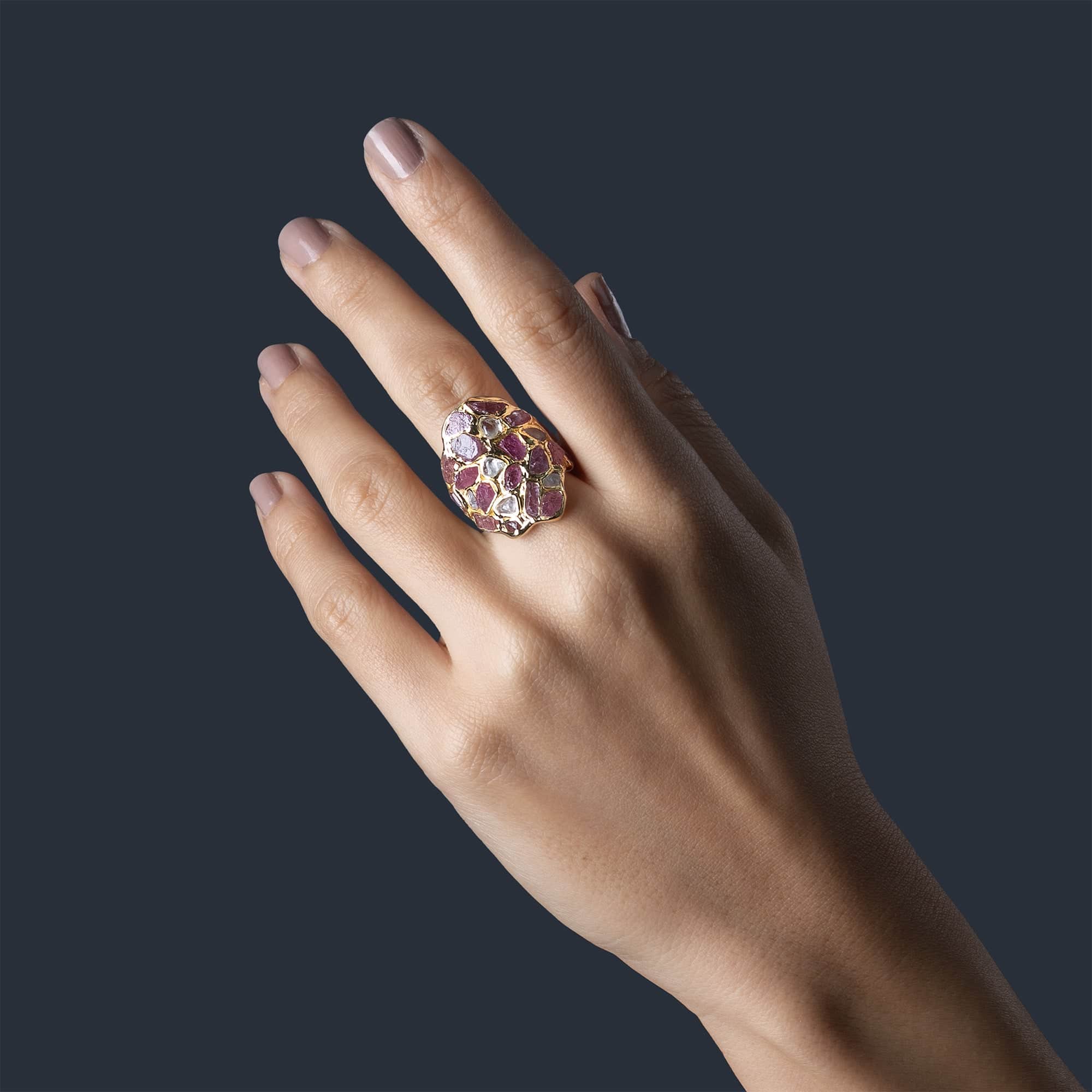
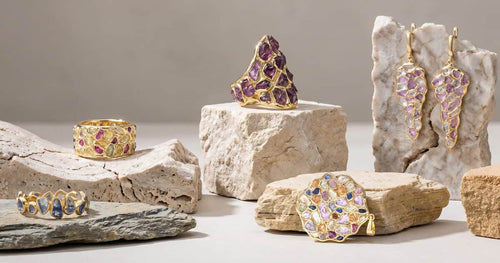
Because texture and stone character are the parts of a piece that software and casting from a digital file simply cannot generate. A hammered or hand-carved surface, or a stone with visible banding, is direct evidence that a human shaped the piece and that the gem came from the ground, not a catalog of standardized cuts.
Yes. A hand-forged or hand-carved surface can't be reproduced the same way twice, and a raw stone's inclusions and color banding are fixed the instant it formed underground. Combine both in one piece, and the result is structurally impossible to duplicate—not similar in style, but singular in fact.
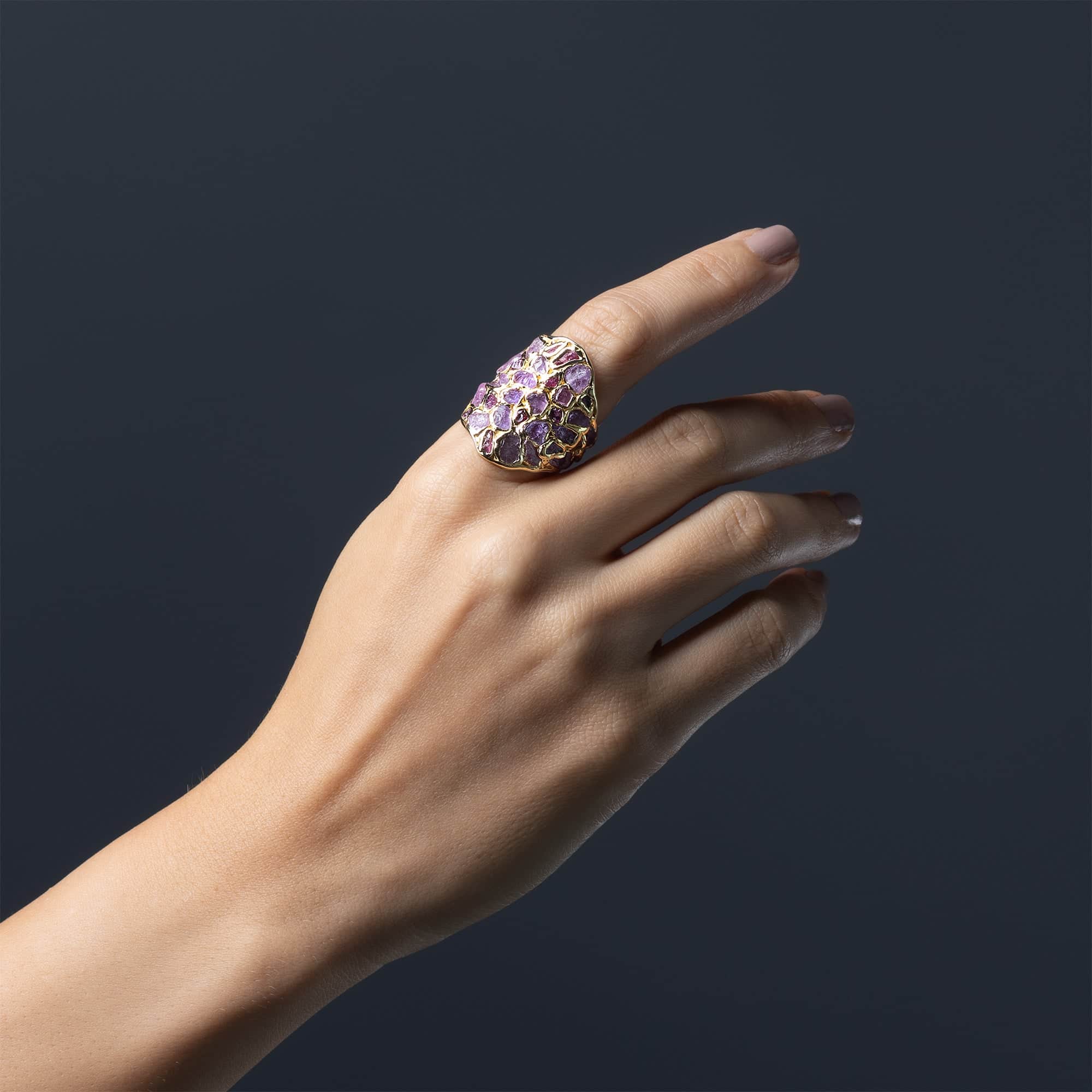
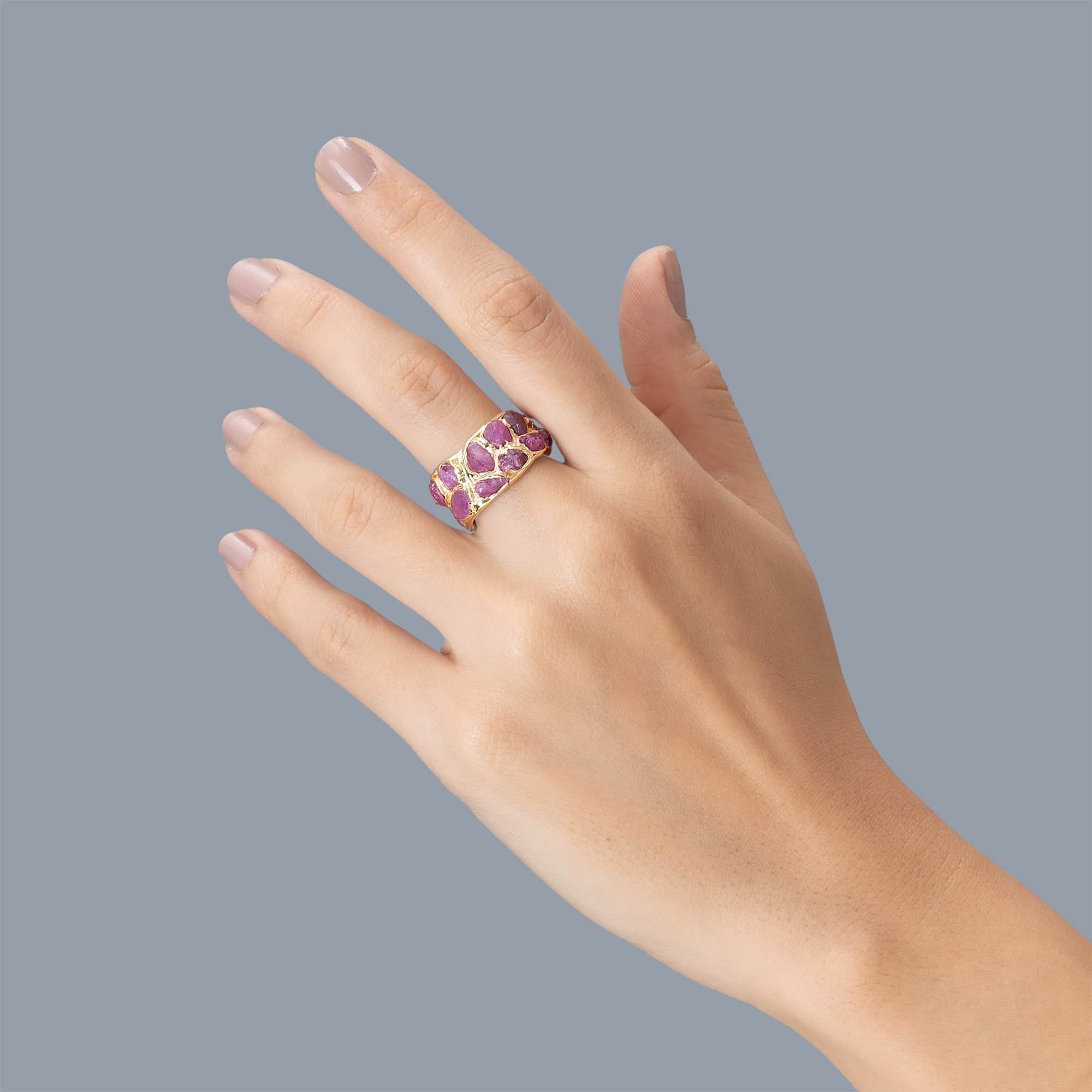
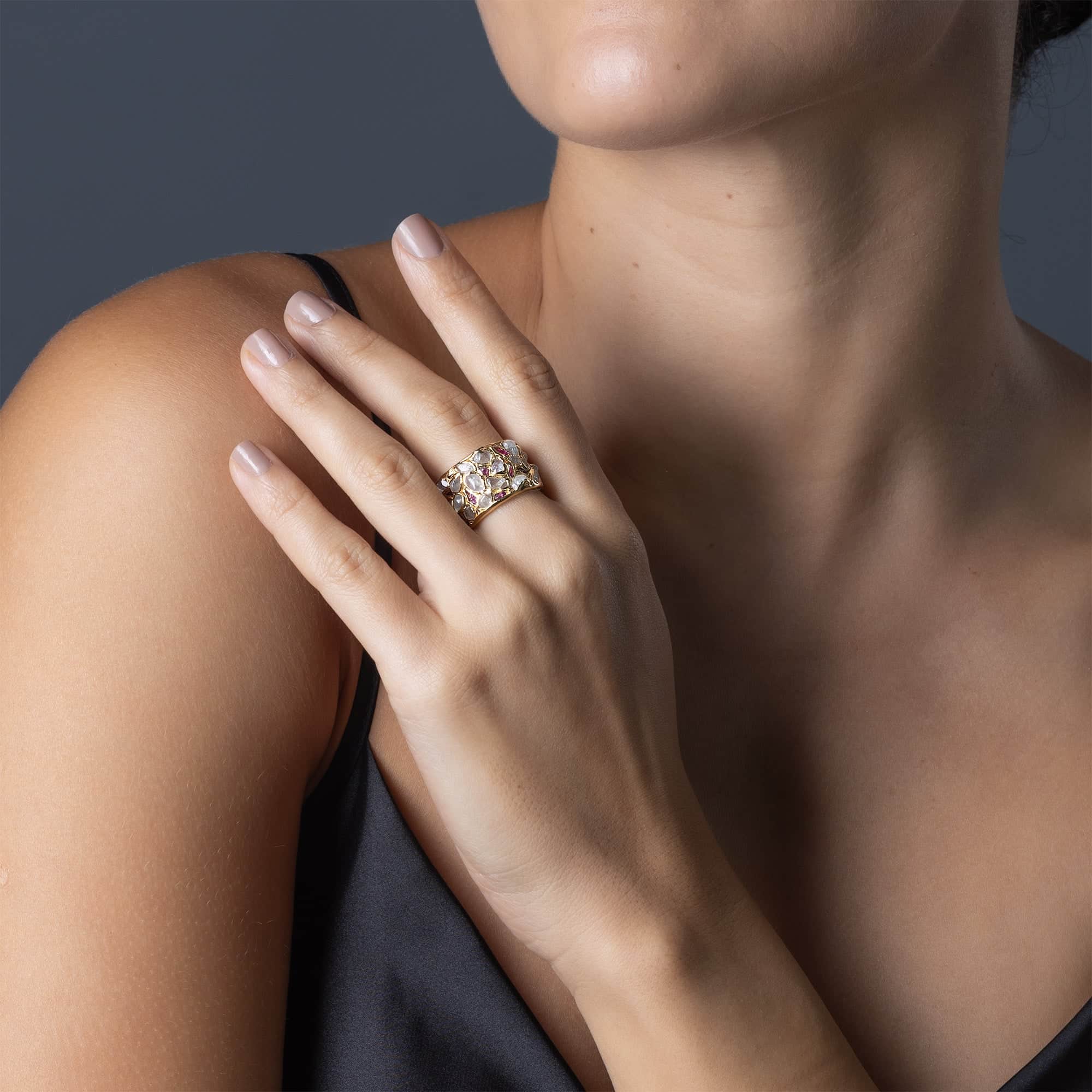
Yes. Texture is one of the few design elements experienced through touch as much as sight, and many wearers describe hand-textured pieces as feeling alive against the skin. Over time, a textured piece can also shift slightly in appearance as it catches light differently with wear, so many owners feel the piece is developing a relationship with them.