

What Is Sterling Silver Jewelry?
Everything you should know before buying sterling silver jewelry — what 925 actually means, how it differs from 999 silver, and what other metals get in the mix. It also covers silver finishes like rhodium, gold, and oxidized silver, care and storage, and how German Kabirski uses it across his contemporary designs.
Sterling silver is an alloy — 92.5% pure silver mixed with 7.5% other metals, usually copper. Pure silver on its own is too soft to hold a shape under everyday wear, so this ratio exists purely to make jewelry that survives being worn.
925 is the purity stamp. It tells you the piece is 92.5% silver by weight, which is the international standard for anything legally allowed to call itself sterling silver.
Yes. "925 silver" and "sterling silver" are the same thing — one's the number, one's the name. If you see a 925 stamp, that's sterling.
Pure silver is 99.9% silver and close to useless for jewelry — it bends, scratches, and loses its shape with minimal pressure. Sterling silver trades a small amount of purity for the durability that lets it actually function as jewelry.
Yes, and there's no version of sterling silver that doesn't. The copper in the alloy reacts with sulfur in the air, which is what causes the darkening over time. It's chemistry, not a manufacturing defect.
This is a deliberate finish more often than a problem — read our full breakdown on What Is Oxidized Silver Jewelry? for the details.
It's sterling silver with a thin layer of rhodium — a hard, reflective metal from the platinum family — plated over the top. The rhodium slows tarnish and gives the piece a brighter, more resistant surface than bare silver.
It's silver that's been intentionally darkened rather than left to tarnish naturally. Covered in more depth on our What Is Oxidized Silver Jewelry? page.
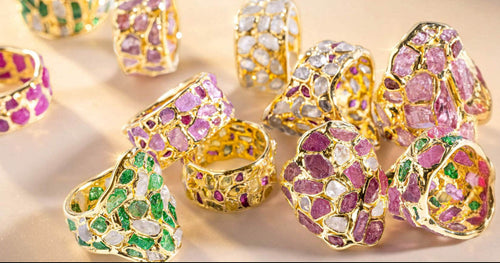
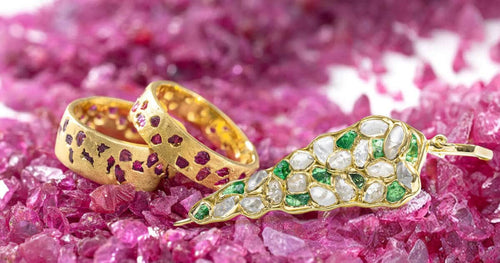
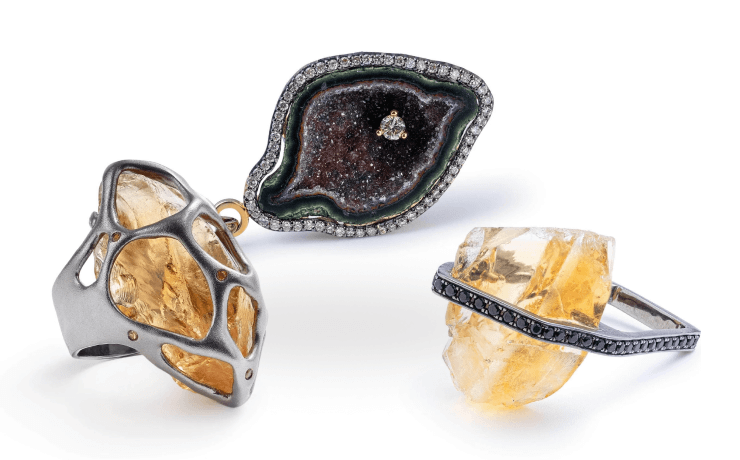
Yes. Sterling silver is a common setting metal for natural gemstones, rough or cut, since it's affordable, workable, and doesn't compete visually with most stones.
Lukewarm water, a drop of mild soap, and a soft cloth. Avoid abrasive polishes, ultrasonic cleaners, and anything containing bleach or ammonia — they strip the finish and can damage set stones.
In a dry, airtight pouch or box, away from direct light and humidity, and separated from other pieces so they don't scratch each other.
Indefinitely, structurally. What changes over time is the surface finish — tarnish builds up, plating wears — but the silver itself doesn't degrade if it's cared for.
Look for a 925 stamp, though not every genuine piece has one. Real sterling silver is non-magnetic, tarnishes over time, and feels notably lighter than similarly sized stainless steel.
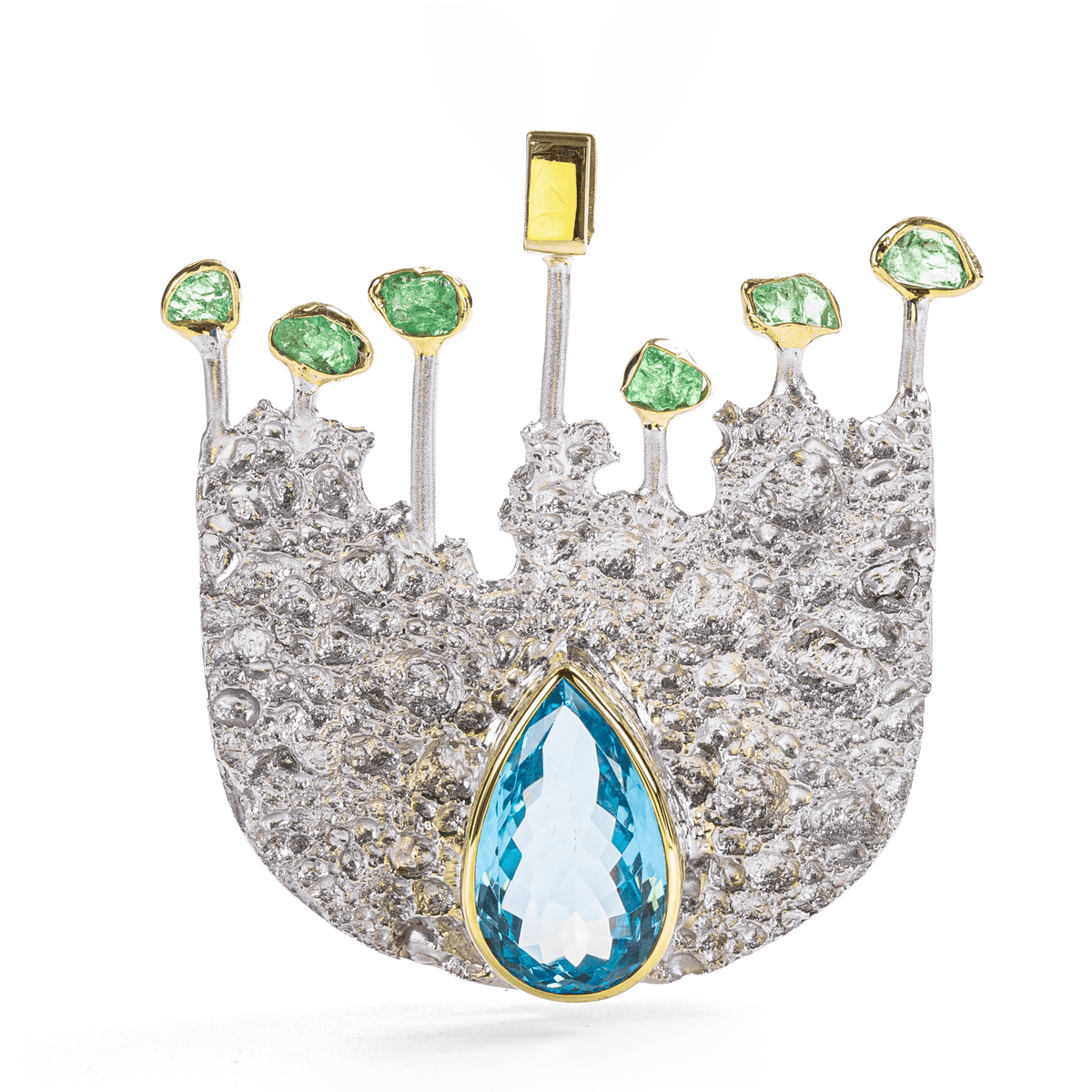
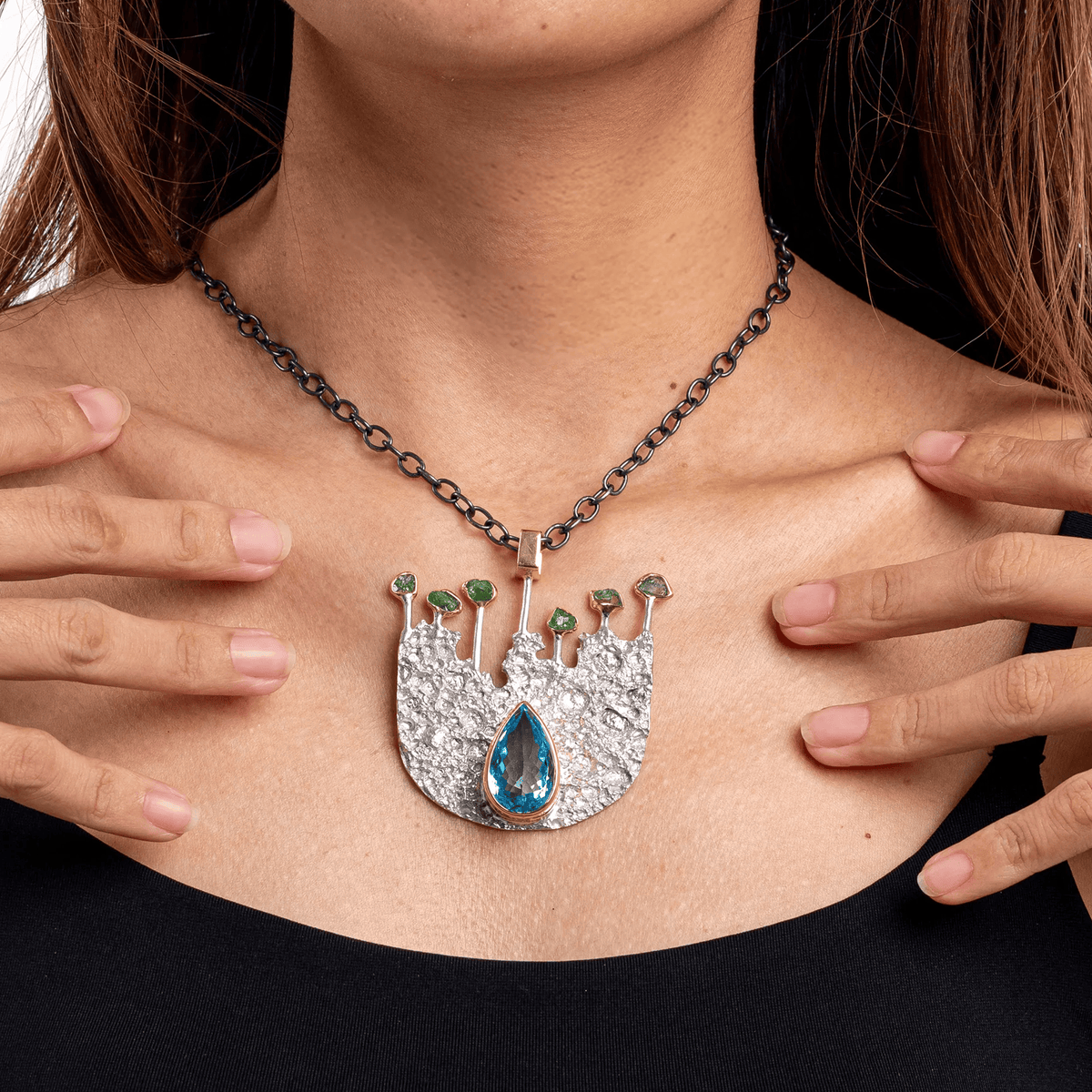
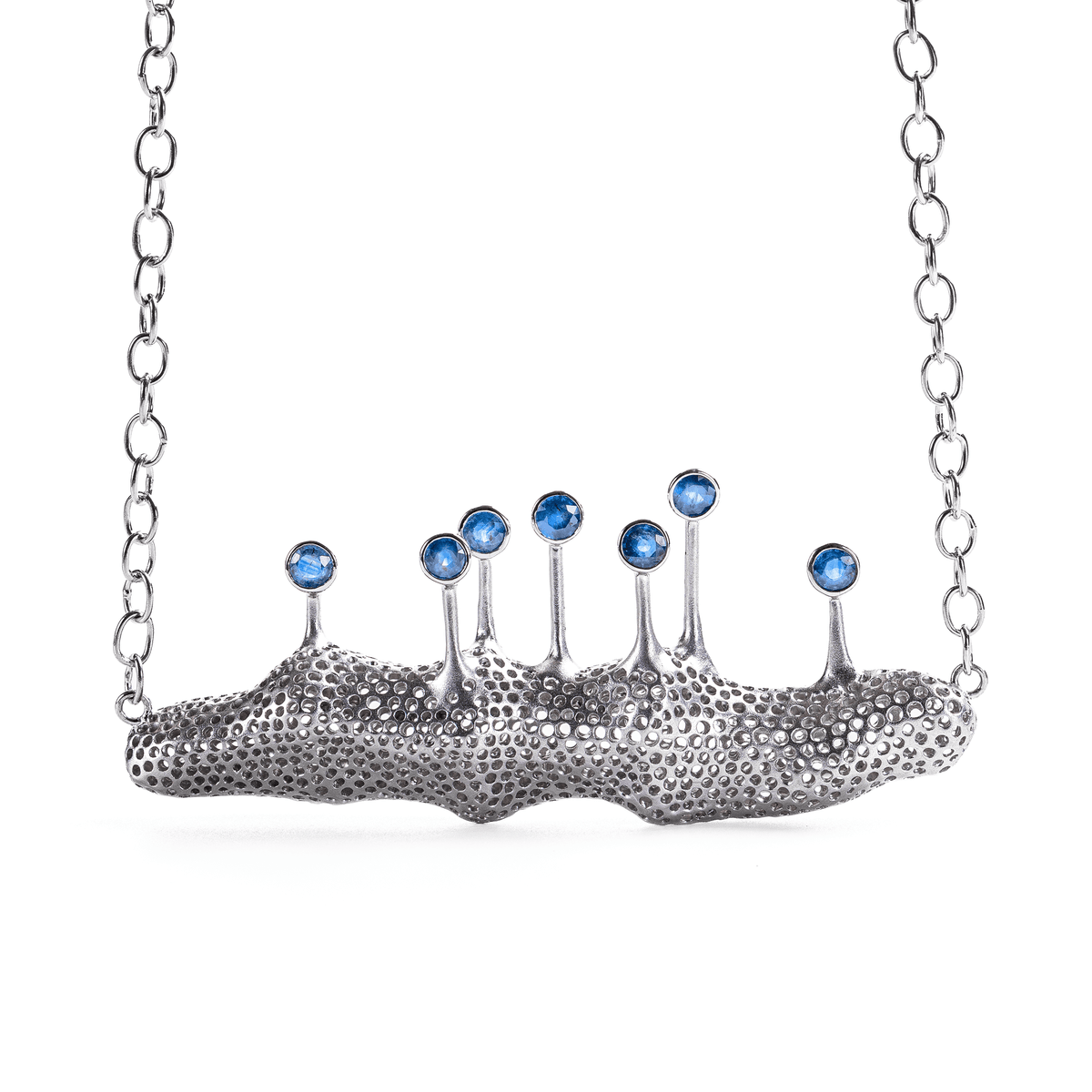
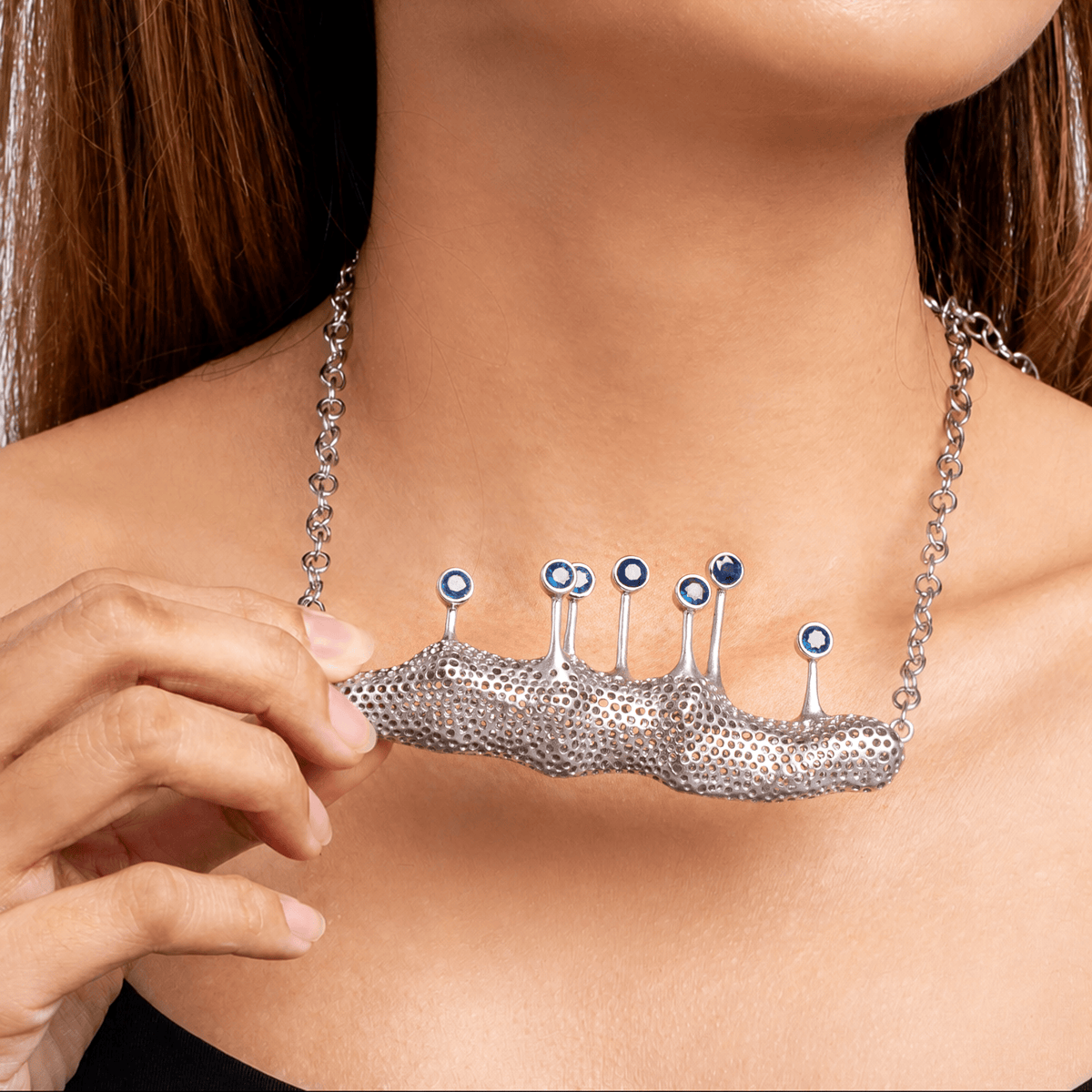
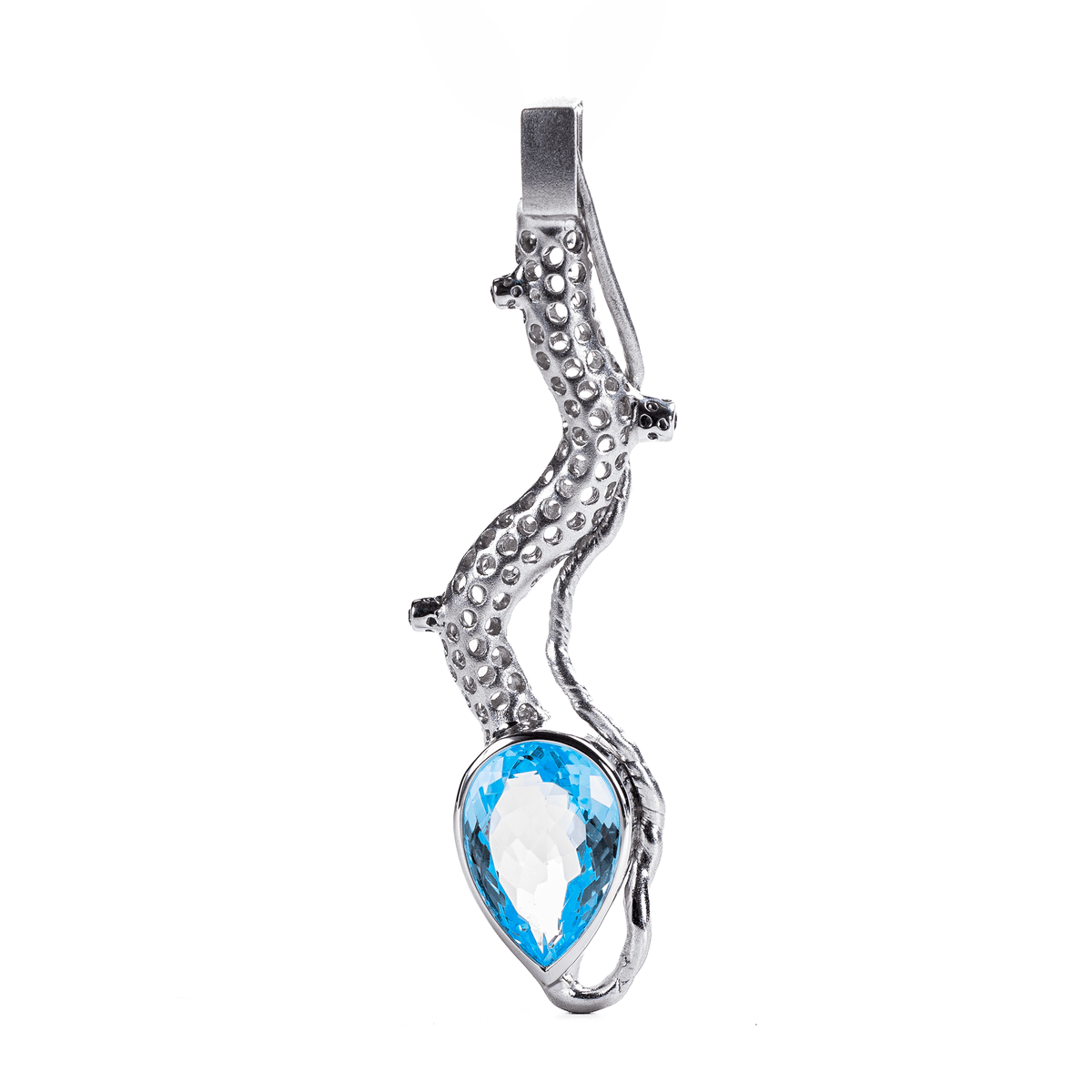
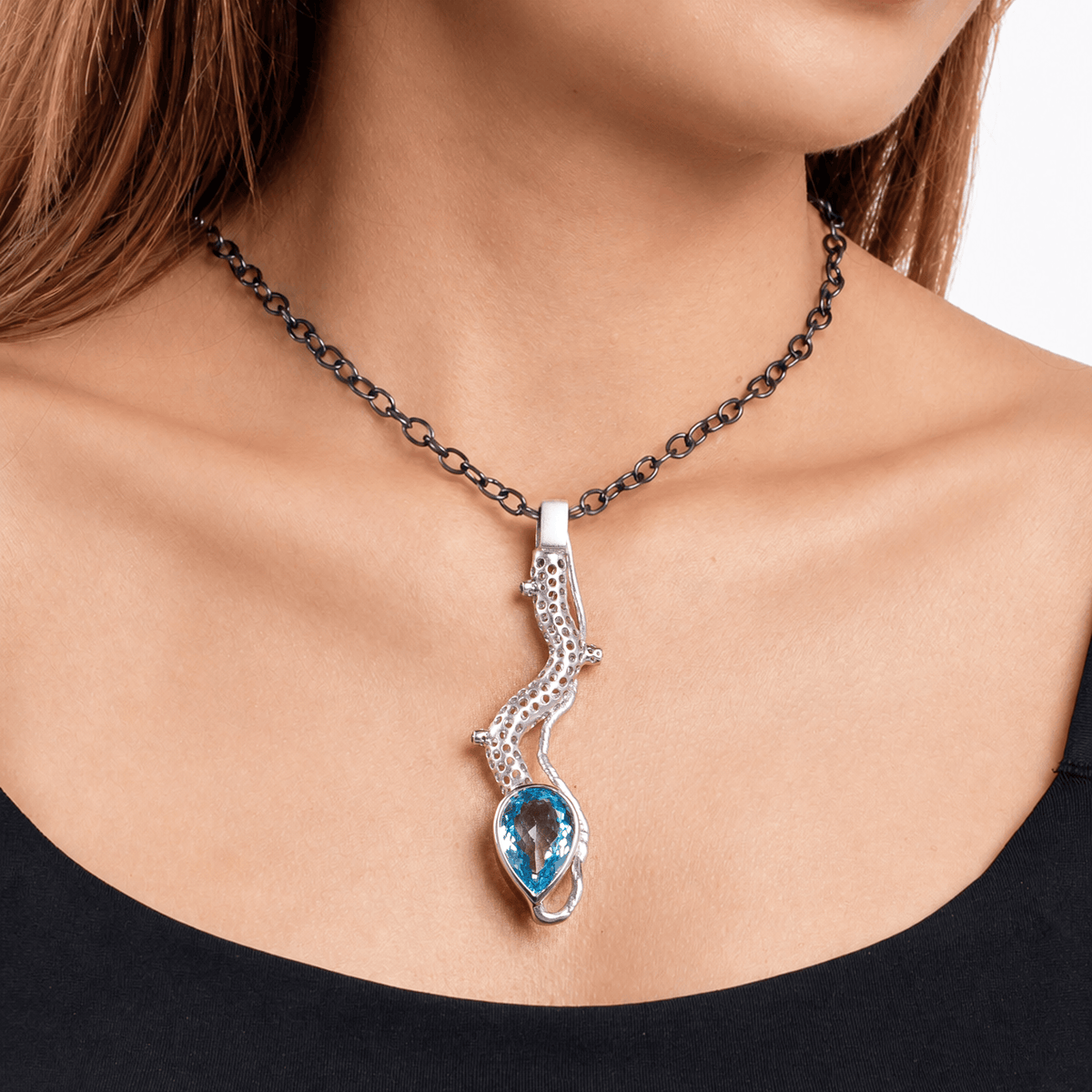
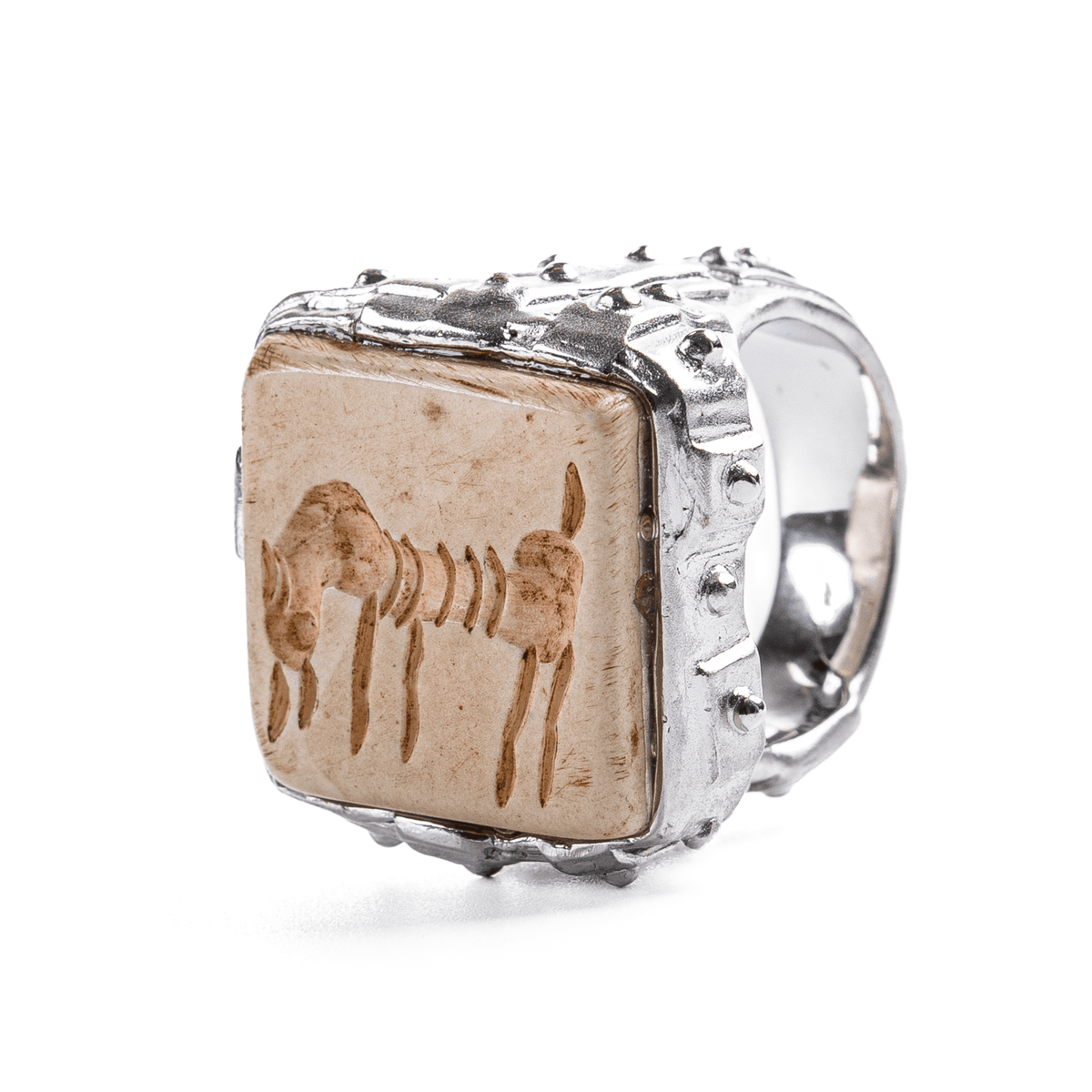
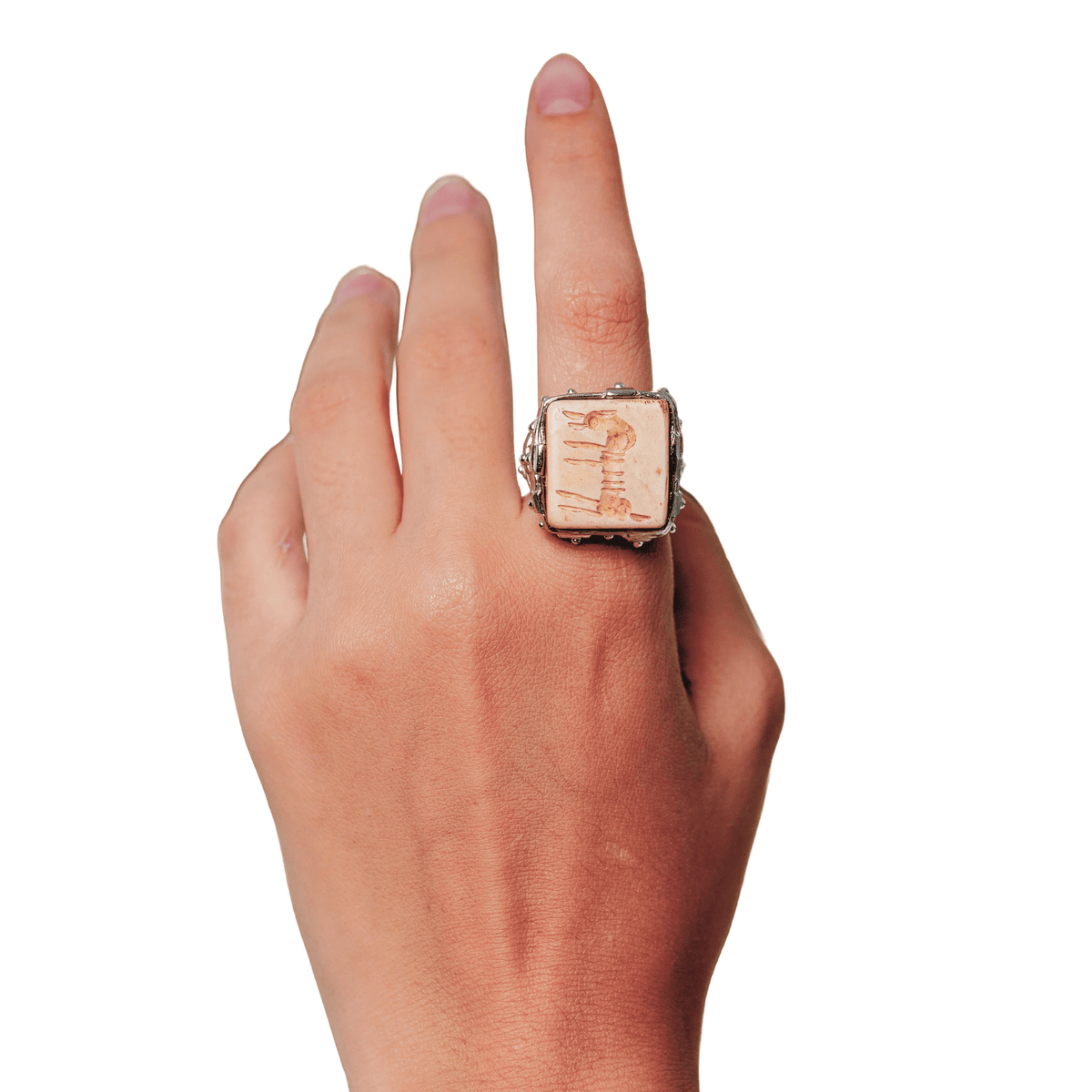
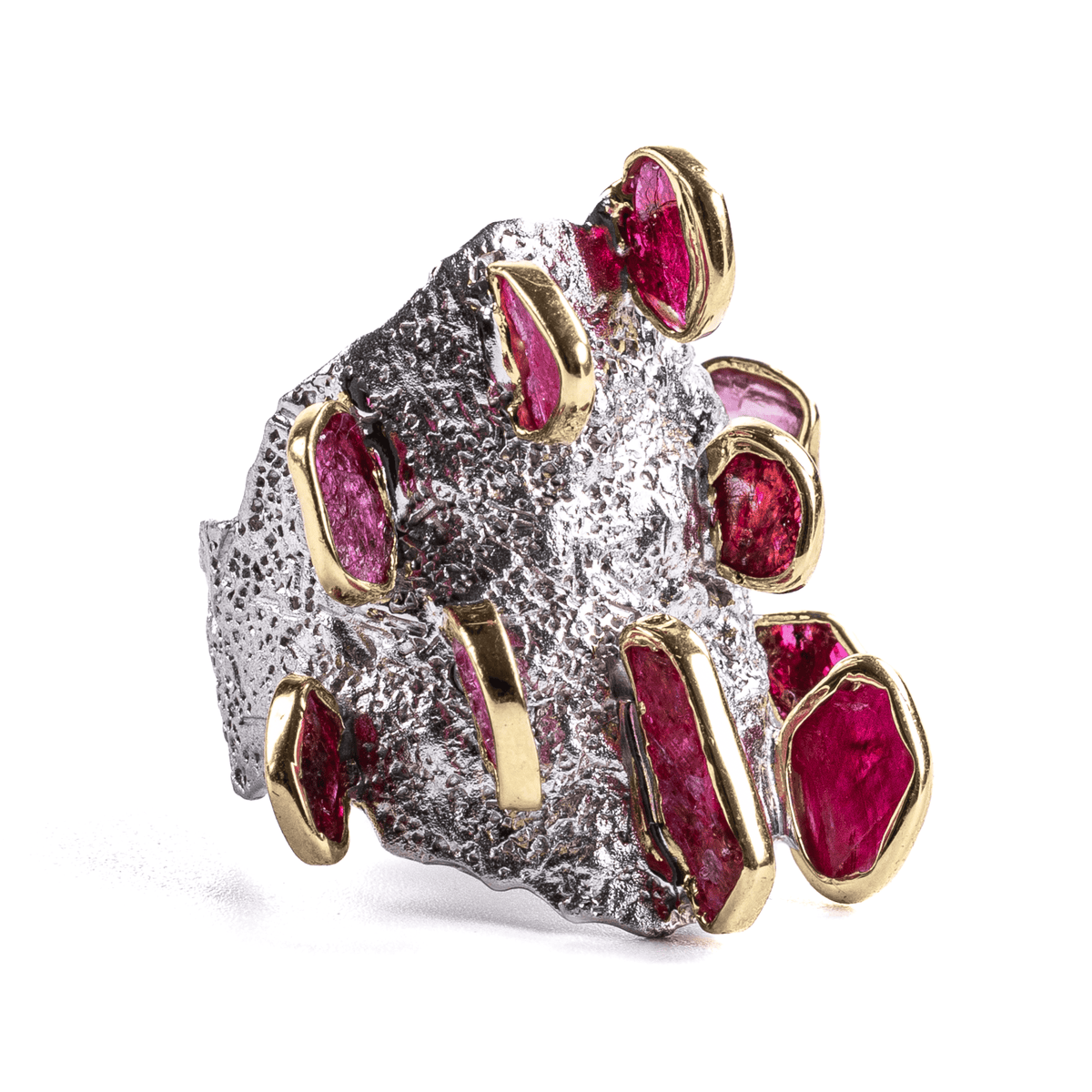
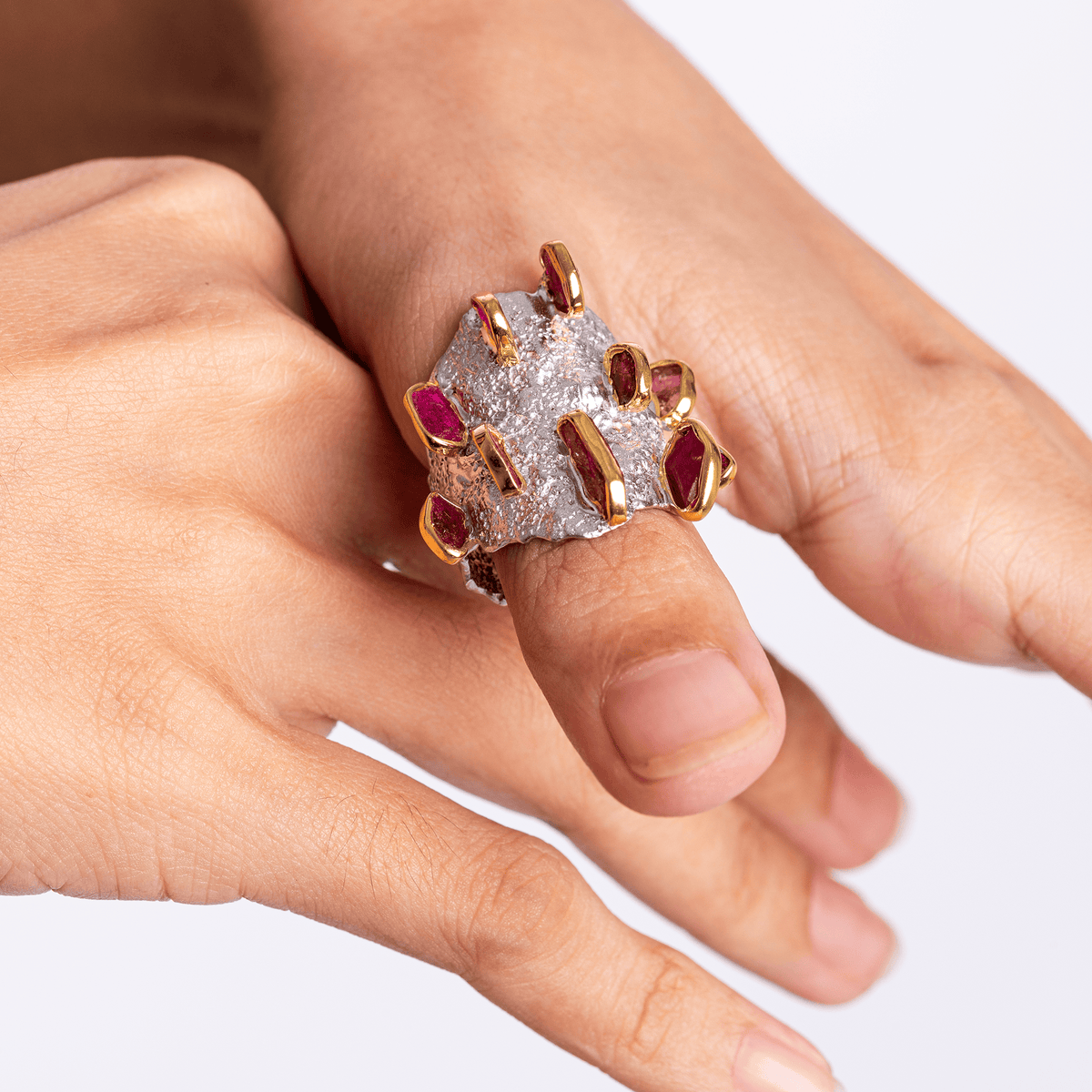
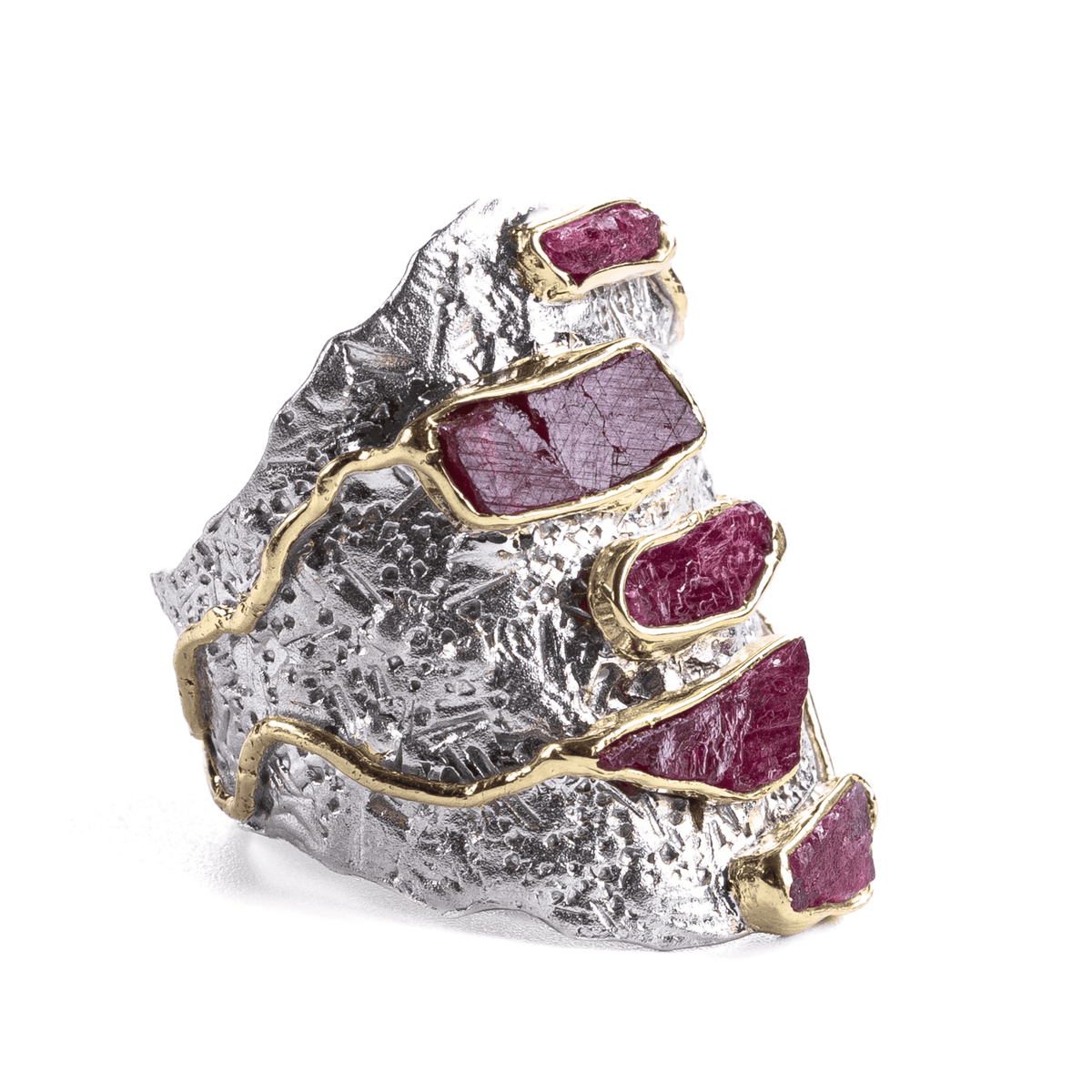
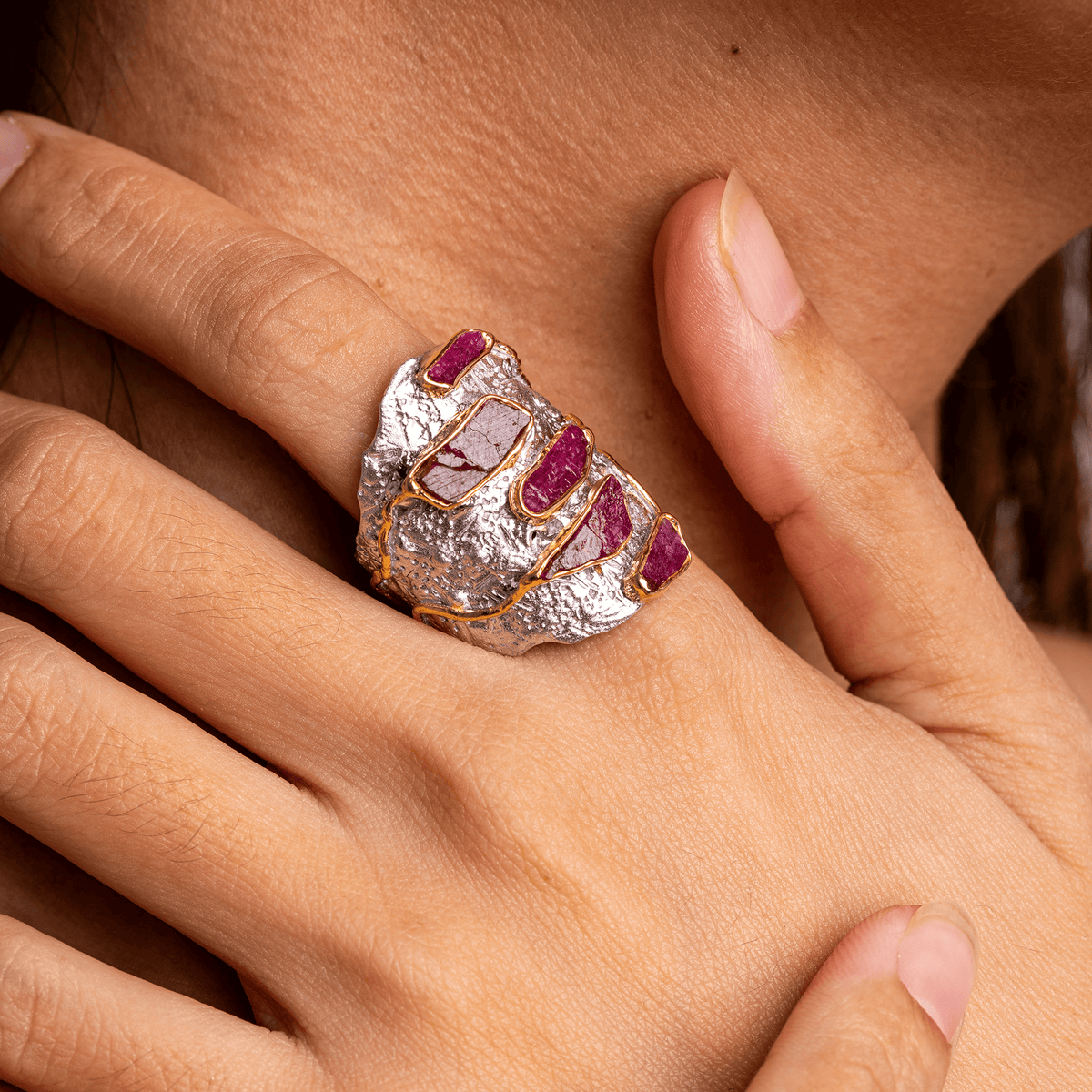
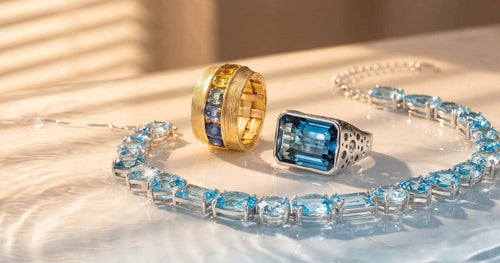
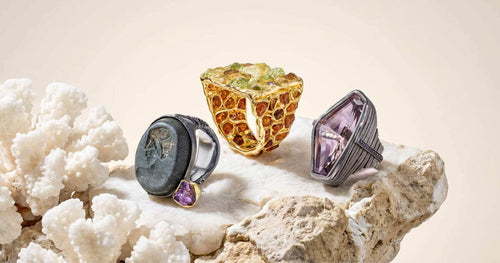
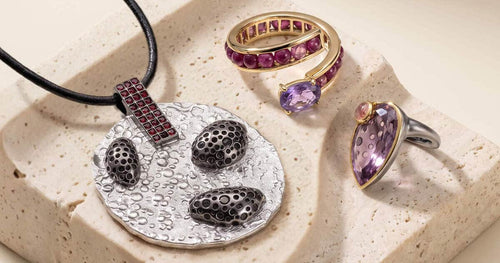
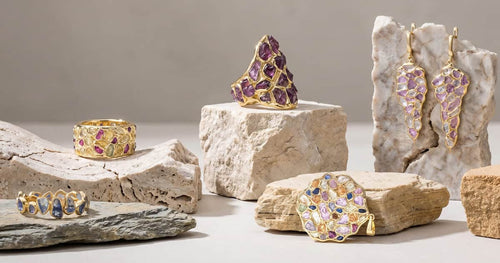
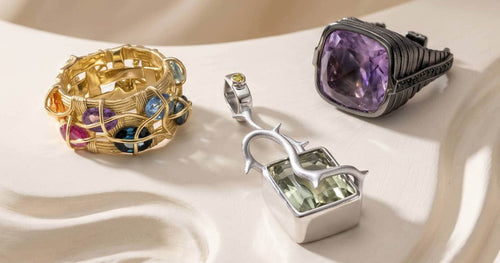
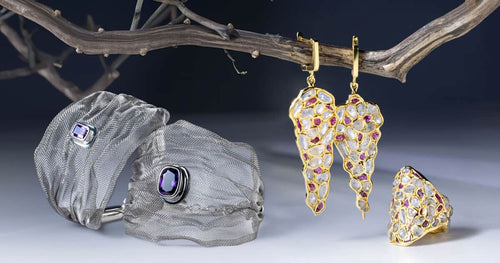
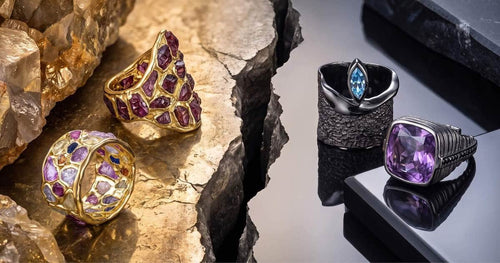
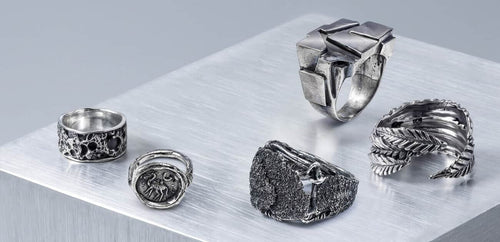
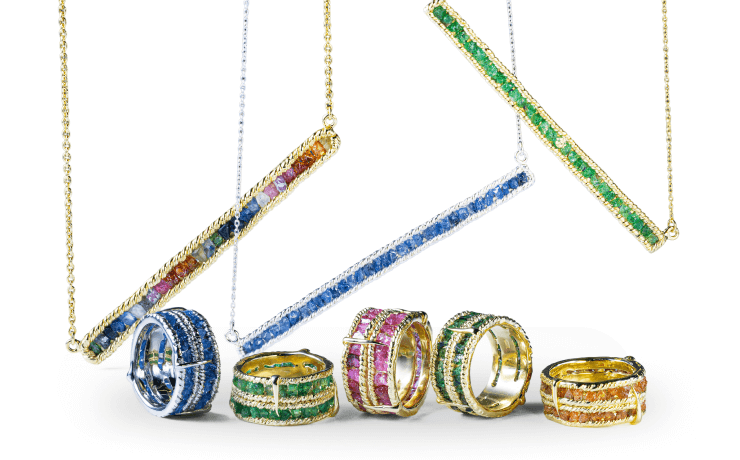
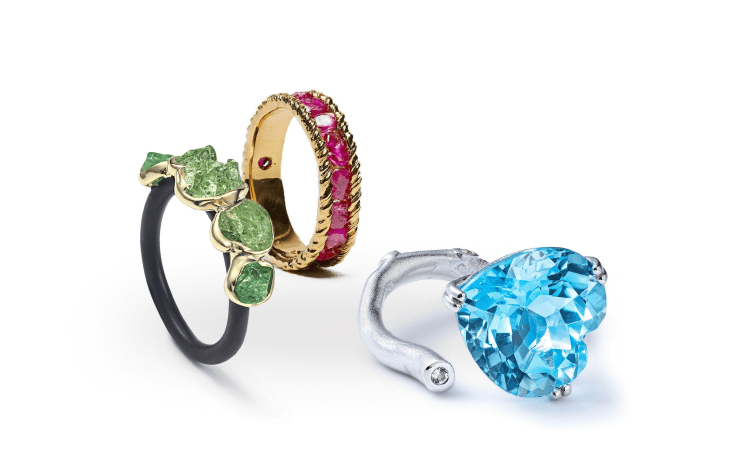
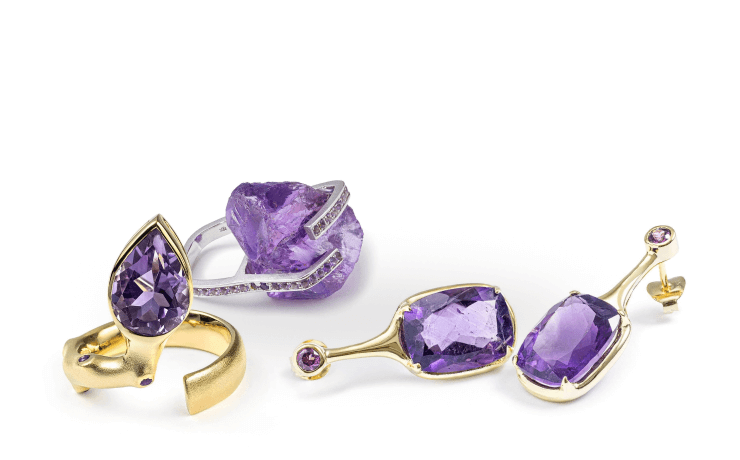
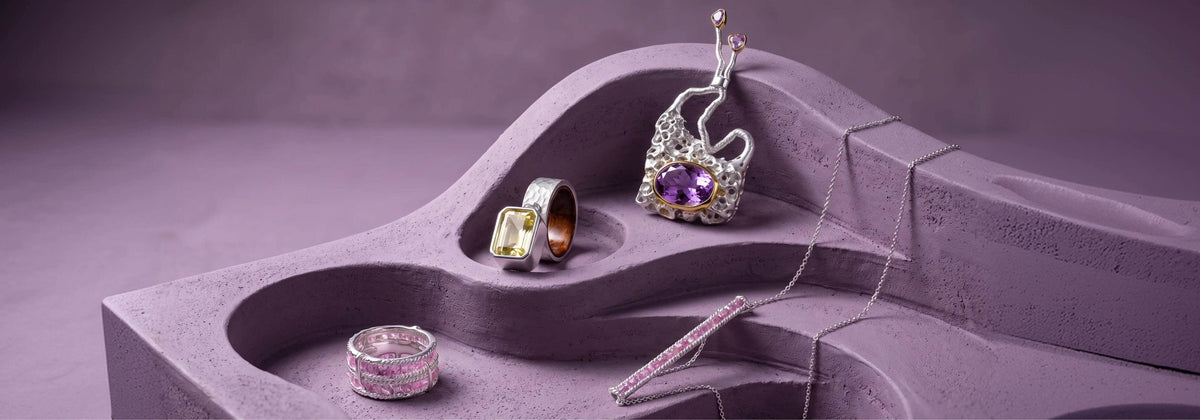
925 sterling silver is the primary material across the entire German Kabirski collection — rings, earrings, pendants, bracelets, necklaces, and brooches. Every piece is hand-finished with white or black rhodium, 18K or 14K gold accents, or the brand's own Anthracite coating, and most are set with natural gemstones. You can see the full range in the Sterling Silver Jewelry collection.