

Eye Idol Meaning: Ancient Symbol from Tell Brak
An overview of Eye Idols, the small stone figurines carved with oversized eyes that originate from Chalcolithic Tell Brak in northeastern Syria, covering their archaeological context, symbolic interpretation, and use in German Kabirski's contemporary Eye Idol pendants.
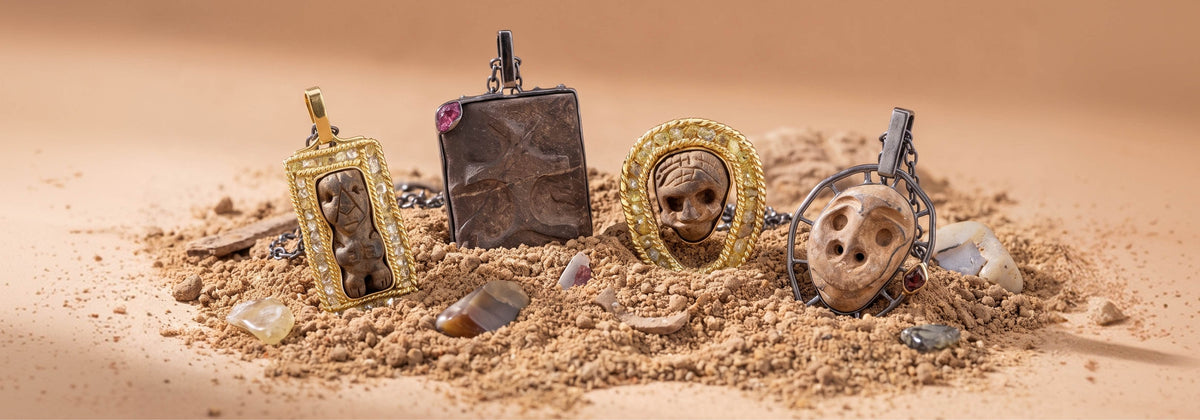
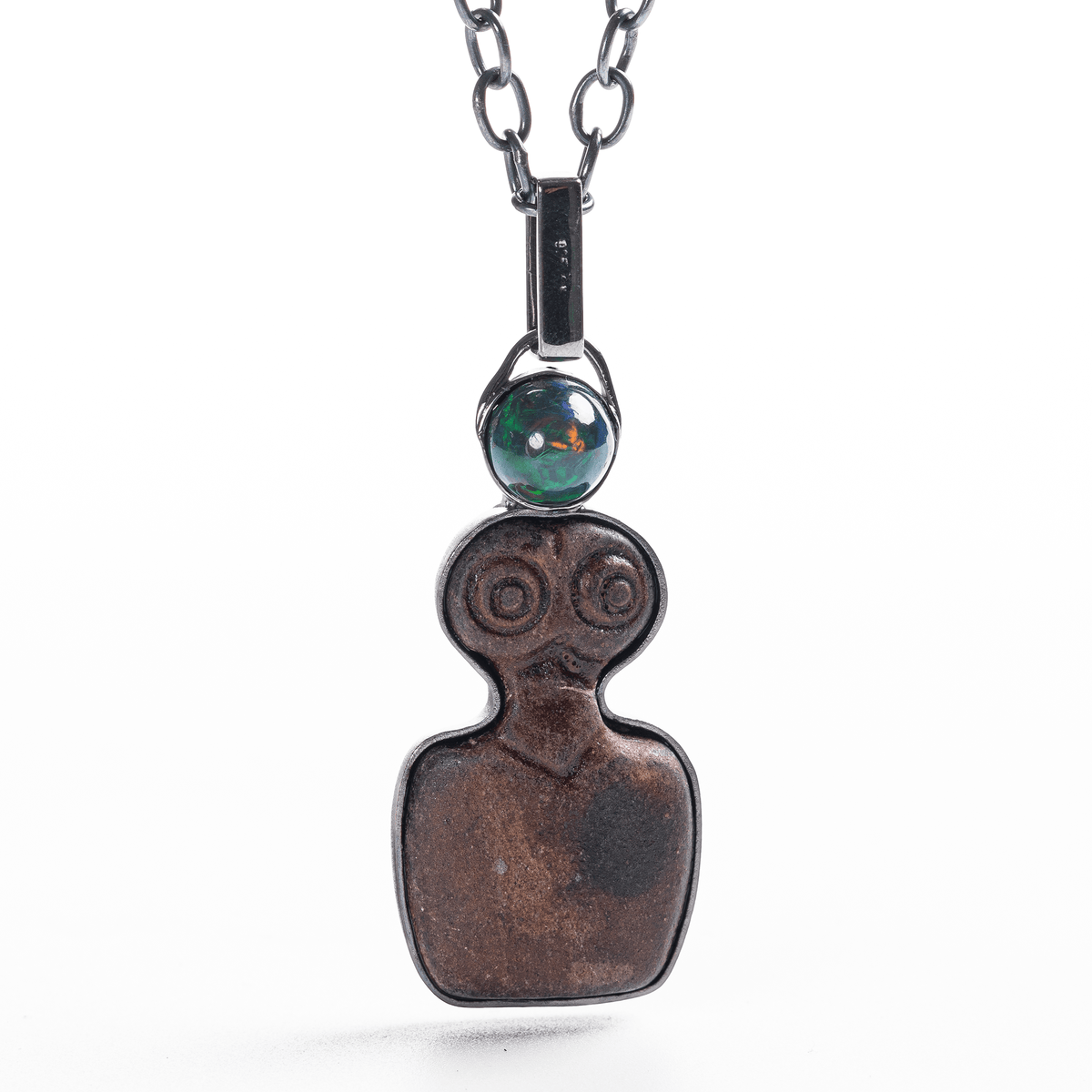
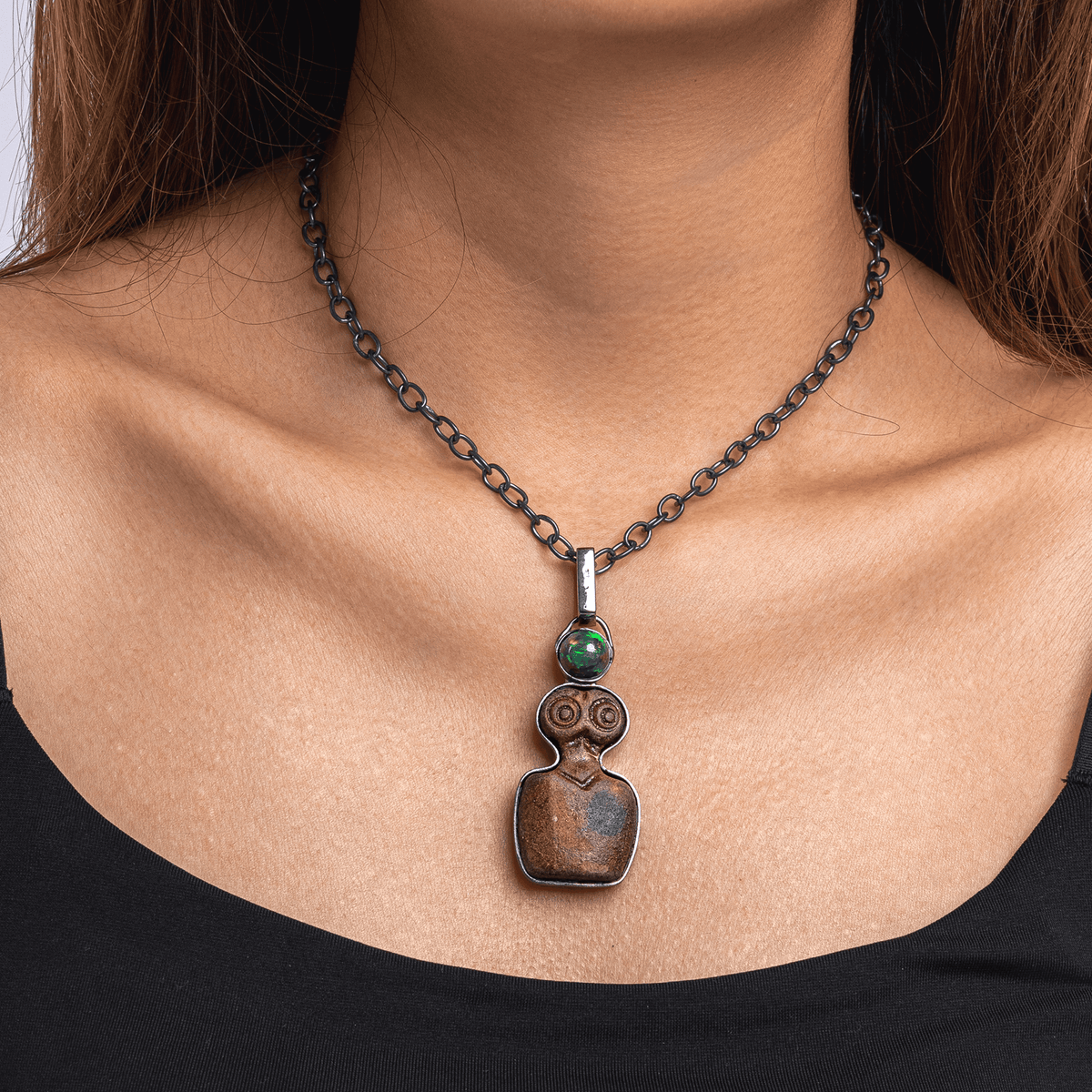
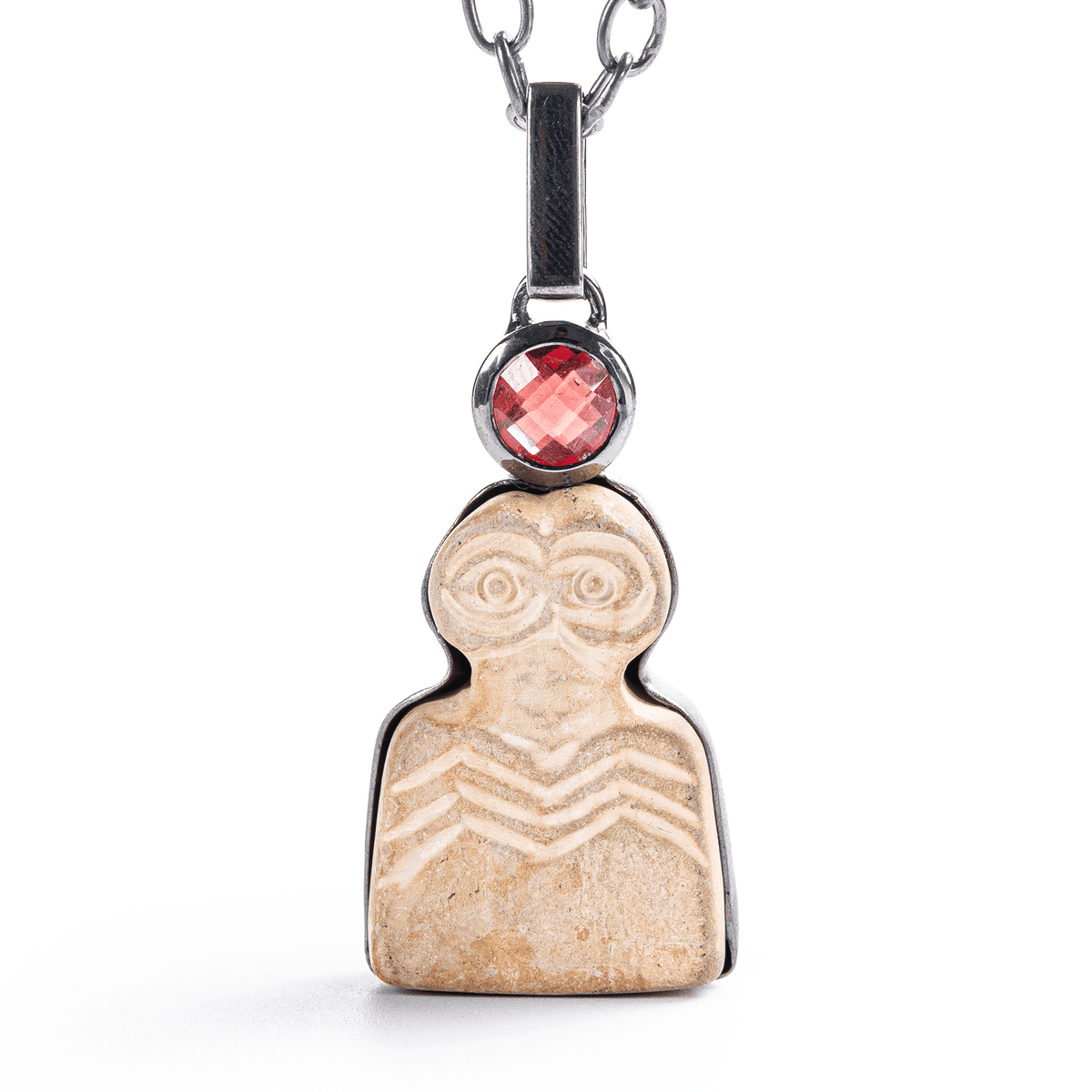
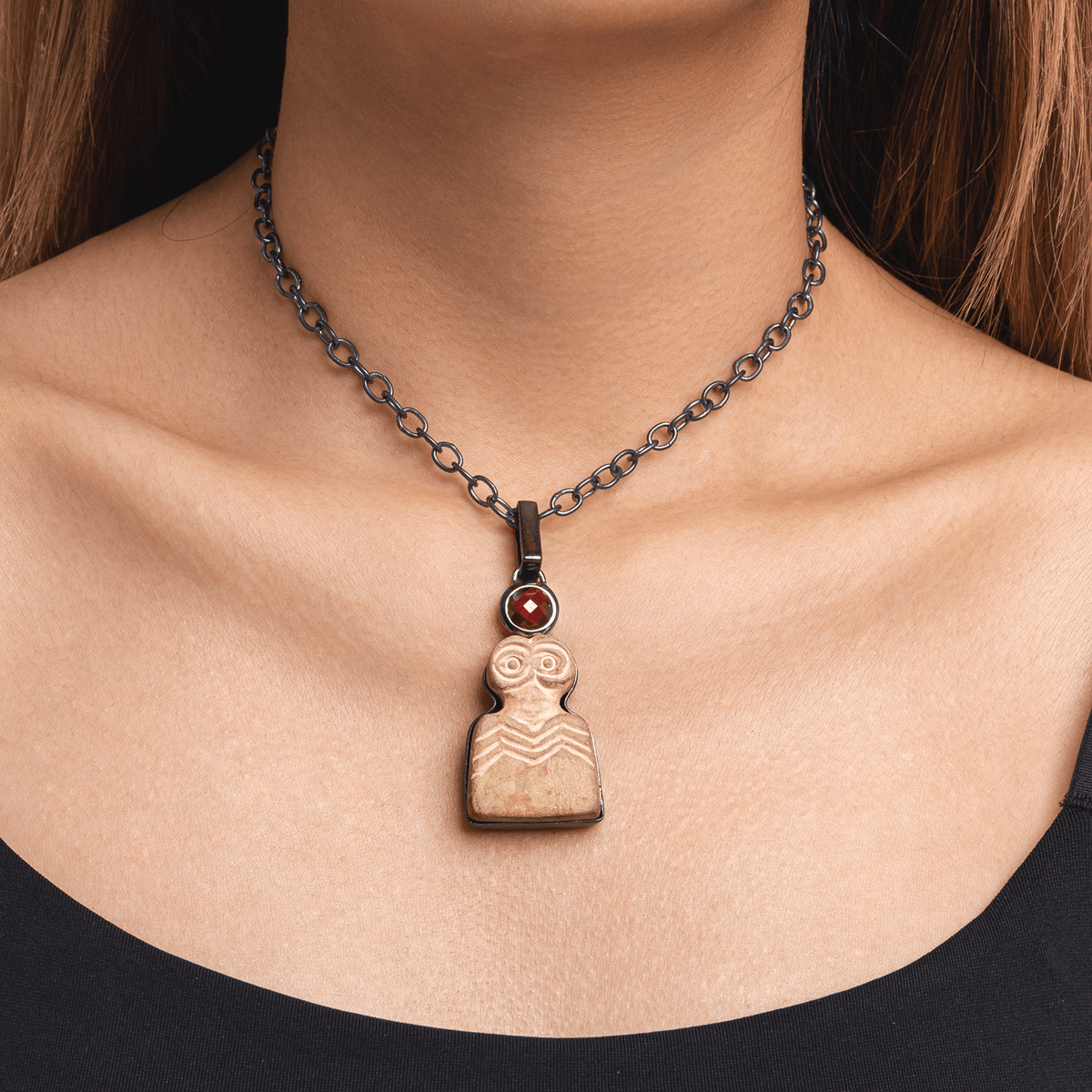
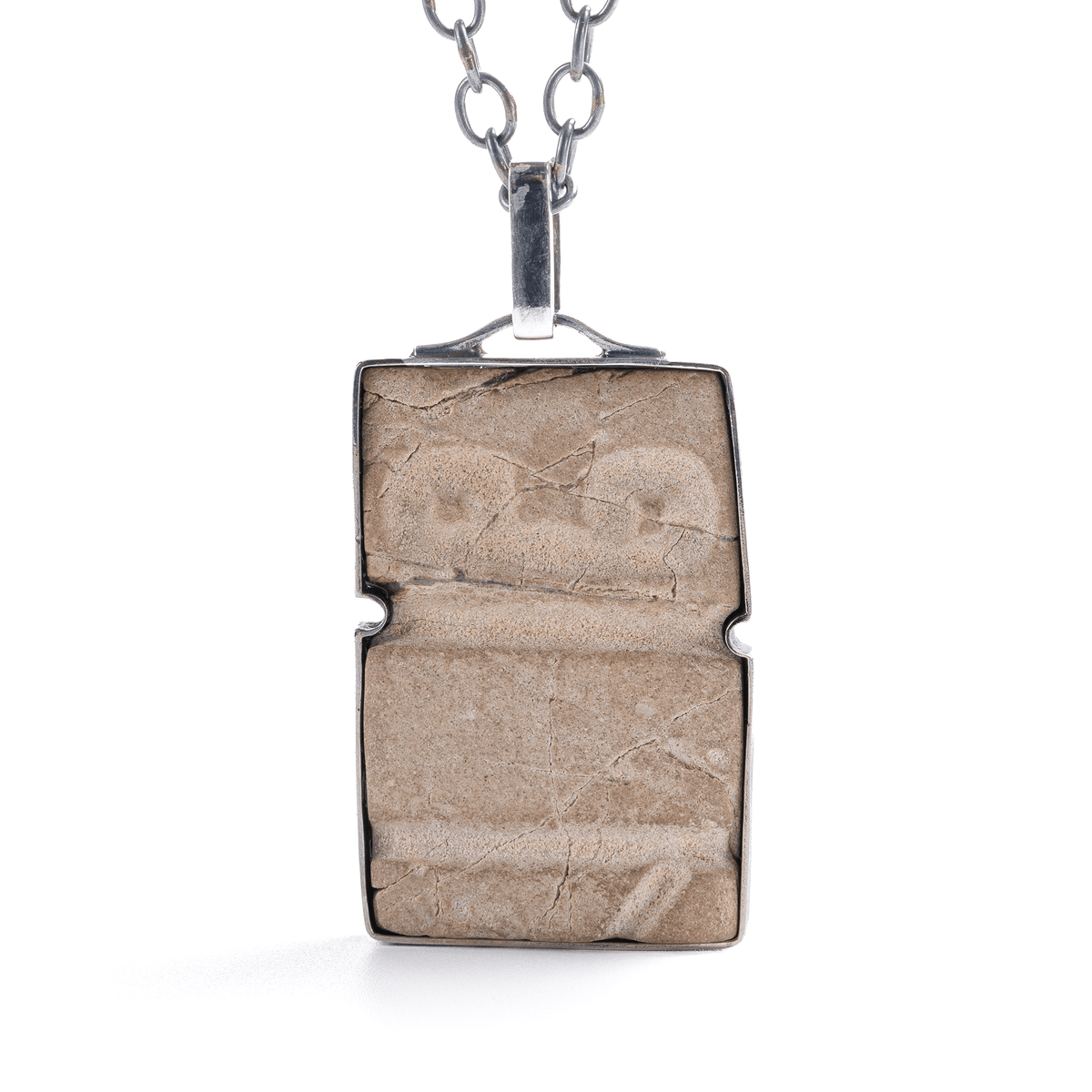
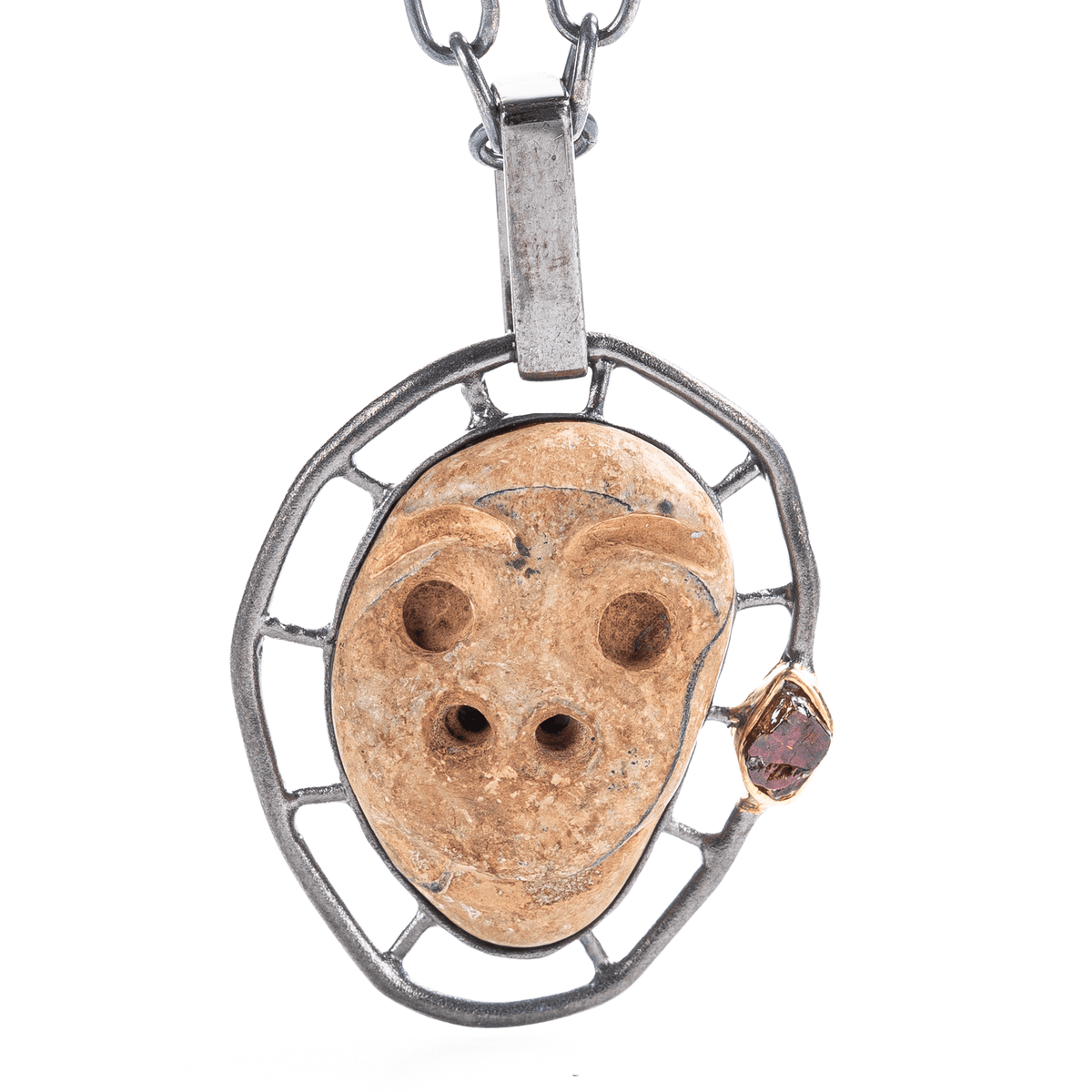
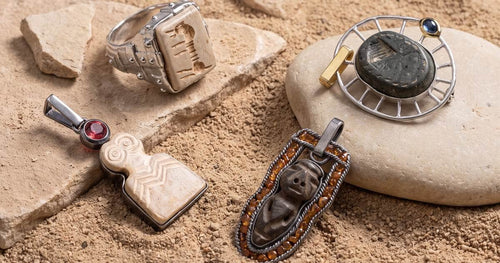
An Eye Idol is a small, flat, plaque-like figurine, typically carved from gypsum alabaster or bone, dominated by one or more pairs of large, incised circular eyes with little or no other facial detail. The Metropolitan Museum of Art describes the type as excavated in the thousands at Tell Brak, where a building has since been named the "Eye Temple" because of the sheer volume found there.
Eye Idols date to the Middle to Late Uruk / Chalcolithic period, roughly 3700–3500 BCE, based on Metropolitan Museum and Fitzwilliam Museum dating of excavated examples. The Metropolitan Museum specifies the Middle Uruk period and locates the find site as Tell Brak in Syria.
Museum sources are careful to present multiple interpretations rather than a single confirmed meaning. The Metropolitan Museum notes that "wide eyes demonstrate attentiveness to the gods in much of Mesopotamian art," and the figurines are believed to be votive offerings dedicated to an unidentified "eye god." The British Museum similarly describes them as possibly representing worshippers placed as offerings, while noting that some examples have drilled eyes whose purpose is not fully understood.
The primary find site is Tell Brak in northeastern Syria, excavated in 1937–38 by archaeologist Max Mallowan on behalf of the British School of Archaeology in Iraq. The British Museum notes that figurines with a related feature—drilled eyes—have also been found at other sites across northern Mesopotamia, indicating the tradition extended beyond Tell Brak alone.
Their significance lies in scale and context: thousands were recovered from a single dedicated building, making them one of the largest concentrations of ritual objects known from this early period of Mesopotamian history. The Metropolitan Museum and British Museum both treat the sheer number and their concentration within a temple structure as strong evidence of an organized votive practice tied to worship, placing them among the earliest known material evidence of collective religious ritual in the region.
Designers use Eye Idols because they combine a compelling, minimalist visual form with roughly 5,500 years of documented ritual history, giving a contemporary piece a rare depth of meaning tied to one of humanity's earliest known devotional practices. Their abstract, staring-eye design also reads as strikingly modern despite its Chalcolithic origin, which makes it unusually adaptable to current jewelry aesthetics.
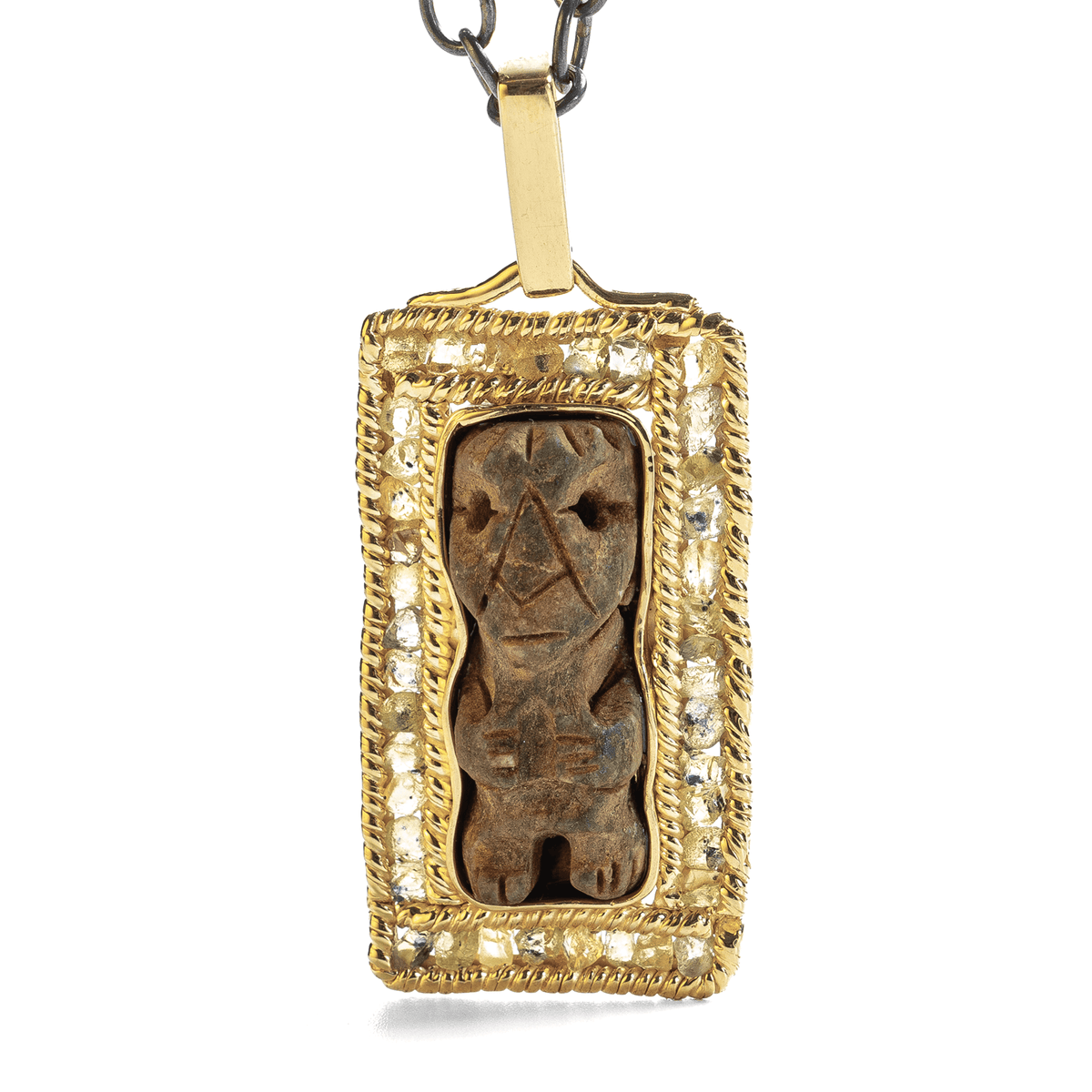
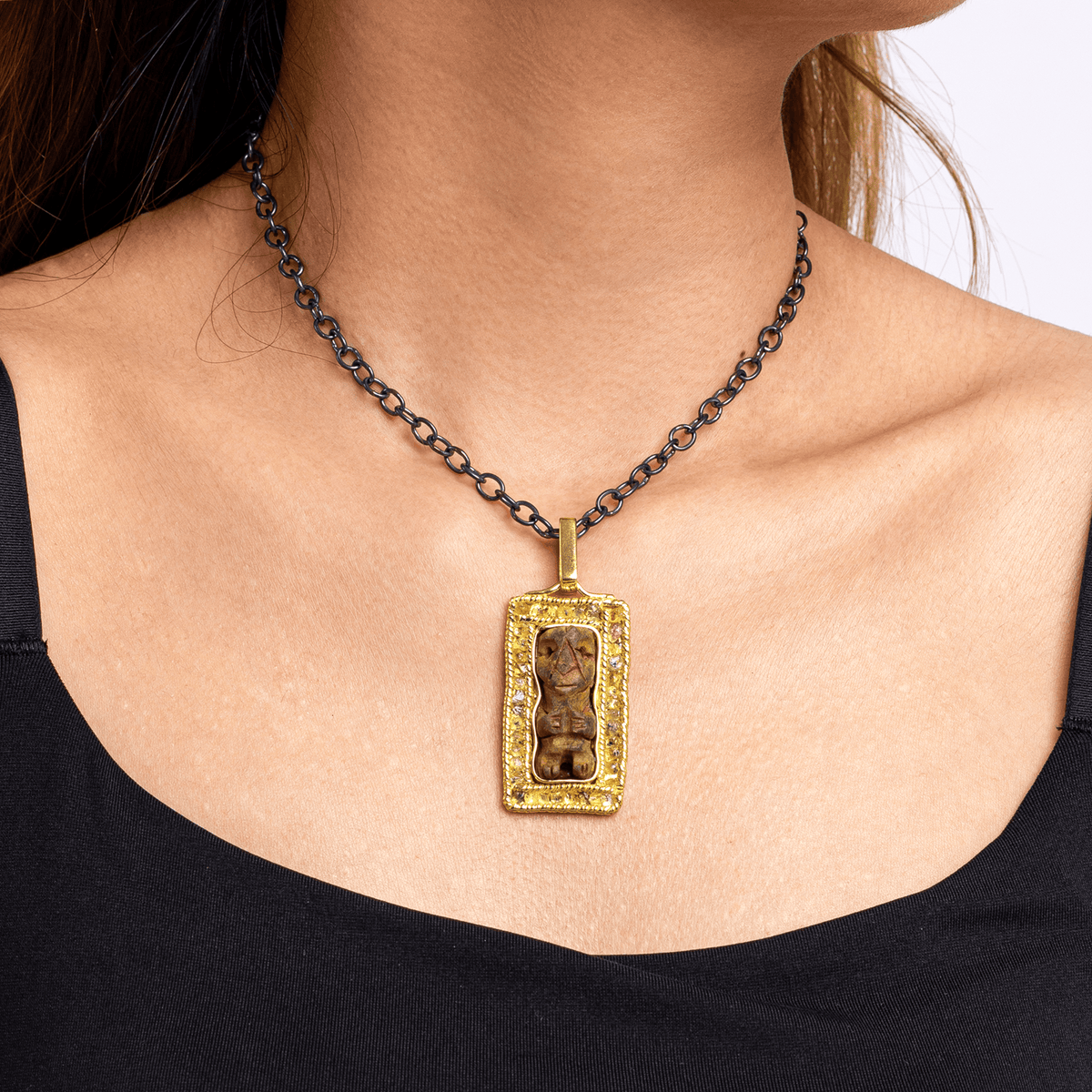
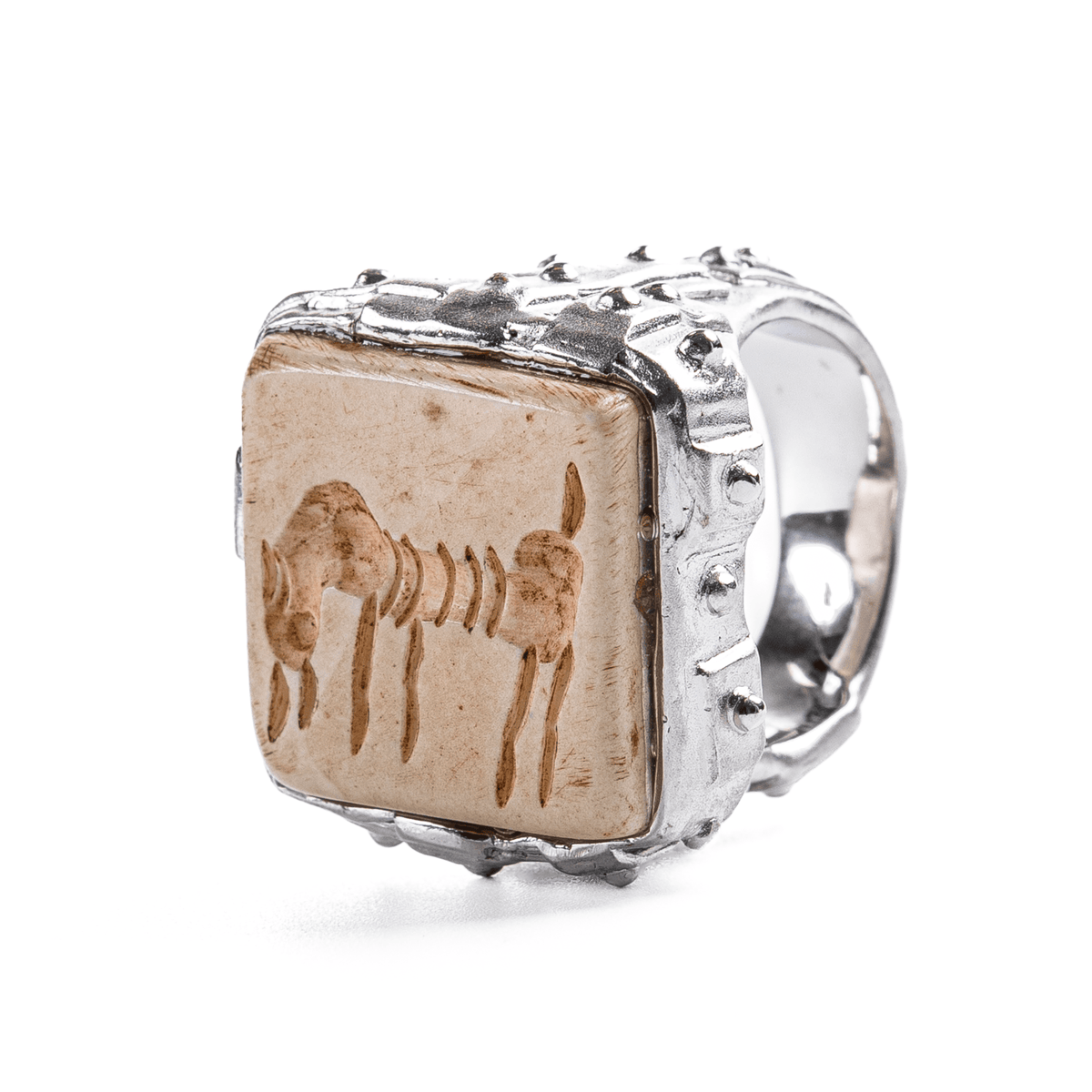
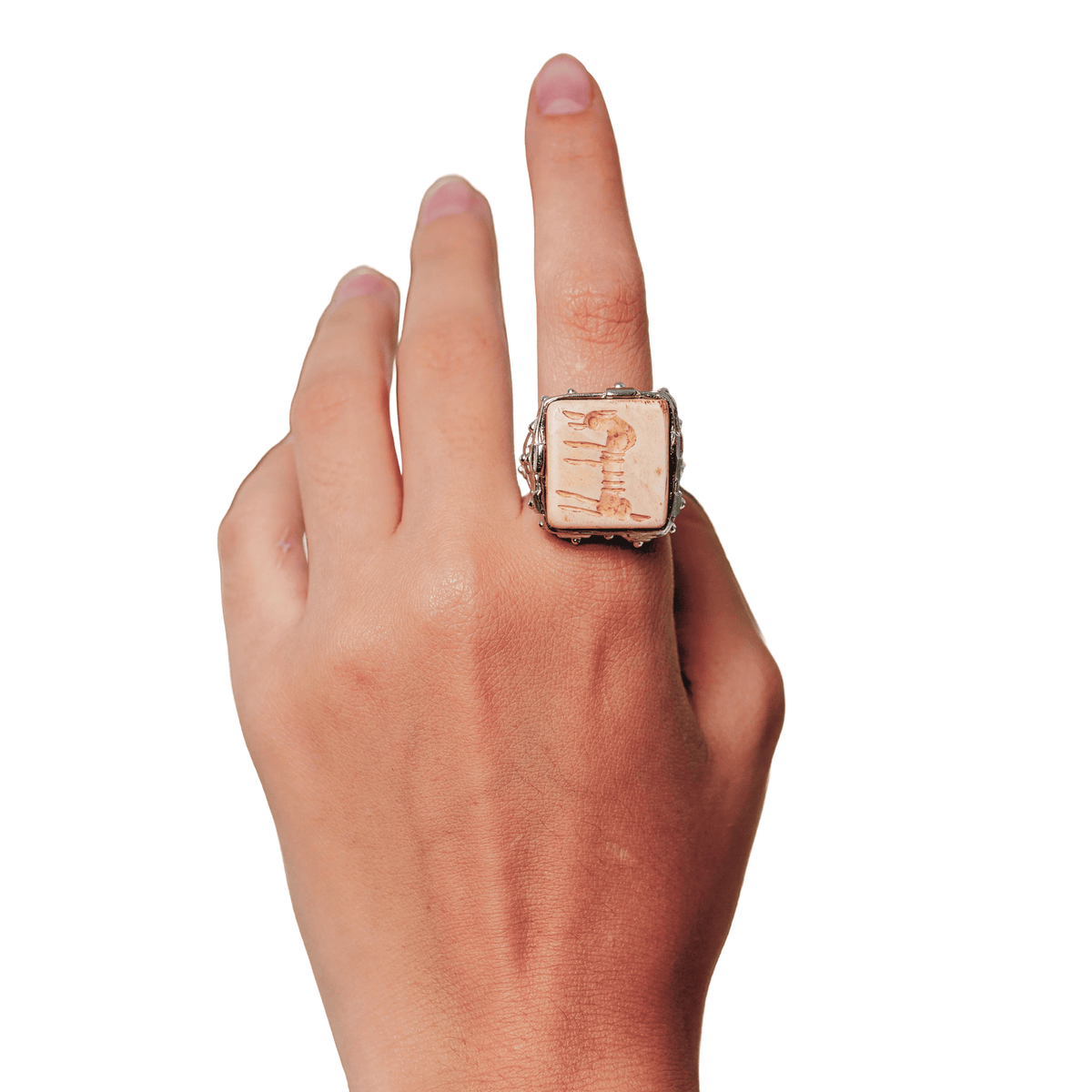
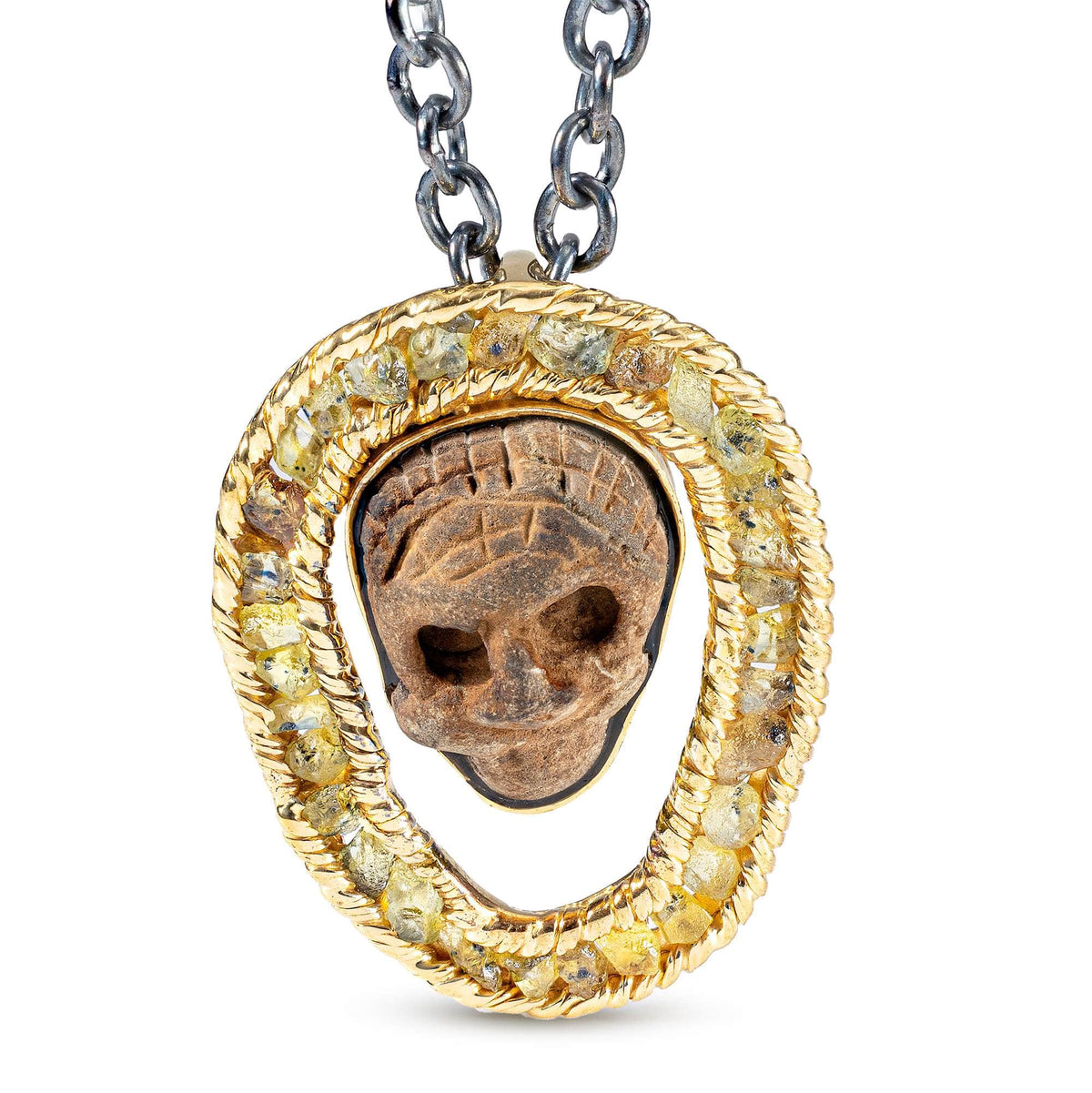
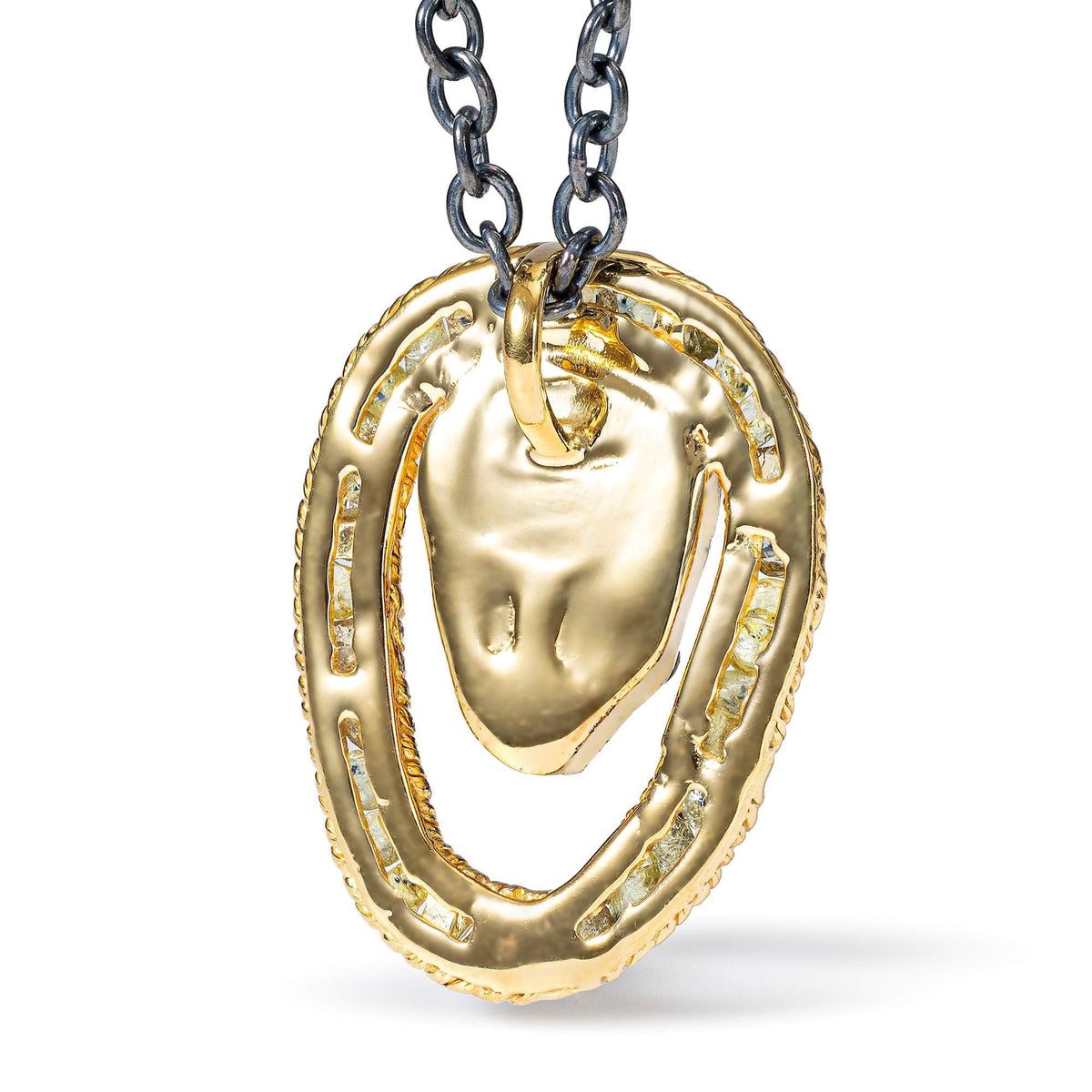
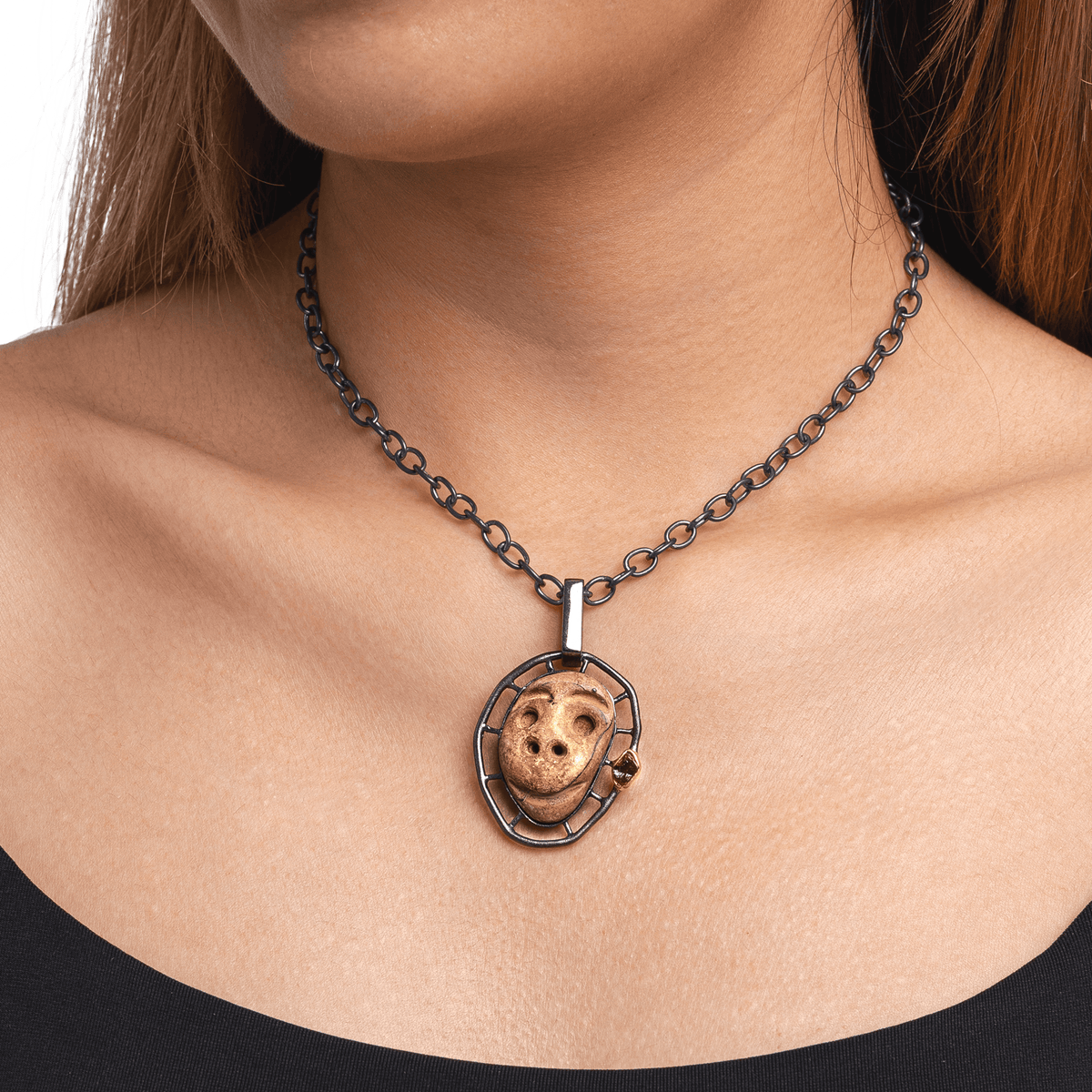
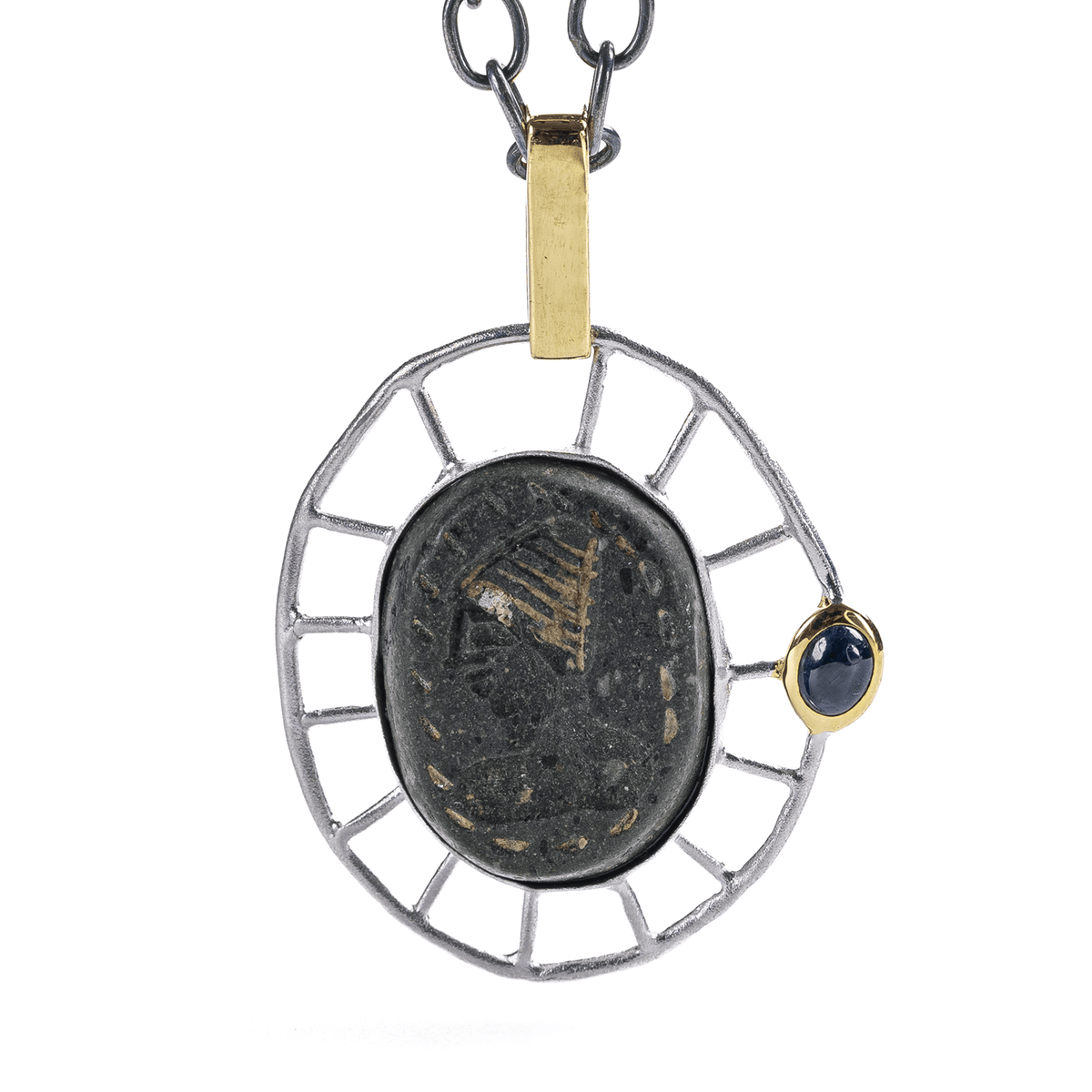
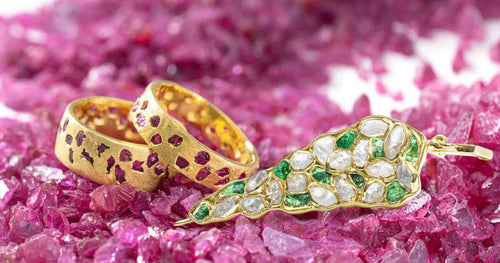
German Kabirski sets an authentic ancient Chalcolithic Eye Idol into a sterling silver pendant plated with 18K gold, pairing the artifact with a natural, uncut rough ruby. The brand frames the ruby's raw color as symbolic of the "life force" the ancient figure was originally carved to watch over, directly tying the modern gemstone choice to the object's original ritual purpose.